Hughes John E, Menditto Enrica, Mucherino Sara, Orlando Valentina, Moreno-Juste Aida, Gimeno-Miguel Antonio, Poblador-Plou Beatriz, Aza-Pascual-Salcedo Mercedes, González-Rubio Francisca, Ioakeim-Skoufa Ignatios, Bennett Kathleen, Cahir Caitriona
School of Population Health, RCSI University of Medicine and Health Sciences, Dublin 2, Ireland.
CIRFF, Center of Pharmacoeconomics and Drug Utilization Research, Department of Pharmacy, University of Naples Federico II, Naples, Italy.
Pharmacoepidemiol Drug Saf. 2025 Jan;34(1):e70092. doi: 10.1002/pds.70092.
Drug-drug interactions (DDIs), highly prevalent amongst the elderly, can lead to avoidable medication-related harm. Cardiovascular and central nervous system (CNS) drugs are commonly implicated. To date, there is no consensus on how to measure DDIs, making comparisons across countries challenging.
To (i) establish a common data model (CDM) to measure DDI prevalence in the older (aged ≥ 70 years) community-dwelling population of three European countries and (ii) compare and describe cardiovascular and CNS DDI prevalence rates across these countries.
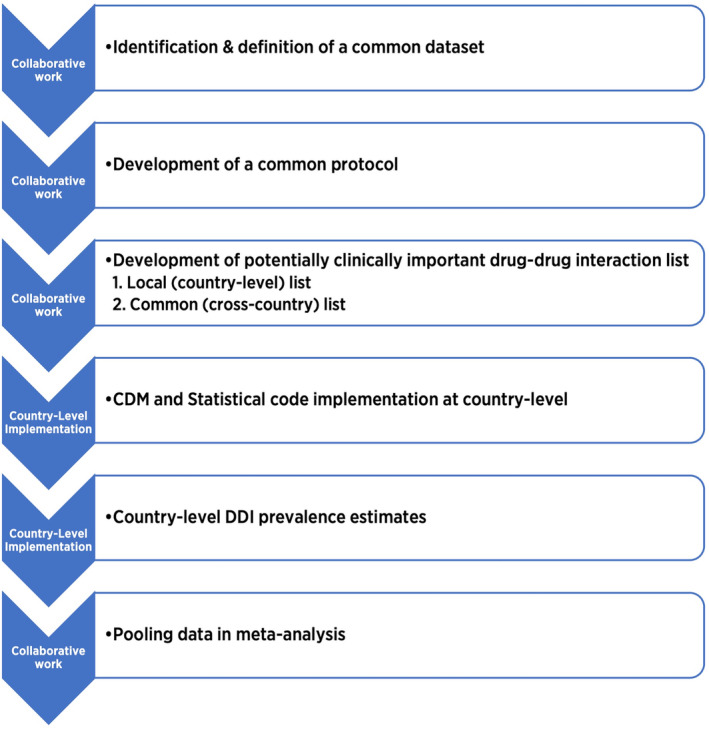
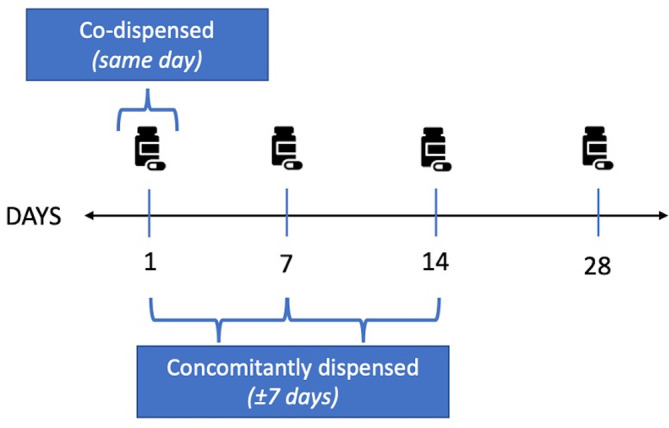
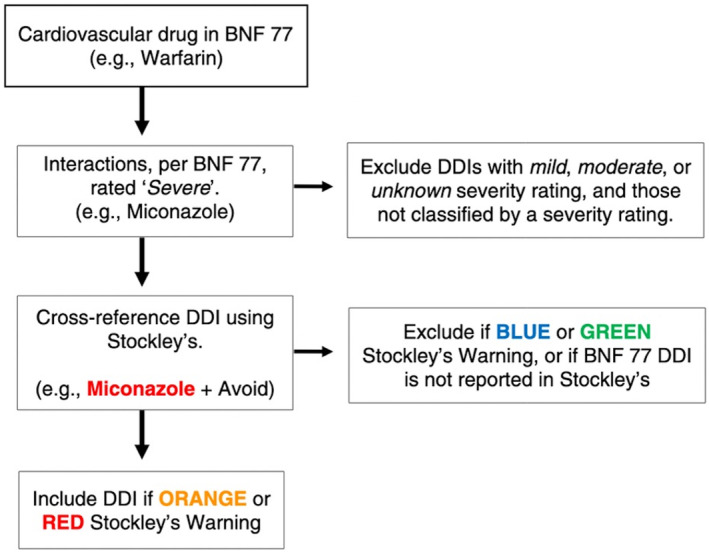
This cross-country study will apply a harmonised method of DDI identification and analysis using the WHO ATC classification system and national pharmacy claims data from three European countries (Ireland, Italy, Spain). Patients aged ≥ 70 years dispensed ≥ 2 medications during 2016 will be identified from each country's national database. 'Severe' cardiovascular and CNS DDIs (i.e., may result in a life-threatening event/permanent detrimental effect) will be identified using the British National Formulary and Stockley's Drug Interactions. Two separate lists of 'severe' DDIs, per medications reimbursed, will be applied to each database: (i) DDIs relevant to each individual country and (ii) DDIs relevant to all three countries. DDIs will be defined as co-dispensed (same day) and concomitantly (±7 days) dispensed.
Descriptive statistics, including DDI prevalence and 95% confidence intervals, will be reported for each country. Prevalence will be pooled and compared across countries using random effects models and meta-regression, where feasible.
The EuroDDI study will develop a harmonised method to measure and compare DDI prevalence across health-related databases in Europe.
药物相互作用(DDIs)在老年人中极为普遍,可导致可避免的药物相关伤害。心血管药物和中枢神经系统(CNS)药物常与之相关。迄今为止,对于如何衡量药物相互作用尚无共识,这使得各国之间的比较颇具挑战性。
(i)建立一个通用数据模型(CDM),以衡量三个欧洲国家年龄较大(≥70岁)的社区居住人口中的药物相互作用患病率;(ii)比较并描述这些国家中心血管和中枢神经系统药物相互作用的患病率。
这项跨国研究将采用统一的药物相互作用识别和分析方法,使用世界卫生组织的解剖学治疗学化学(ATC)分类系统以及来自三个欧洲国家(爱尔兰、意大利、西班牙)的国家药房报销数据。将从每个国家的国家数据库中识别出2016年期间配发了≥2种药物的70岁及以上患者。将使用《英国国家处方集》和《斯托克利药物相互作用》来识别“严重”的心血管和中枢神经系统药物相互作用(即可能导致危及生命的事件/永久性有害影响)。针对每个报销药物,将两份单独的“严重”药物相互作用清单应用于每个数据库:(i)与每个国家相关的药物相互作用;(ii)与所有三个国家相关的药物相互作用。药物相互作用将被定义为同一天配发以及在±7天内同时配发。
将报告每个国家的描述性统计数据,包括药物相互作用患病率和95%置信区间。在可行的情况下,将使用随机效应模型和元回归对各国的患病率进行汇总和比较。
欧洲药物相互作用(EuroDDI)研究将开发一种统一的方法,以衡量和比较欧洲健康相关数据库中的药物相互作用患病率。