Mickens Kaylee L, Dillon Stephanie M, Guo Kejun, Thompson Ashley N, Barrett Bradley S, Wood Cheyret, Kechris Katerina, Santiago Mario L, Wilson Cara C
Division of Infectious Diseases, Department of Medicine, University of Colorado School of Medicine, 12700 E 19th Ave, Mail Stop B168, Aurora, CO 80045, USA.
Department of Immunology and Microbiology, University of Colorado School of Medicine, 12800 E 19th Avenue, Mail Stop 8333, Aurora, CO 80045, USA.
PNAS Nexus. 2024 Oct 29;3(11):pgae486. doi: 10.1093/pnasnexus/pgae486. eCollection 2024 Nov.
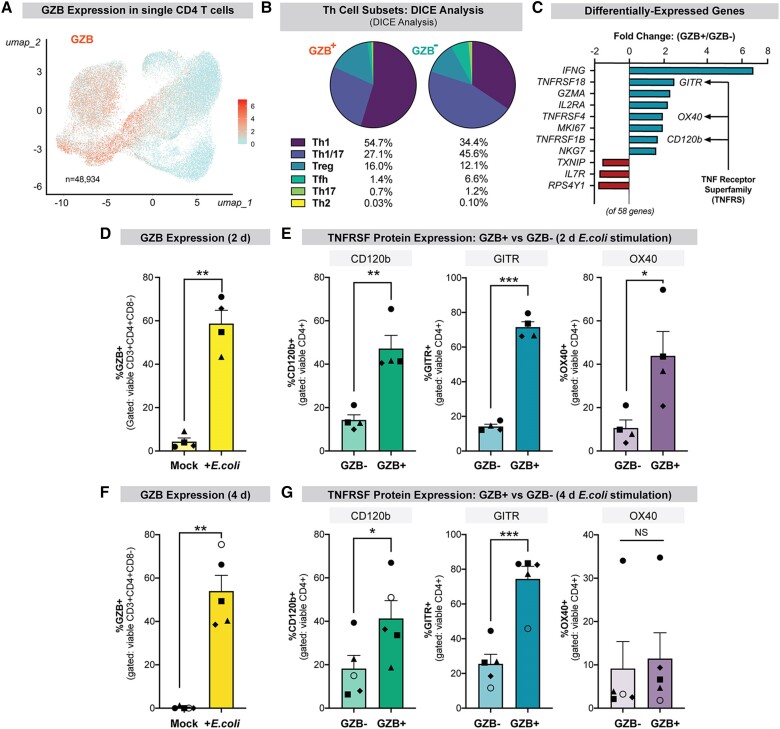
The gastrointestinal tract is ground zero for the massive and sustained CD4 T cell depletion during acute HIV-1 infection. To date, the molecular mechanisms governing this fundamental pathogenic process remain unclear. HIV-1 infection in the gastrointestinal tract is associated with chronic inflammation due to a disrupted epithelial barrier that results in microbial translocation. Here, we utilized the lamina propria aggregate culture model to demonstrate that the profound induction of granzyme B by bacteria in primary gut CD4 T cells ex vivo significantly contributes to HIV-1-mediated CD4 T cell death. Counterintuitively, a substantial fraction of gut granzyme B+ CD4 T cells harboring high levels of HIV-1 infection survive via a pathway linked to CD120b/TNFR2. Our findings underscore previously undescribed mechanisms governing the death and survival of gut CD4 T cells during HIV-1 infection that could inform strategies to counter HIV-1 pathogenesis and persistence in this critical tissue compartment.
在急性HIV-1感染期间,胃肠道是CD4 T细胞大量持续耗竭的起始部位。迄今为止,控制这一基本致病过程的分子机制仍不清楚。由于上皮屏障破坏导致微生物易位,胃肠道中的HIV-1感染与慢性炎症相关。在此,我们利用固有层聚集培养模型证明,体外原代肠道CD4 T细胞中的细菌对颗粒酶B的深度诱导显著促成了HIV-1介导的CD4 T细胞死亡。与直觉相反的是,大量携带高水平HIV-1感染的肠道颗粒酶B+ CD4 T细胞通过与CD120b/TNFR2相关的途径存活下来。我们的研究结果强调了HIV-1感染期间控制肠道CD4 T细胞死亡和存活的先前未描述的机制,这可能为对抗HIV-1在这一关键组织隔室中的发病机制和持续存在的策略提供信息。