Maki Keita, Haga Hiroaki, Hoshikawa Kyoko, Katsumi Tomohiro, Suzuki Fumiya, Uchiyama Fumi, Ueno Yoshiyuki
Department of Gastroenterology Yamagata University Faculty of Medicine Yamagata Japan.
DEN Open. 2025 Jan 7;5(1):e70054. doi: 10.1002/deo2.70054. eCollection 2025 Apr.
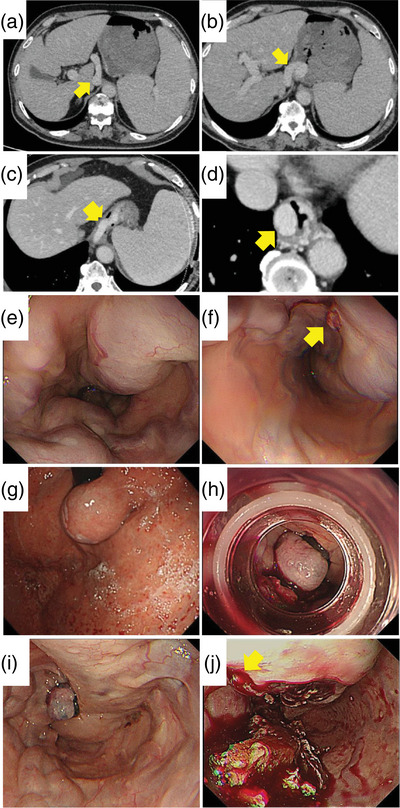
While esophageal varices (EVs) are typically treated endoscopically, other options such as interventional radiology or surgical treatment are considered when endoscopic treatment is challenging. Pipeline EVs are difficult to treat endoscopically due to their large diameter, and currently, no specific treatment guidelines have been established.
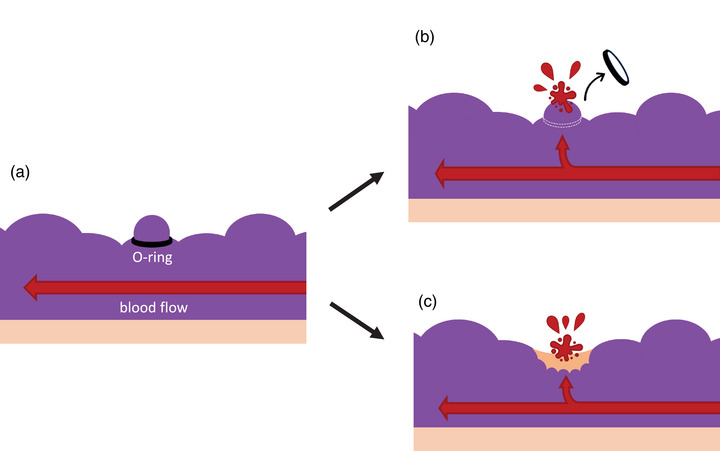
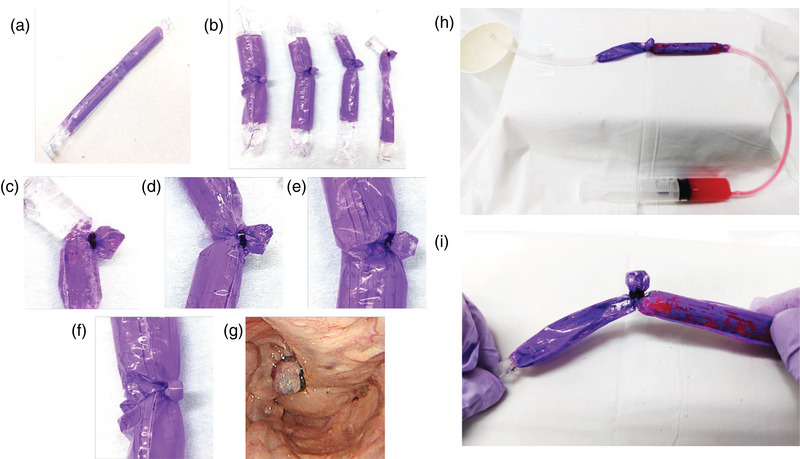
We reviewed cases of pipeline EVs treated at our hospital and analyzed previously reported cases to collect evidence for the formulation of treatment guidelines. Additionally, we created EV simple models to evaluate the safety margin of endoscopic variceal ligation for varices.
Our analysis included 14 cases of pipeline EVs (four cases treated at our hospital from 2013 to 2024 and 10 previously reported cases from 1990 to 2024). Endoscopic treatment alone was insufficient in six cases (42.9%), and five cases (35.7%) required interventional radiology or surgical intervention. Using EV simple models with varying diameters, EVL was inadequate for varices with diameters of 20 mm or larger.
There are few reported cases of pipeline EVs, making it difficult to determine a treatment algorithm. In our study using an EV simple model, it was suggested that endoscopic variceal ligation is effective in blocking blood flow for EVs with a diameter of 15 mm or less. It is important that we understand there are EVs, such as pipeline EVs, for which there are limitations to safely occluding blood flow with endoscopic variceal ligation, and it may be necessary to develop treatment strategies that include methods other than endoscopic therapy.
虽然食管静脉曲张(EVs)通常采用内镜治疗,但在内镜治疗具有挑战性时,会考虑其他选择,如介入放射学或手术治疗。管道型食管静脉曲张因其直径较大,难以通过内镜治疗,目前尚未制定具体的治疗指南。
我们回顾了我院治疗的管道型食管静脉曲张病例,并分析了先前报道的病例,以收集制定治疗指南的证据。此外,我们创建了食管静脉曲张简易模型,以评估内镜下静脉曲张结扎术治疗静脉曲张的安全边界。
我们的分析纳入了14例管道型食管静脉曲张病例(2013年至2024年我院治疗4例,1990年至2024年先前报道10例)。仅内镜治疗在6例(42.9%)中不足,5例(35.7%)需要介入放射学或手术干预。使用不同直径的食管静脉曲张简易模型,内镜下静脉曲张结扎术对直径20毫米或更大的静脉曲张效果不佳。
报道的管道型食管静脉曲张病例很少,难以确定治疗方案。在我们使用食管静脉曲张简易模型的研究中,提示内镜下静脉曲张结扎术对直径15毫米或更小的食管静脉曲张阻断血流有效。重要的是,我们要认识到存在一些食管静脉曲张,如管道型食管静脉曲张,内镜下静脉曲张结扎术安全阻断血流存在局限性,可能有必要制定包括内镜治疗以外方法的治疗策略。