Kim Dong Ha, Kim Ho Cheol, Im Kyungtaek, Baek In-Jeoung, Choi Yun Jung, Lee Hyeonjeong, Kim Da-Som, Lee Chae Won, Jeong JaeYi, Ban Kyosun, Kim Sang-Yeob, Ji Wonjun, Lee Jae Cheol, Kim Hyun-Yi, Lee Yoonji, Yang Yeongin, Yun Miyong, Choi Chang Min, Rho Jin Kyung
Asan Institute for Life Sciences, Asan Medical Center, University of Ulsan College of Medicine, Seoul, South Korea.
D.H. Kim, H.C. Kim and K. Im contributed equally to this work.
Eur Respir J. 2025 Jun 5;65(6). doi: 10.1183/13993003.00615-2024. Print 2025 Jun.
Although a relationship between the growth arrest-specific 6 (GAS6)/anexelekto (AXL) pathway and pulmonary fibrosis has been suggested, the precise mechanisms and clinical implications of the AXL pathway in idiopathic pulmonary fibrosis are still unclear.
Constitutive and conditional AXL-knockout mice were generated and injected with bleomycin to induce pulmonary fibrosis. The expression of AXL and macrophage subtypes in bleomycin-injected mice and patients with idiopathic pulmonary fibrosis was analysed using flow cytometry. The therapeutic effects of the AXL inhibitors were examined.
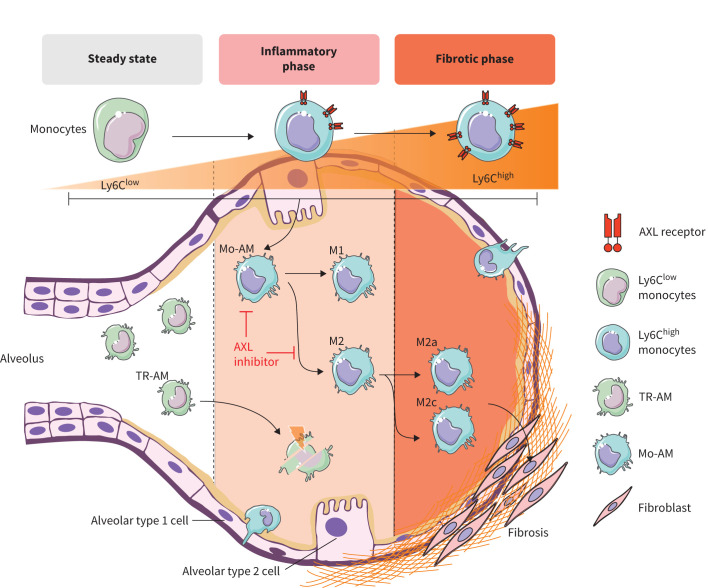
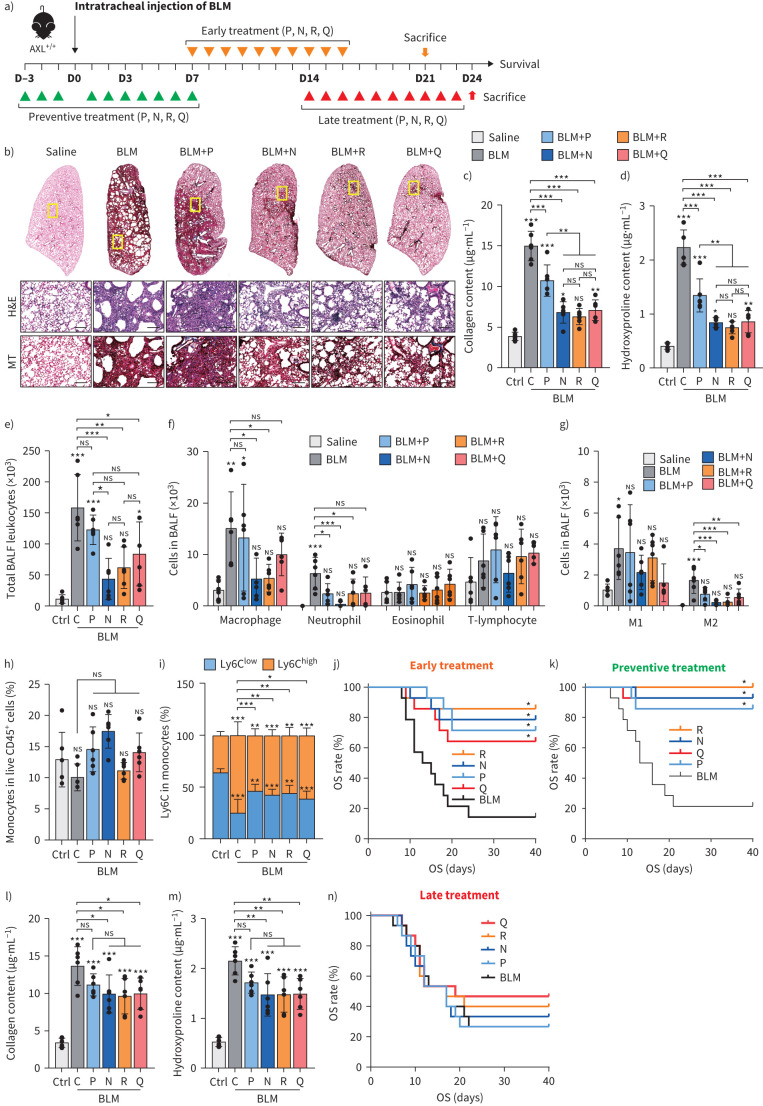
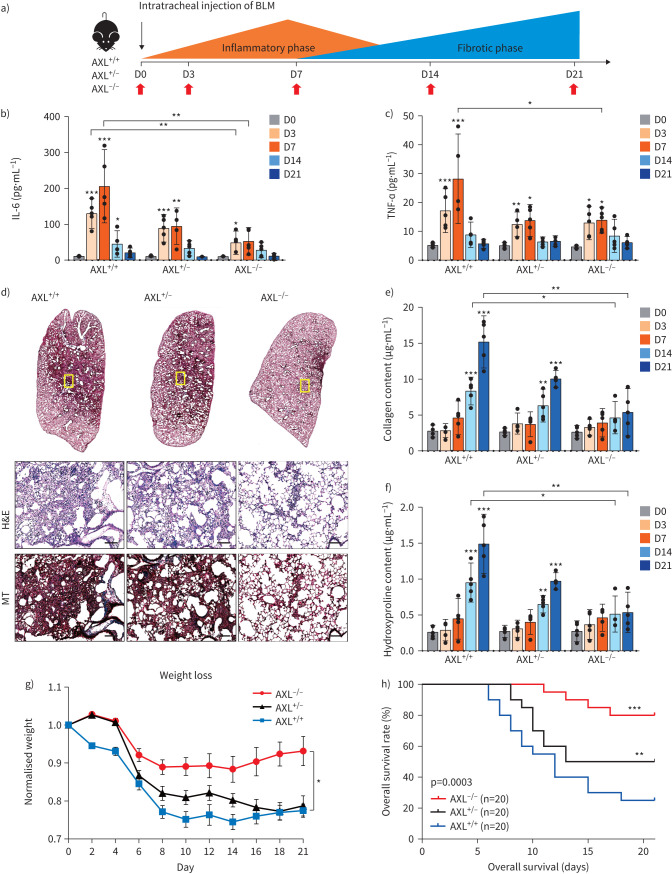
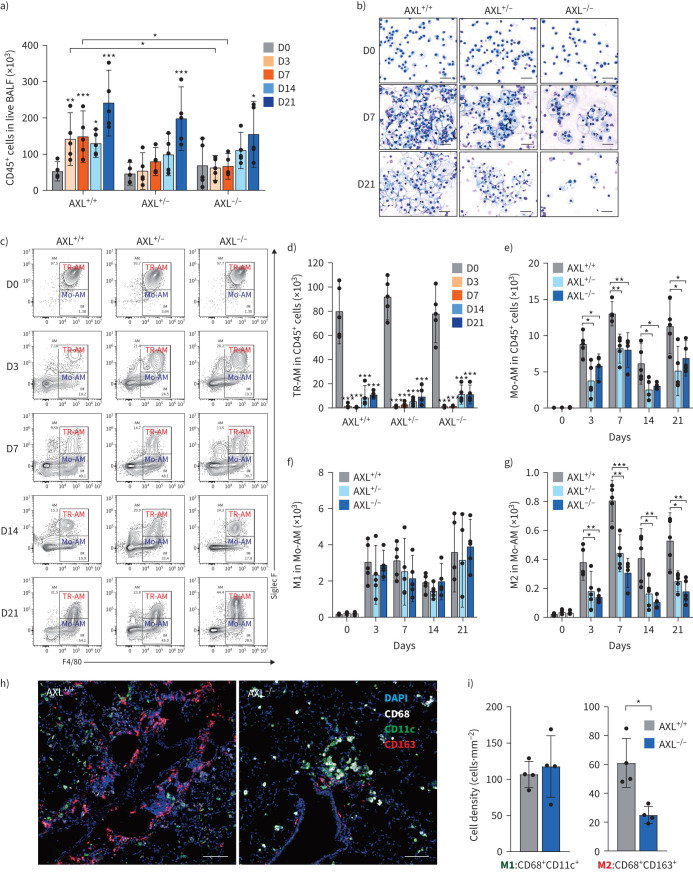
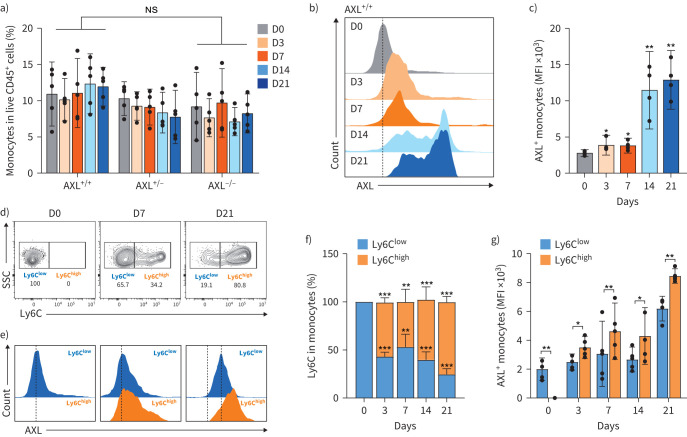
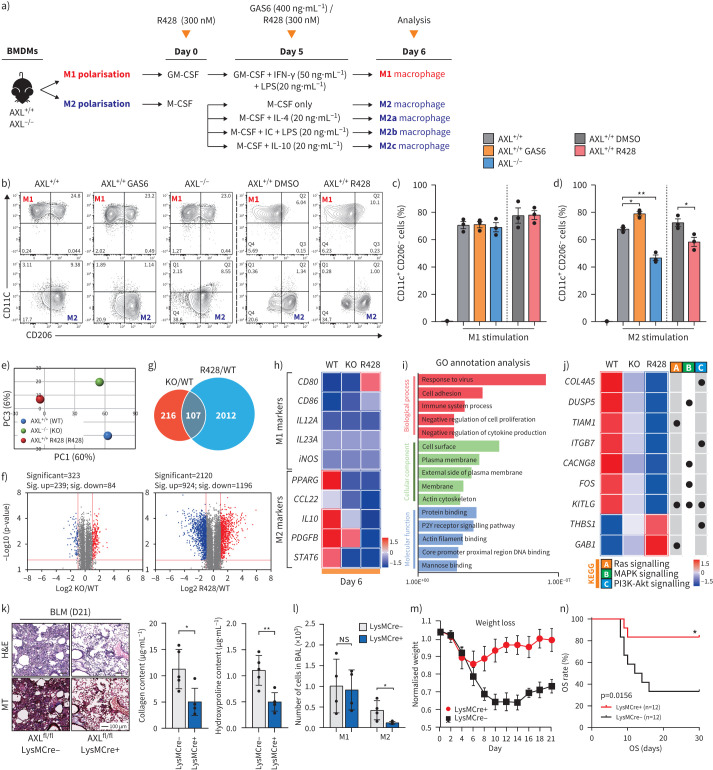
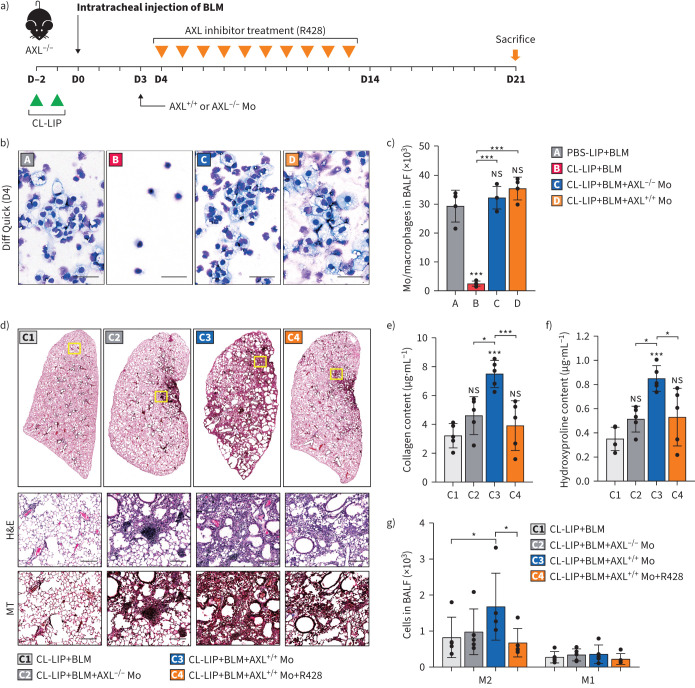
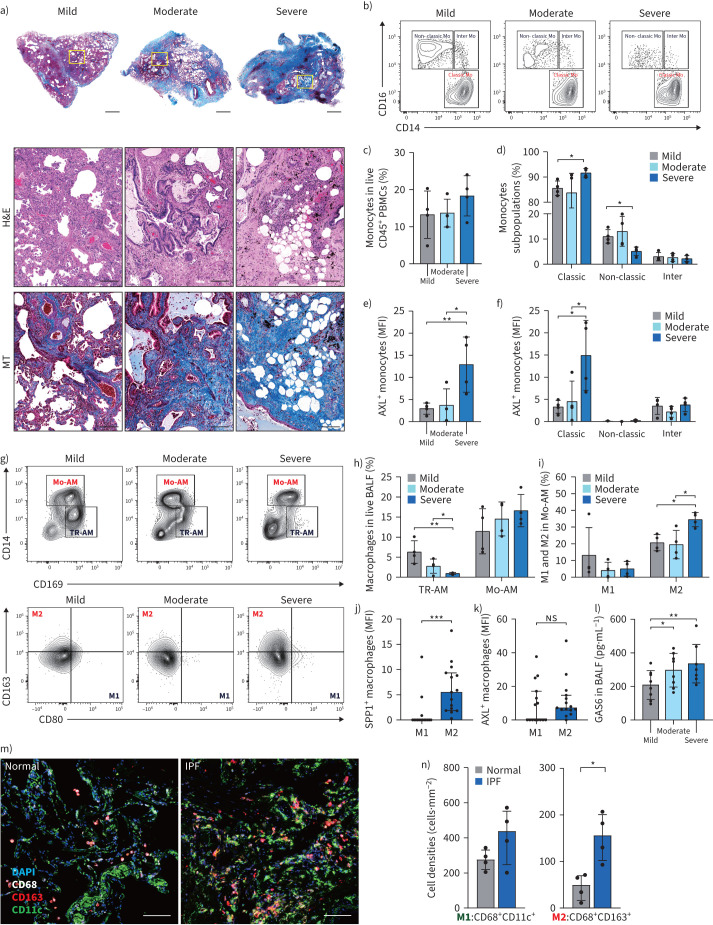
AXL-deficient mice were resistant to bleomycin-induced pulmonary fibrosis and had a lower degree of M2-like macrophage differentiation than wild-type mice. Interestingly, AXL expression in monocytes was enhanced according to the progression of bleomycin-induced pulmonary fibrosis, and these results were especially prominent in lymphocyte antigen 6C (Ly6C) monocytes. Gene silencing or inhibitor treatment with AXL inhibited the differentiation of M2-like macrophages during bone marrow-derived macrophage differentiation. These results were confirmed through experiments using mice and systems with depletion and reconstitution of macrophages. In line with these results, patients with severe idiopathic pulmonary fibrosis had high AXL expression in monocytes, high GAS6 levels and an enhanced population of M2-like macrophages compared to those with mild idiopathic pulmonary fibrosis. Lastly, treatment with AXL inhibitors ameliorated bleomycin-induced pulmonary fibrosis and improved survival rates.
The AXL pathway in classical monocytes contributes to pulmonary fibrosis progression through the induction of M2-like macrophage differentiation. Therefore, targeting AXL may be a promising therapeutic option for pulmonary fibrosis.
尽管已表明生长停滞特异性蛋白6(GAS6)/轴突生长导向因子(AXL)信号通路与肺纤维化之间存在关联,但AXL信号通路在特发性肺纤维化中的精确机制和临床意义仍不清楚。
构建组成型和条件型AXL基因敲除小鼠,并注射博来霉素以诱导肺纤维化。使用流式细胞术分析注射博来霉素的小鼠和特发性肺纤维化患者中AXL的表达及巨噬细胞亚型。检测AXL抑制剂的治疗效果。
AXL基因敲除小鼠对博来霉素诱导的肺纤维化具有抗性,且与野生型小鼠相比,M2样巨噬细胞分化程度较低。有趣的是,随着博来霉素诱导的肺纤维化进展,单核细胞中AXL的表达增强,这些结果在淋巴细胞抗原6C(Ly6C)单核细胞中尤为突出。AXL的基因沉默或抑制剂处理在骨髓来源的巨噬细胞分化过程中抑制了M2样巨噬细胞的分化。这些结果通过使用巨噬细胞耗竭和重建的小鼠及系统实验得到证实。与这些结果一致,与轻度特发性肺纤维化患者相比,重度特发性肺纤维化患者的单核细胞中AXL表达较高、GAS6水平较高且M2样巨噬细胞群体增加。最后,AXL抑制剂治疗改善了博来霉素诱导的肺纤维化并提高了生存率。
经典单核细胞中的AXL信号通路通过诱导M2样巨噬细胞分化促进肺纤维化进展。因此,靶向AXL可能是肺纤维化的一种有前景的治疗选择。