Farina Juan M, Jaroszewski Dawn E, Arsanjani Reza, Naqvi Tasneem Z, Aly Mohamed R, Freeman William K, Larsen Carolyn M, Marcotte Francois, Lester Steven J, Chaliki Hari P, Narayanasamy Hemalatha, Wilansky Susan, Appleton Christopher P
Department of Cardiovascular and Thoracic Surgery, Mayo Clinic Arizona, Phoenix, Arizona.
Department of Cardiovascular Medicine, Mayo Clinic Arizona, Phoenix, Arizona.
Ann Thorac Surg Short Rep. 2023 Feb 27;1(2):226-230. doi: 10.1016/j.atssr.2023.02.009. eCollection 2023 Jun.
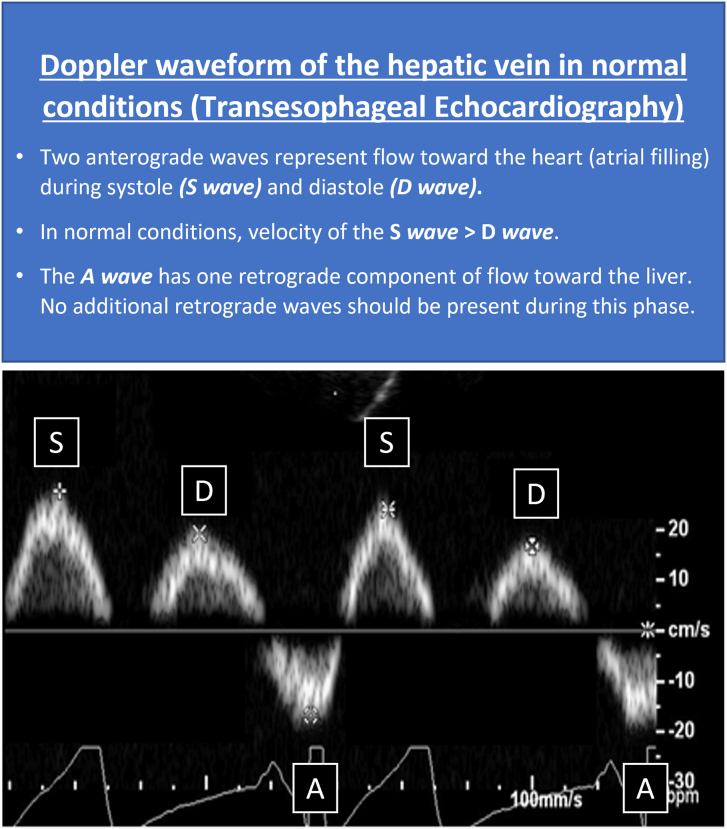
The cardiovascular benefits of surgical repair in pectus excavatum (PEx) continue to be debated, with limited data supporting repair in adult patients. Hepatic vein flow is used to identify right-sided diastolic dysfunction in cardiovascular disorders, including tricuspid stenosis, cardiac tamponade, and constrictive pericarditis. This study evaluates the effects of cardiac compression on diastolic function (as assessed by hepatic vein flow patterns and velocities) before and after repair of PEx.
A retrospective study was performed of intraoperative transesophageal echocardiograms including hepatic vein assessments of adult patients who underwent preoperative and postoperative evaluations during repair of PEx from 2018 to 2021.
In total, 127 patients were included (median age, 29.0 [15.4] years; median Haller index, 4.2 [1.7]; 60.6% male). Statistically significant improvements were seen after pectus repair of right ventricular stroke volume and diastolic function as measured by increased postoperative velocities for hepatic vein waves ( < .001 for all comparisons). Preoperatively, 5.5% of patients had constrictive-like physiology with end-diastolic retrograde flow that normalized postoperatively ( = .016). Approximately 10% of patients changed their pattern of hepatic vein flow after surgical procedure. Patients with more proximal cardiac compression had greater improvements in hepatic vein velocities after repair.
Surgical relief of cardiac compression resulted in an immediate improvement in hepatic vein flow and right ventricle stroke volume in patients with PEx. These results support diastolic dysfunction in a large number of patients, with improvement in function and compliance after the surgical relief of cardiac compression.
漏斗胸(PEx)手术修复的心血管益处仍存在争议,支持成年患者修复的数据有限。肝静脉血流用于识别心血管疾病中的右侧舒张功能障碍,包括三尖瓣狭窄、心脏压塞和缩窄性心包炎。本研究评估了漏斗胸修复前后心脏受压对舒张功能(通过肝静脉血流模式和速度评估)的影响。
对2018年至2021年期间接受漏斗胸修复术前和术后评估的成年患者的术中经食管超声心动图进行回顾性研究,其中包括肝静脉评估。
共纳入127例患者(中位年龄29.0[15.4]岁;中位哈勒指数4.2[1.7];男性占60.6%)。漏斗胸修复术后,右心室每搏输出量和舒张功能有统计学意义的改善,表现为肝静脉波术后速度增加(所有比较<0.001)。术前,5.5%的患者具有类似缩窄的生理状态,舒张末期逆向血流术后恢复正常(P=0.016)。约10%的患者术后肝静脉血流模式发生改变。心脏受压更靠近近端的患者修复后肝静脉速度改善更大。
漏斗胸患者手术解除心脏受压后,肝静脉血流和右心室每搏输出量立即得到改善。这些结果支持大量患者存在舒张功能障碍,手术解除心脏受压后功能和顺应性得到改善。