Anebo Abera Ayza, Chenrayan Venkatesh, Shahapurkar Kiran, Gebremaryam Gezahgn, Petrů Jana, Soudagar Manzoore Elahi M, Bhaviripudi Vijayabhaskara Rao, Rajagopal Rajakrishnan, Bashir Muhammad Nasir
Department of Mechanical Engineering, College of Engineering, Wolaita Sodo University, Wolaita Sodo, Ethiopia.
AU-Sophisticated Testing and Instrumentation Centre (AU-STIC), Centre of Excellence-Advanced Material Synthesis (CoE-AMS), Department of Mechanical Engineering, Alliance School of Applied Engineering, Alliance University, Bangaluru, 562106, India.
Sci Rep. 2025 Jan 10;15(1):1598. doi: 10.1038/s41598-024-84309-z.
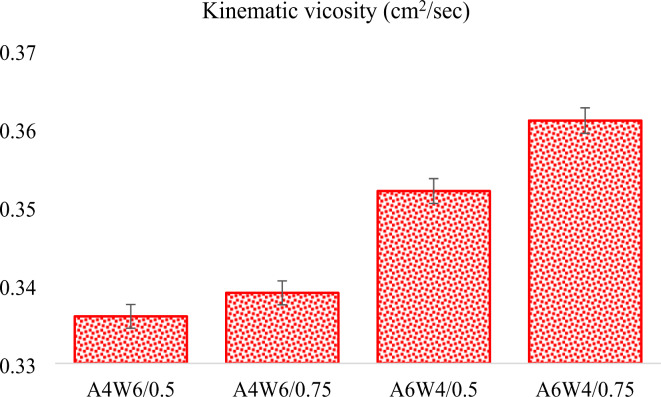
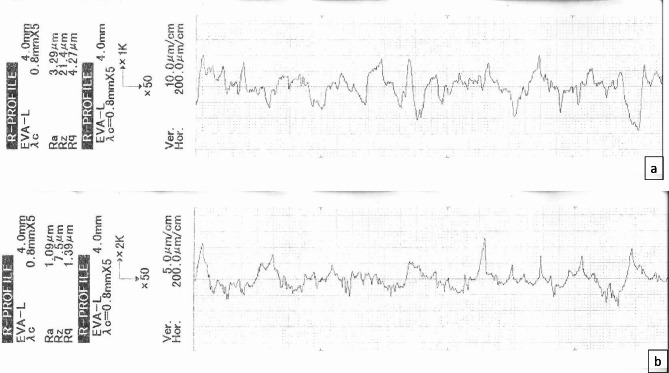
Higher-end science and technology facilitate the human community with a sophisticated life despite it curses by abundant pollution. The alarming demand for sustainability pressurizes the manufacturing sector to ensure sustainable manufacturing. Since Molybdenum di sulfide (MoS) and avocado oil are known solid and liquid lubricants respectively, hence, it is a worthwhile attempt to implement the bio-based degradable avocado oil enriched with nano Molybdenum di sulfide (nMoS) particles as a potential machining fluid for CNC-end milling. Different proportions of avocado oil and nMoS were used to synthesise four distinct machining fluids to assess the individual impact of avocado oil and nMoS particles. The emulsification and sonication were employed to synthesise the fluids. A hybrid Grey Relational Analysis (GRA) coupled with Principal Component Analysis (PCA) was followed to scrutiny the effect of novel machining fluid on machining objectives. The experimental results of physio-chemical properties revealed that avocado-rich 0.5% nMoS excels among others. The L orthogonal array experiments associated with statistical analysis explored the developed machining fluid (A6W4/0.5) that significantly impacts the machining objectives. The experimental results manifest that nearly 64.87% of surface roughness and 93.3% of tool wear have been reduced during machining in the presence of A6W4/0.5 fluid than A4W6/0.75. The improved performance of the novel machining fluid upholds its potential to replace conventional fluids and ensure green manufacturing.
高端科技为人类社会带来了精致的生活,尽管它伴随着大量污染。对可持续性的迫切需求给制造业带来压力,以确保可持续制造。由于二硫化钼(MoS)和鳄梨油分别是已知的固体和液体润滑剂,因此,将富含纳米二硫化钼(nMoS)颗粒的生物基可降解鳄梨油用作数控端铣削的潜在加工液是一次值得尝试的举措。使用不同比例的鳄梨油和nMoS合成了四种不同的加工液,以评估鳄梨油和nMoS颗粒各自的影响。采用乳化和超声处理来合成这些加工液。采用了一种结合主成分分析(PCA)的混合灰色关联分析(GRA)来研究新型加工液对加工目标的影响。物理化学性质的实验结果表明,富含鳄梨的0.5% nMoS在其他加工液中表现出色。与统计分析相关的L正交阵列实验探索了开发的加工液(A6W4/0.5),它对加工目标有显著影响。实验结果表明,在使用A6W4/0.5加工液进行加工时,与使用A4W6/0.75相比,表面粗糙度降低了近64.87%,刀具磨损降低了93.3%。新型加工液的性能提升证明了其替代传统加工液并确保绿色制造的潜力。