
成纤维细胞生长因子(FGF)信号传导在FGF靶向癌症治疗中的复杂性及意义
The Complexity and Significance of Fibroblast Growth Factor (FGF) Signaling for FGF-Targeted Cancer Therapies.
作者信息
Nguyen Anh L, Facey Caroline O B, Boman Bruce M
机构信息
Department of Biological Sciences, University of Delaware, Newark, DE 19716, USA.
Center for Translational Cancer Research, Helen F. Graham Cancer Center & Research Institute, 4701 Ogletown-Stanton Road, Newark, DE 19713, USA.
出版信息
Cancers (Basel). 2024 Dec 30;17(1):82. doi: 10.3390/cancers17010082.
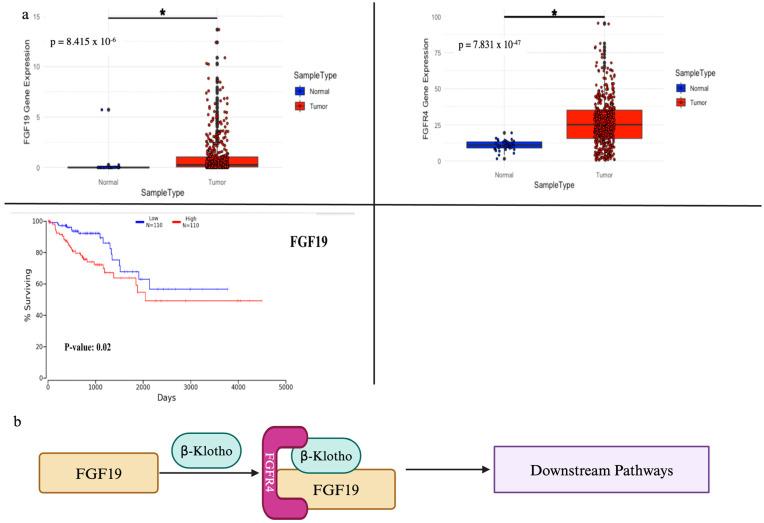
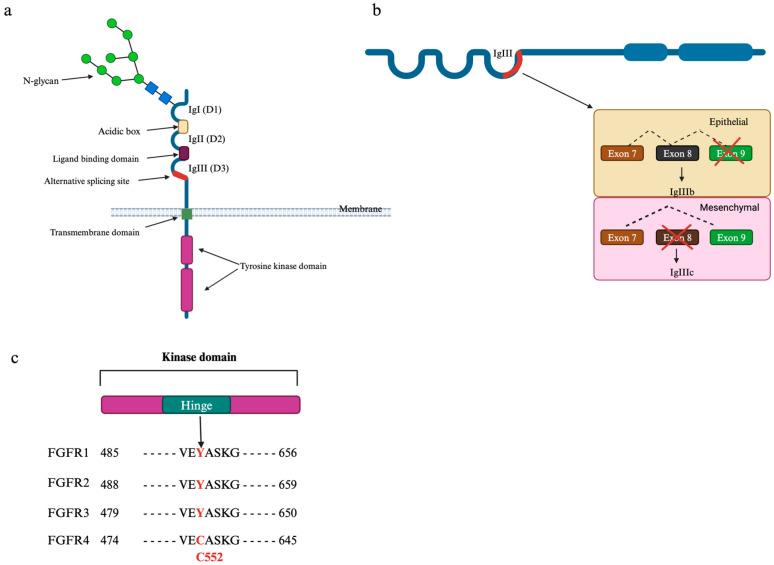
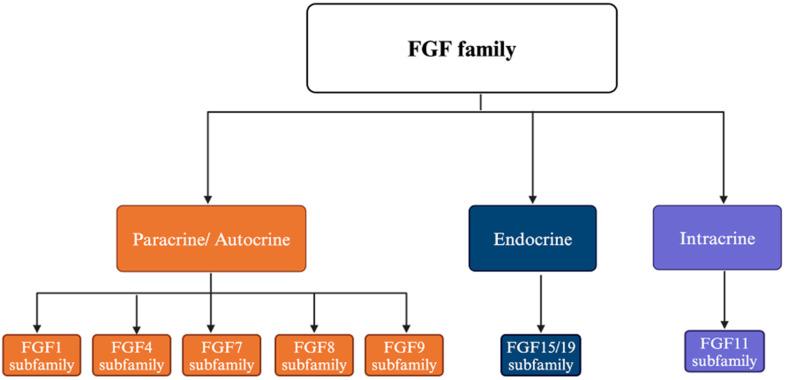
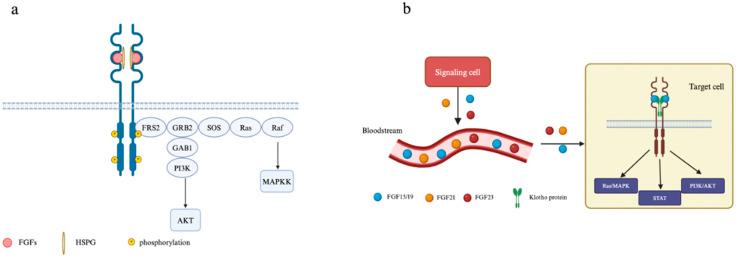
Fibroblast growth factors (FGFs) have diverse functions in the regulation of cell proliferation and differentiation in development, tissue maintenance, wound repair, and angiogenesis. The goal of this review paper is to (i) deliberate on the role of FGFs and FGF receptors (FGFRs) in different cancers, (ii) present advances in FGF-targeted cancer therapies, and (iii) explore cell signaling mechanisms that explain how FGF expression becomes dysregulated during cancer development. FGF is often mutated and overexpressed in cancer and the different FGF and FGFR isoforms have unique expression patterns and distinct roles in different cancers. Among the FGF members, the FGF 15/19 subfamily is particularly interesting because of its unique protein structure and role in endocrine function. The abnormal expression of FGFs in different cancer types (breast, colorectal, hepatobiliary, bronchogenic, and others) is examined and correlated with patient prognosis. The classification of FGF ligands based on their mode of action, whether autocrine, paracrine, endocrine, or intracrine, is illustrated, and an analysis of the binding specificity of FGFs to FGFRs is also provided. Moreover, the latest advances in cancer therapeutic strategies involving small molecules, ligand traps, and monoclonal antibody-based FGF inhibitors are presented. Lastly, we discuss how the dysregulation of FGF and FGFR expression affects FGF signaling and its role in cancer development.
成纤维细胞生长因子(FGFs)在发育、组织维持、伤口修复和血管生成过程中,对细胞增殖和分化的调节具有多种功能。本综述文章的目的是:(i)探讨FGFs和成纤维细胞生长因子受体(FGFRs)在不同癌症中的作用;(ii)介绍FGF靶向癌症治疗的进展;(iii)探索细胞信号传导机制,以解释在癌症发展过程中FGF表达是如何失调的。FGF在癌症中常发生突变并过度表达,不同的FGF和FGFR亚型具有独特的表达模式,在不同癌症中发挥着不同的作用。在FGF成员中,FGF 15/19亚家族因其独特的蛋白质结构和在内分泌功能中的作用而特别引人关注。本文研究了FGFs在不同癌症类型(乳腺癌、结直肠癌、肝胆癌、支气管癌等)中的异常表达,并将其与患者预后相关联。阐述了基于FGF配体作用方式(自分泌、旁分泌、内分泌或胞内分泌)的分类,并对FGFs与FGFRs的结合特异性进行了分析。此外,还介绍了涉及小分子、配体陷阱和基于单克隆抗体的FGF抑制剂的癌症治疗策略的最新进展。最后,我们讨论了FGF和FGFR表达失调如何影响FGF信号传导及其在癌症发展中的作用。
 Zotero 插件