Miyagami Taiju, Nishizaki Yuji, Shimizu Taro, Yamamoto Yu, Shikino Kiyoshi, Kataoka Koshi, Nojima Masanori, Deshpande Gautam, Naito Toshio, Tokuda Yasuharu
Department of General Medicine, Faculty of Medicine, Juntendo University, Tokyo, Japan.
Division of Medical Education, Juntendo University School of Medicine, 2-1-1Bunkyo-Ku, HongoTokyo, Japan.
BMC Med Educ. 2025 Jan 11;25(1):49. doi: 10.1186/s12909-025-06670-5.
Outpatient training for resident physicians has been attracting attention in recent years. However, to our knowledge, there have only been a few surveys on outpatient training, particularly in Japan. This study evaluates outpatient care among Japanese resident physicians by determining how the volume of outpatient encounters and length of outpatient training correlate with residents' clinical competence.
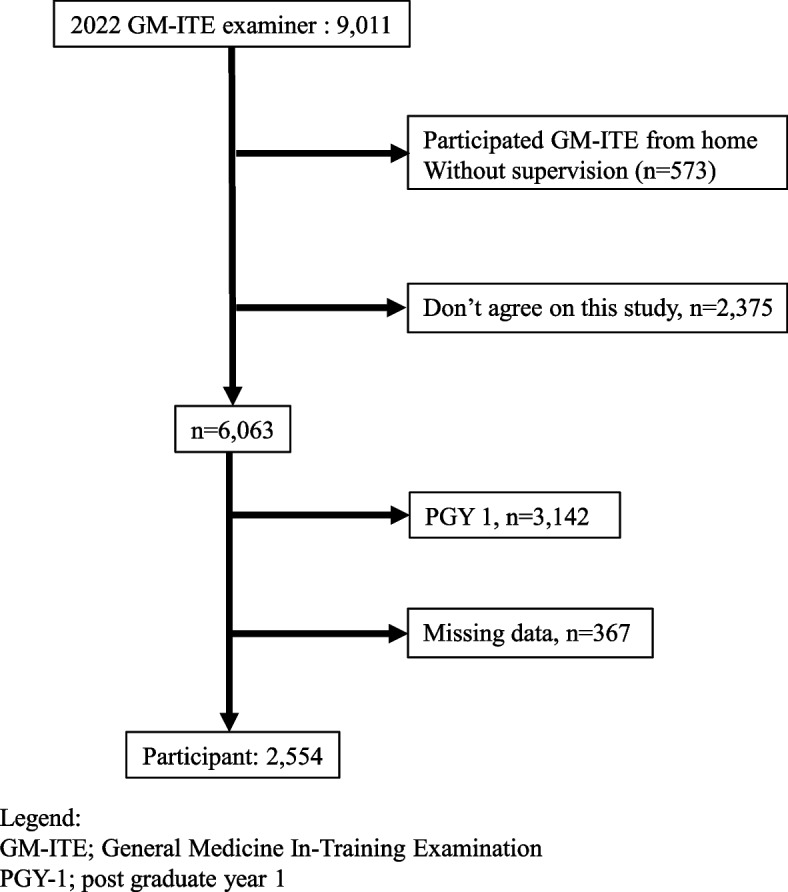
This study utilised the results of the General Medicine In-Training Examination (GM-ITE; resident clinical competency assessment) for 2,554 post-graduate year 2 (PGY 2) resident physicians in Japan, as well as a self-reported questionnaire regarding their educational training environments conducted after the examination. We investigated whether GM-ITE scores correlated with daily outpatient volume and duration of outpatient training.
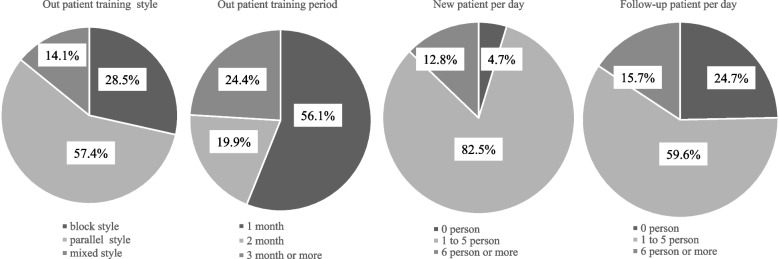
Regarding outpatient volume, having 1-5 new patient encounters per day was significantly associated with higher GM-ITE scores by multilevel analysis [0 patients: average score 43.7, 1-5 patients: adjusted estimated coefficient (aEC) 1.99, 95% confidence interval (CI) 0.44 to 3.55, P = 0.01]. Regarding the duration of outpatient training, residents trained for one month had the highest GM-ITE scores (one month: average score 46.9; two months: aEC -1.44, 95% CI -2.29 to -0.60, P < 0.001; three months: aEC -1.44, 95% CI -2.22 to -0.65, P < 0.001).
Minimal daily new outpatient visits and one month of outpatient training effectively correlated with residents' basic clinical competence.
This study was approved by the Ethics Committee of the Japan Institute for Advancement of Medical Education Program (JAMEP; No. 22-30) and retrospectively registered.
住院医师门诊培训近年来备受关注。然而,据我们所知,关于门诊培训的调查较少,尤其是在日本。本研究通过确定门诊诊疗量和门诊培训时长与住院医师临床能力之间的相关性,对日本住院医师的门诊医疗进行评估。
本研究利用了日本2554名二年级住院医师的内科住院医师培训考试(GM-ITE;住院医师临床能力评估)结果,以及考试后进行的关于其教育培训环境的自我报告问卷。我们调查了GM-ITE分数与每日门诊量和门诊培训时长之间是否存在相关性。
关于门诊量,通过多水平分析,每天有1-5名新患者就诊与较高的GM-ITE分数显著相关[0名患者:平均分数43.7,1-5名患者:调整估计系数(aEC)1.99,95%置信区间(CI)0.44至3.55,P = 0.01]。关于门诊培训时长,培训1个月的住院医师GM-ITE分数最高(1个月:平均分数46.9;2个月:aEC -1.44,95% CI -2.29至-0.60,P < 0.001;3个月:aEC -1.44,95% CI -2.22至-0.65,P < 0.001)。
每日最低限度的新门诊就诊量和1个月的门诊培训与住院医师的基本临床能力有效相关。
本研究经日本医学教育促进项目研究所伦理委员会(JAMEP;第22-30号)批准并进行回顾性注册。