
弥漫性大B细胞淋巴瘤中与线粒体相关的特征:预后、免疫及治疗特性
A Mitochondria-Related Signature in Diffuse Large B-Cell Lymphoma: Prognosis, Immune and Therapeutic Features.
作者信息
Zhou Zhen-Zhong, Lu Jia-Chen, Guo Song-Bin, Tian Xiao-Peng, Li Hai-Long, Zhou Hui, Huang Wei-Juan
机构信息
Department of Medical Oncology, Sun Yat-sen University Cancer Center, Guangzhou, China.
State Key Laboratory of Oncology in South China, Guangdong Provincial Clinical Research Center for Cancer, Sun Yat-sen University Cancer Center, Guangzhou, China.
出版信息
Cancer Med. 2025 Jan;14(2):e70602. doi: 10.1002/cam4.70602.
BACKGROUND
Distinctive heterogeneity characterizes diffuse large B-cell lymphoma (DLBCL), one of the most frequent types of non-Hodgkin's lymphoma. Mitochondria have been demonstrated to be closely involved in tumorigenesis and progression, particularly in DLBCL.
OBJECTIVE
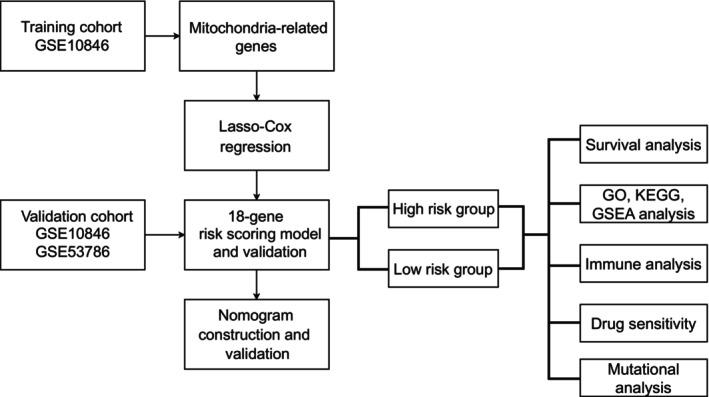
The purposes of this study were to identify the prognostic mitochondria-related genes (MRGs) in DLBCL, and to develop a risk model based on MRGs and machine learning algorithms.
METHODS
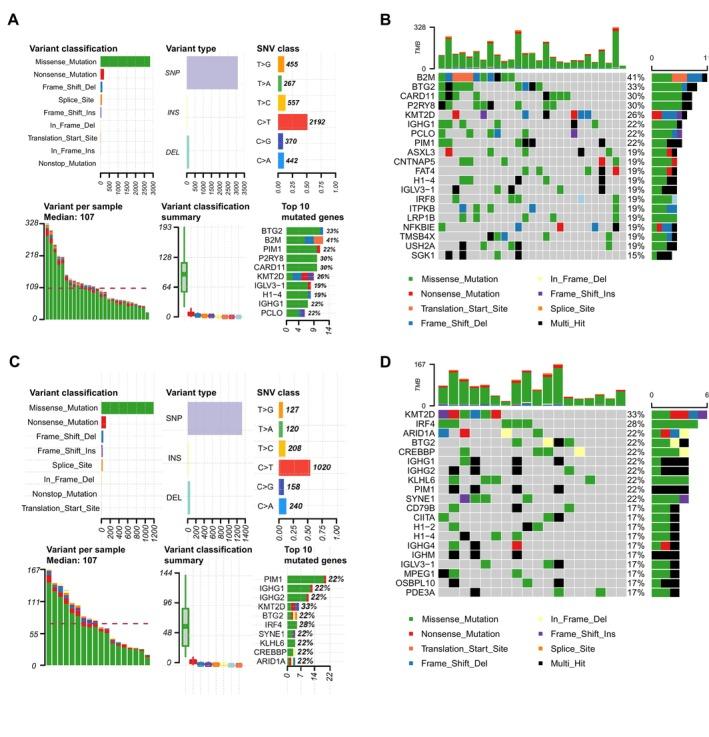
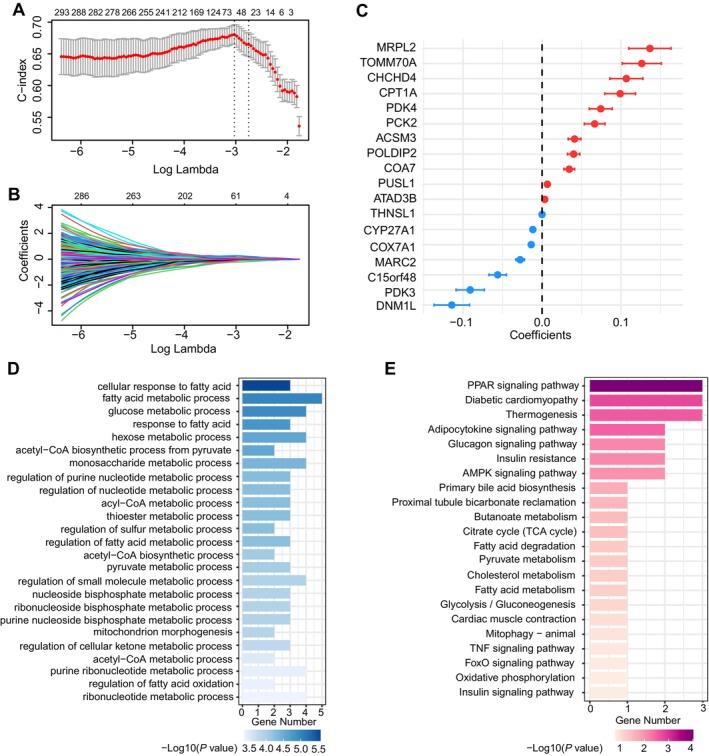
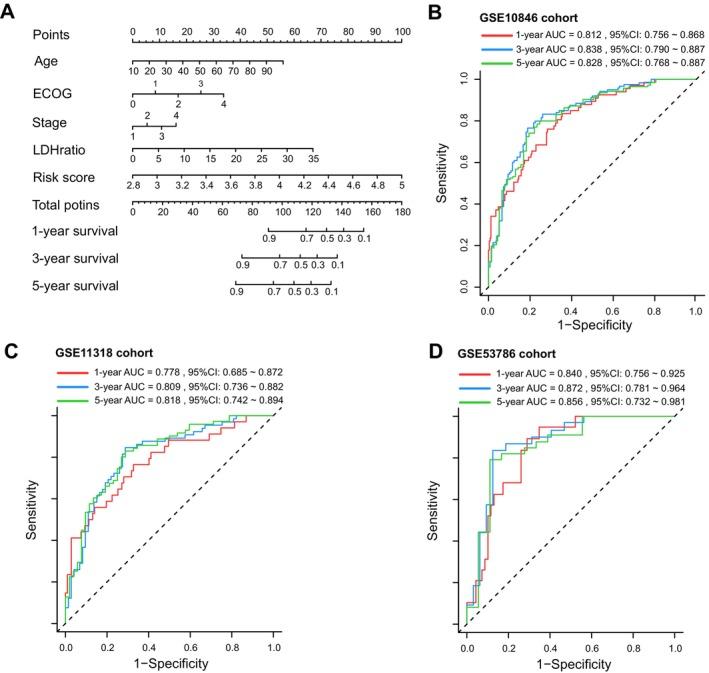
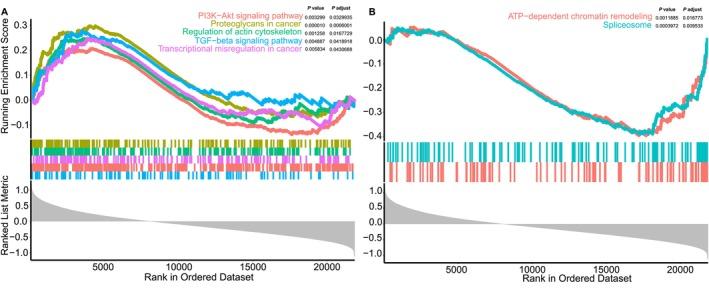
Transcriptome profiles and clinical information were obtained from the Gene Expression Omnibus (GEO) database. The risk model was defined using Least Absolute Shrinkage and Selection Operator (Lasso) regression algorithm, and its prognostic value was further examined in independent datasets. Patients were stratified into two clusters based on the risk scores, additionally a nomogram was generated based on the risk score and clinical characteristics. Gene pathway level, microenvironment, expression of targeted therapy-associated genes, response to immunotherapy, drug sensitivity, and somatic mutation status were compared between clusters.
RESULTS
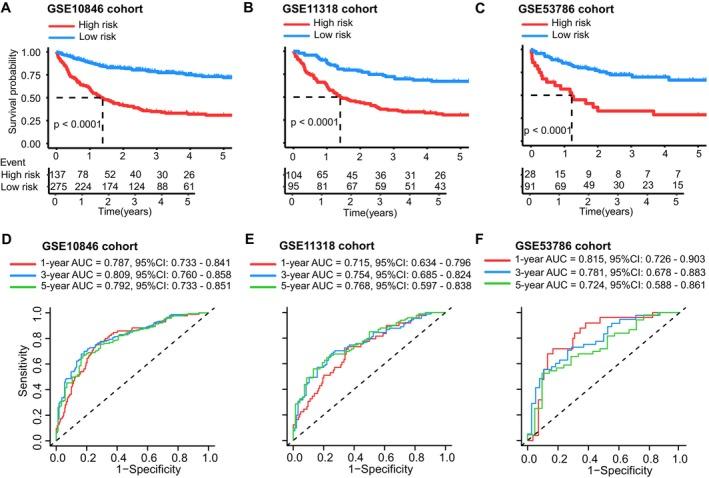
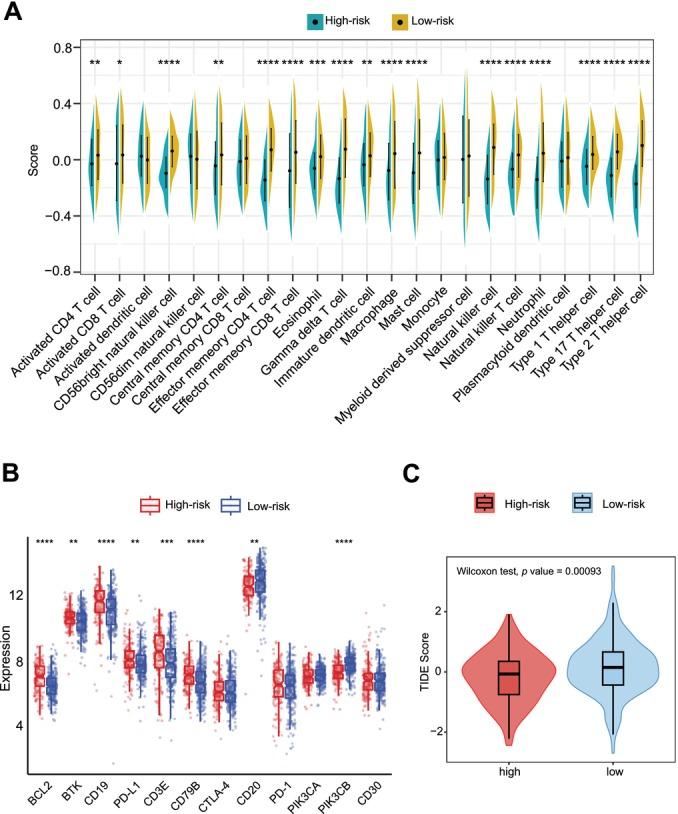
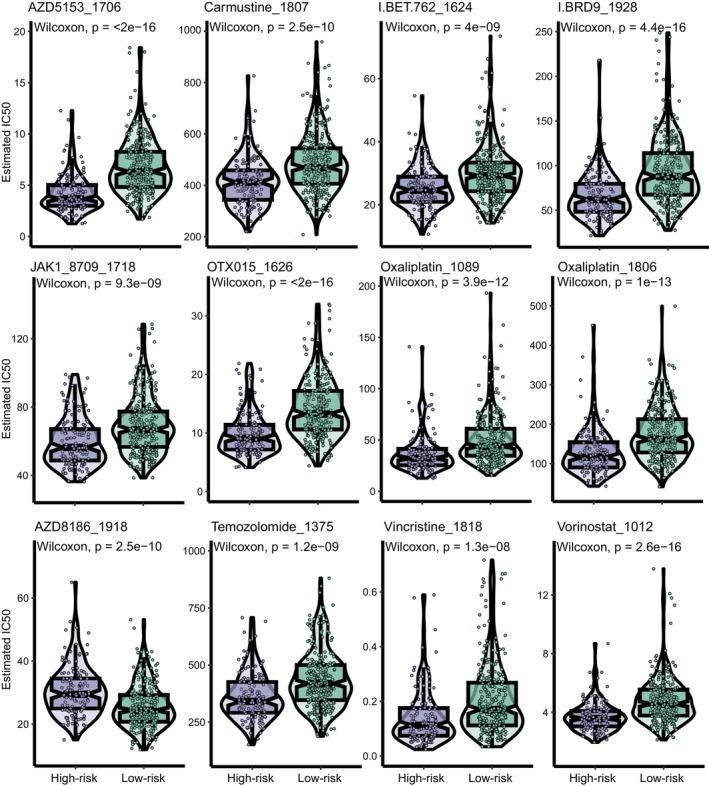
Eighteen prognostic MRGs (DNM1L, PUSL1, CHCHD4, COX7A1, CPT1A, CYP27A1, POLDIP2, PCK2, MRPL2, PDK3, PDK4, MARC2, ACSM3, COA7, THNSL1, ATAD3B, C15orf48, TOMM70A) were identified to construct the risk model. Remarkable discrepancies were observed between groups. The high-risk group had shorter overall survival, less immune infiltration, lower CD20 and higher PD-L1 expression than the low-risk group. Distinct immune microenvironment, responses to immunotherapy and predictive drug IC50 values were found between groups.
CONCLUSIONS
We established a novel prognostic mitochondria-related signature by machine learning algorithm, which also demonstrated outstanding predictive value in tumor microenvironment and responses to therapies.
背景
弥漫性大B细胞淋巴瘤(DLBCL)是最常见的非霍奇金淋巴瘤类型之一,具有明显的异质性。线粒体已被证明与肿瘤发生和进展密切相关,尤其是在DLBCL中。
目的
本研究旨在识别DLBCL中与预后相关的线粒体基因(MRG),并基于MRG和机器学习算法建立风险模型。
方法
从基因表达综合数据库(GEO)中获取转录组谱和临床信息。使用最小绝对收缩和选择算子(Lasso)回归算法定义风险模型,并在独立数据集中进一步检验其预后价值。根据风险评分将患者分为两个聚类,此外还基于风险评分和临床特征生成了列线图。比较了聚类之间的基因通路水平、微环境、靶向治疗相关基因的表达、对免疫治疗的反应、药物敏感性和体细胞突变状态。
结果
识别出18个与预后相关的MRG(DNM1L、PUSL1、CHCHD4、COX7A1、CPT1A、CYP27A1、POLDIP2、PCK2、MRPL2、PDK3、PDK4、MARC2、ACSM3、COA7、THNSL1、ATAD3B、C15orf48、TOMM70A)以构建风险模型。两组之间观察到显著差异。高风险组的总生存期较短,免疫浸润较少,CD20表达较低,PD-L1表达高于低风险组。两组之间发现了不同的免疫微环境、对免疫治疗的反应和预测药物IC50值。
结论
我们通过机器学习算法建立了一种新的与预后相关的线粒体特征,该特征在肿瘤微环境和治疗反应中也显示出出色的预测价值。
 Zotero 插件