
利用胰腺导管腺癌大量mRNA测序中血清和组织来源的细胞外囊泡提高诊断和预后的可预测性
Improved Predictability of Diagnosis and Prognosis Using Serum- and Tissue-Derived Extracellular Vesicles From Bulk mRNA Sequencing in Pancreatic Ductal Adenocarcinoma.
作者信息
Zhu Qian, Chen Zhang, Tian Ming, Yan Xin, Gongye Xiangdong, Liu Zhicheng, Zhao Anbang, Yang Zhiyong, Yuan Yufeng
机构信息
Department of Hepatobiliary and Pancreatic Surgery, Zhongnan Hospital of Wuhan University, Wuhan, China.
Clinical Medicine Research Center for Minimally Invasive Procedure of Hepatobiliary & Pancreatic Diseases of Hubei Province, Wuhan, China.
出版信息
Cancer Med. 2025 Jan;14(2):e70538. doi: 10.1002/cam4.70538.
BACKGROUND
Early-stage pancreatic ductal adenocarcinoma (PDAC) is frequently misdiagnosed, contributing to its high mortality rate. Exosomal microRNAs (miRNAs) have emerged as potential biomarkers for the early detection of PDAC.
AIMS
This study aimed to evaluate the feasibility of using exosomal miRNAs from PDAC tissues and serum as biomarkers for early detection and prognosis.
MATERIALS & METHODS: Exosomes were isolated from healthy individuals and PDAC patients via tissue and serum samples, then identified by analyzing their particle size and protein content. PDAC-specific exosomal miRNAs were identified using a microRNA array. A large cohort was subsequently recruited to validate these findings. The diagnostic capacity of the identified miRNAs was assessed using the Brier score and area under the curve (AUC). Verified miRNAs were also used to confirm intracellular mRNA change patterns.
RESULTS
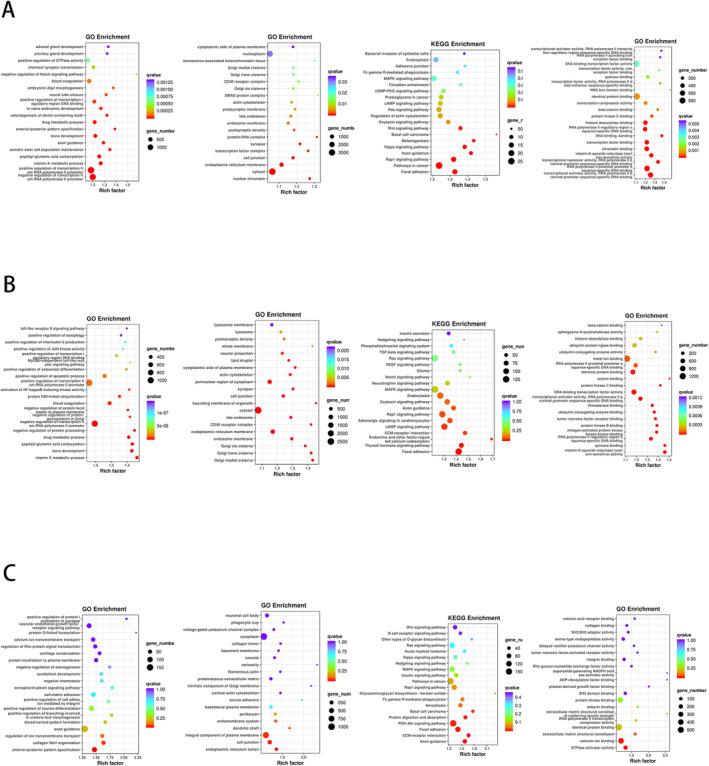
The combination of miR142-3p, miR148a-3p, and CA199 showed a higher AUC (0.747) compared to CA199 alone (0.716) in ROC curve analysis. Gene Ontology (GO) annotations revealed that the two-miRNA panel was associated with multiple oncogenic pathways.
DISCUSSION
142-3p and miR148a-3p were identified as specific to PDAC and, when combined with CA199, improved diagnostic accuracy. Their involvement in oncogenic pathways underscores their relevance as diagnostic and prognostic biomarkers.
CONCLUSION
MiR142-3p and miR148a-3p, alongside CA199, show promise as non-invasive biomarkers for early detection and prognosis of PDAC, improving diagnostic accuracy.
背景
早期胰腺导管腺癌(PDAC)经常被误诊,这导致其死亡率很高。外泌体微小RNA(miRNA)已成为早期检测PDAC的潜在生物标志物。
目的
本研究旨在评估使用来自PDAC组织和血清的外泌体miRNA作为早期检测和预后生物标志物的可行性。
材料与方法
通过组织和血清样本从健康个体和PDAC患者中分离外泌体,然后通过分析其粒径和蛋白质含量进行鉴定。使用miRNA芯片鉴定PDAC特异性外泌体miRNA。随后招募了一个大型队列来验证这些发现。使用Brier评分和曲线下面积(AUC)评估所鉴定miRNA的诊断能力。经验证的miRNA也用于确认细胞内mRNA的变化模式。
结果
在ROC曲线分析中,与单独的CA199(0.716)相比,miR142 - 3p、miR148a - 3p和CA199的组合显示出更高的AUC(0.747)。基因本体(GO)注释显示,双miRNA组合与多种致癌途径相关。
讨论
miR142 - 3p和miR148a - 3p被鉴定为PDAC特异性,与CA199联合使用时可提高诊断准确性。它们参与致癌途径突出了它们作为诊断和预后生物标志物的相关性。
结论
miR142 - 3p和miR148a - 3p与CA199一起,有望成为PDAC早期检测和预后的非侵入性生物标志物,提高诊断准确性。



 Zotero 插件