Department of Molecular Diagnostics and Experimental Therapeutics, Beckman Research Institute of City of Hope, Monrovia, California.
Department of Molecular Diagnostics and Experimental Therapeutics, Beckman Research Institute of City of Hope, Monrovia, California; Department of Surgery, The Chinese University of Hong Kong. Prince of Wales Hospital, Shatin, N.T., Hong Kong, SAR, China; Department of Biomedical Sciences, City University of Hong Kong, Hong Kong SAR, China.
Gastroenterology. 2022 Nov;163(5):1252-1266.e2. doi: 10.1053/j.gastro.2022.06.090. Epub 2022 Jul 16.
BACKGROUND & AIMS: Pancreatic ductal adenocarcinoma (PDAC) incidence is rising worldwide, and most patients present with an unresectable disease at initial diagnosis. Measurement of carbohydrate antigen 19-9 (CA19-9) levels lacks adequate sensitivity and specificity for early detection; hence, there is an unmet need to develop alternate molecular diagnostic biomarkers for PDAC. Emerging evidence suggests that tumor-derived exosomal cargo, particularly micro RNAs (miRNAs), offer an attractive platform for the development of cancer-specific biomarkers. Herein, genomewide profiling in blood specimens was performed to develop an exosome-based transcriptomic signature for noninvasive and early detection of PDAC.
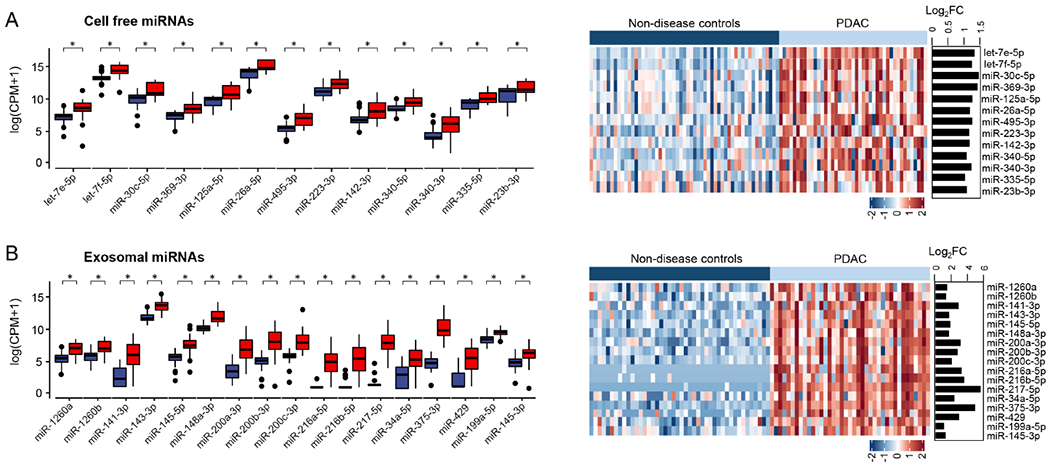
Small RNA sequencing was undertaken in a cohort of 44 patients with an early-stage PDAC and 57 nondisease controls. Using machine-learning algorithms, a panel of cell-free (cf) and exosomal (exo) miRNAs were prioritized that discriminated patients with PDAC from control subjects. Subsequently, the performance of the biomarkers was trained and validated in independent cohorts (n = 191) using quantitative reverse transcription polymerase chain reaction (qRT-PCR) assays.
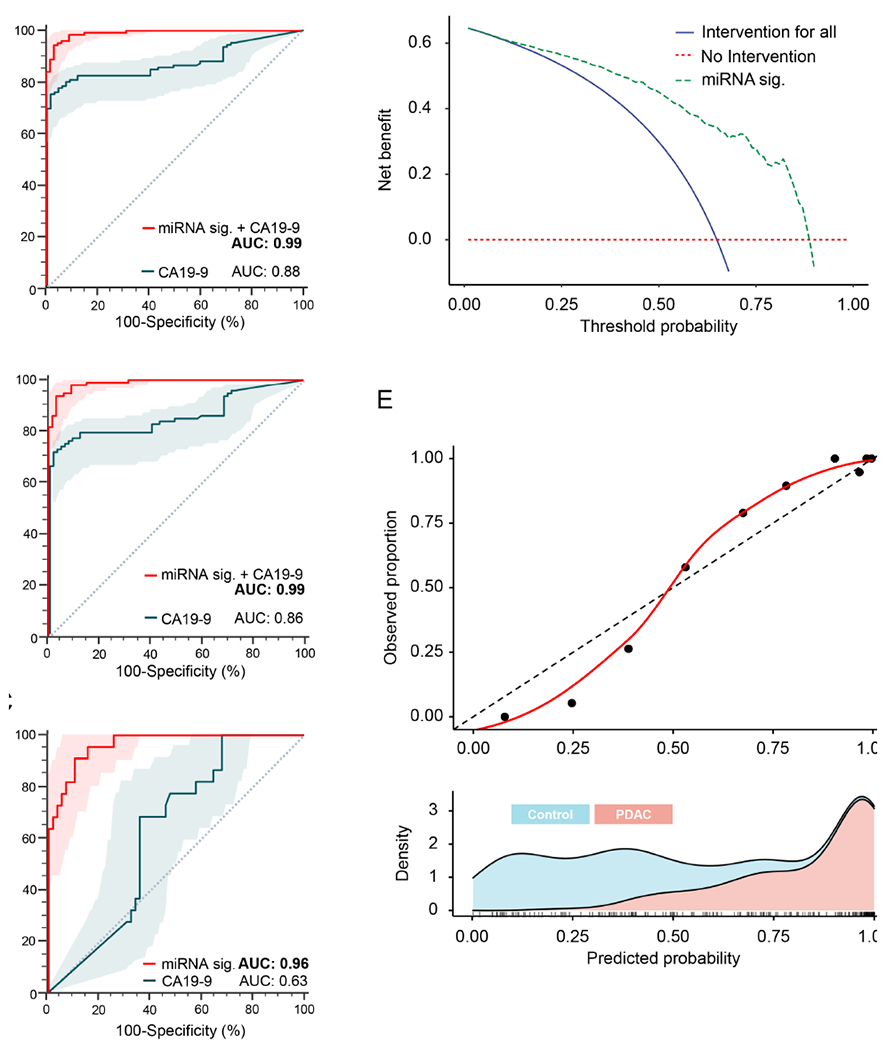
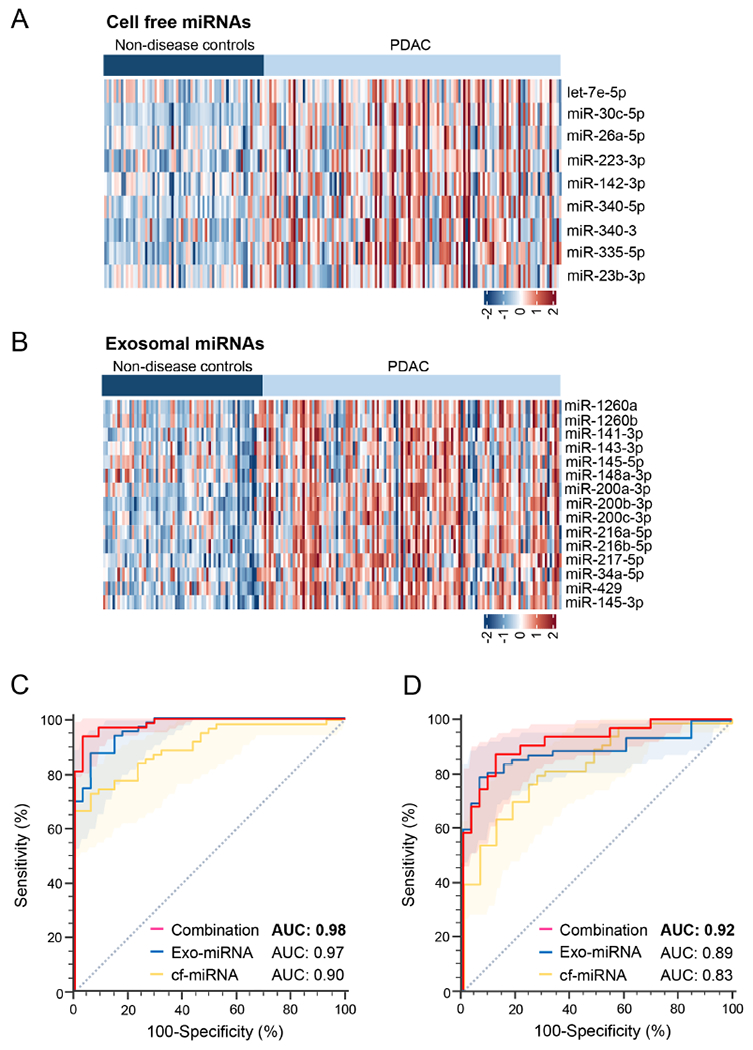
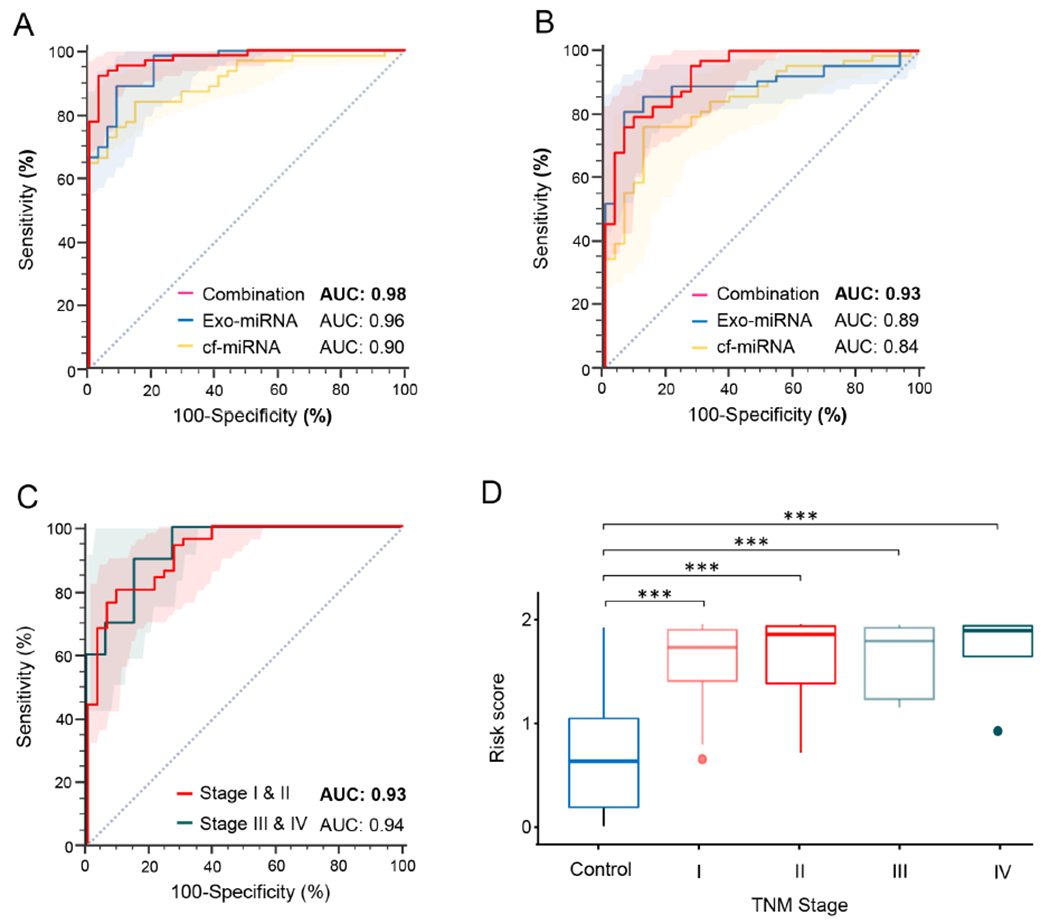
The sequencing analysis initially identified a panel of 30 overexpressed miRNAs in PDAC. Subsequently using qRT-PCR assays, the panel was reduced to 13 markers (5 cf- and 8 exo-miRNAs), which successfully identified patients with all stages of PDAC (area under the curve [AUC] = 0.98 training cohort; AUC = 0.93 validation cohort); but more importantly, was equally robust for the identification of early-stage PDAC (stages I and II; AUC = 0.93). Furthermore, this transcriptomic signature successfully identified CA19-9 negative cases (<37 U/mL; AUC = 0.96), when analyzed in combination with CA19-9 levels, significantly improved the overall diagnostic accuracy (AUC = 0.99 vs AUC = 0.86 for CA19-9 alone).
In this study, an exosome-based liquid biopsy signature for the noninvasive and robust detection of patients with PDAC was developed.
全球范围内胰腺癌(PDAC)的发病率正在上升,大多数患者在初始诊断时就已患有不可切除的疾病。糖链抗原 19-9(CA19-9)水平的测量对早期检测缺乏足够的敏感性和特异性;因此,需要开发用于 PDAC 的替代分子诊断生物标志物。新出现的证据表明,肿瘤衍生的外泌体货物,特别是 microRNAs(miRNAs),为开发癌症特异性生物标志物提供了一个有吸引力的平台。在此,对血液标本进行了全基因组谱分析,以开发一种基于外泌体的转录组特征,用于非侵入性和早期检测 PDAC。
对 44 例早期 PDAC 患者和 57 例非疾病对照者的血液标本进行小 RNA 测序。使用机器学习算法,对区分 PDAC 患者和对照组的细胞游离(cf)和外泌体(exo)miRNAs 进行了优先级排序。随后,使用定量逆转录聚合酶链反应(qRT-PCR)检测,在独立的队列(n=191)中对生物标志物的性能进行了训练和验证。
测序分析最初在 PDAC 中确定了一组 30 个过表达的 miRNA。随后使用 qRT-PCR 检测,该组被缩小到 13 个标志物(5 个 cf-和 8 个 exo-miRNAs),该标志物成功地识别了所有阶段的 PDAC 患者(训练队列 AUC=0.98;验证队列 AUC=0.93);但更重要的是,对早期 PDAC(I 期和 II 期)的识别同样稳健(AUC=0.93)。此外,当与 CA19-9 水平结合分析时,该转录组特征成功地识别了 CA19-9 阴性病例(<37 U/mL;AUC=0.96),显著提高了整体诊断准确性(AUC=0.99 比 CA19-9 单独使用时 AUC=0.86)。
在这项研究中,开发了一种基于外泌体的液体活检生物标志物,用于非侵入性和稳健地检测 PDAC 患者。