Norton Joseph, Stiff Patrick
Internal Medicine Department, Division of Hematology, Oncology, and Transplant, University of Minnesota, 516 Delaware Street SE, PWB 14-100, Minneapolis, MN, 55455, USA.
Internal Medicine Department, Division of Hematology-Oncology, Loyola University Medical Center, 2160 S 1St Ave, Maywood, IL, 60153, USA.
Discov Oncol. 2025 Jan 15;16(1):49. doi: 10.1007/s12672-025-01776-0.
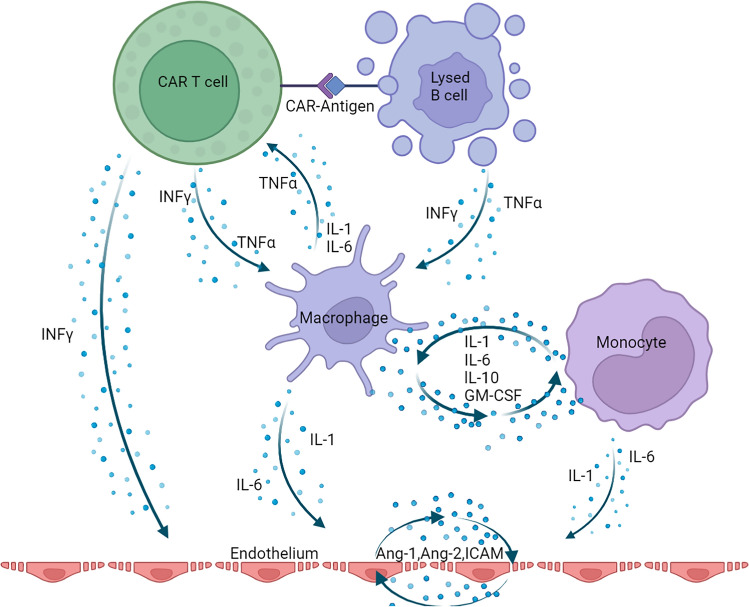
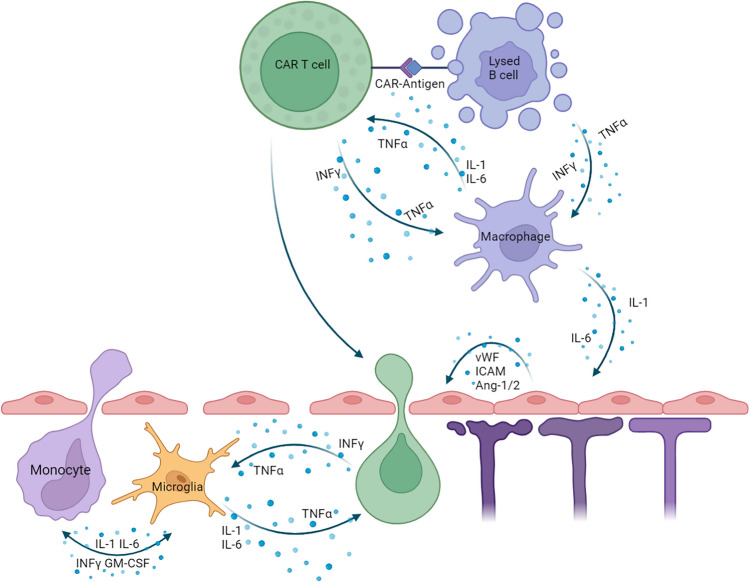
CAR-T cell therapies have risen to prominence over the last decade, and their indications are increasing with several products approved as early as second line in Large B Cell non-Hodgkin Lymphomas. Their major toxicities are the cytokine release syndrome (CRS) and the Immune-effector Cell Associated Neurotoxicity Syndrome (ICANS). These entities involve a hyperinflammatory cascade which is amplified through the mononuclear phagocytic system (MPS). Herein, we review the immune mediated adverse events related to CAR therapy, including their pathophysiologies, and current therapies. In particular, we discuss the emerging role of the MPS in both the toxicity and efficacy of CAR-T therapy, and possible avenues for the modulation of the MPS to optimize efficacy while minimizing toxicity.
在过去十年中,嵌合抗原受体T细胞(CAR-T)疗法已崭露头角,随着多款产品早在大B细胞非霍奇金淋巴瘤的二线治疗中获批,其适应症也在不断增加。其主要毒性是细胞因子释放综合征(CRS)和免疫效应细胞相关神经毒性综合征(ICANS)。这些病症涉及通过单核吞噬细胞系统(MPS)放大的高炎症级联反应。在此,我们综述与CAR疗法相关的免疫介导不良事件,包括其病理生理学及当前治疗方法。特别地,我们讨论了MPS在CAR-T疗法的毒性和疗效中所起的新作用,以及调节MPS以优化疗效同时最小化毒性的可能途径。