Kruger Natalie, Plinsinga Melanie, Window Peter, Hayes Sandra, Bunzli Samantha
School of Health Sciences and Social Work, Griffith University, Nathan, Queensland, Australia
Physiotherapy Department, Royal Brisbane and Women's Hospital, Herston, Queensland, Australia.
BMJ Open. 2025 Jan 20;15(1):e089789. doi: 10.1136/bmjopen-2024-089789.
Knowledgeable doctors are needed for timely assessment, diagnosis and management of lymphoedema. This qualitative study explored the thoughts and feelings of Australian interns (medical graduates in their first postgraduate year) towards (i) their understanding of the lymphatic system and lymphoedema, (ii) curricula pertaining to lymphoedema within their Australian medical degree and (iii) how they perceive that their understanding and medical training in lymphoedema influence their clinical practice.
Qualitative semistructured interviews were conducted with interns employed within their first postgraduate year in Australia. Interviews were conducted via Microsoft Teams or telephone, video-recorded, transcribed verbatim and analysed using thematic analysis. Inductive (data-driven) codes identified in the data were organised into themes.
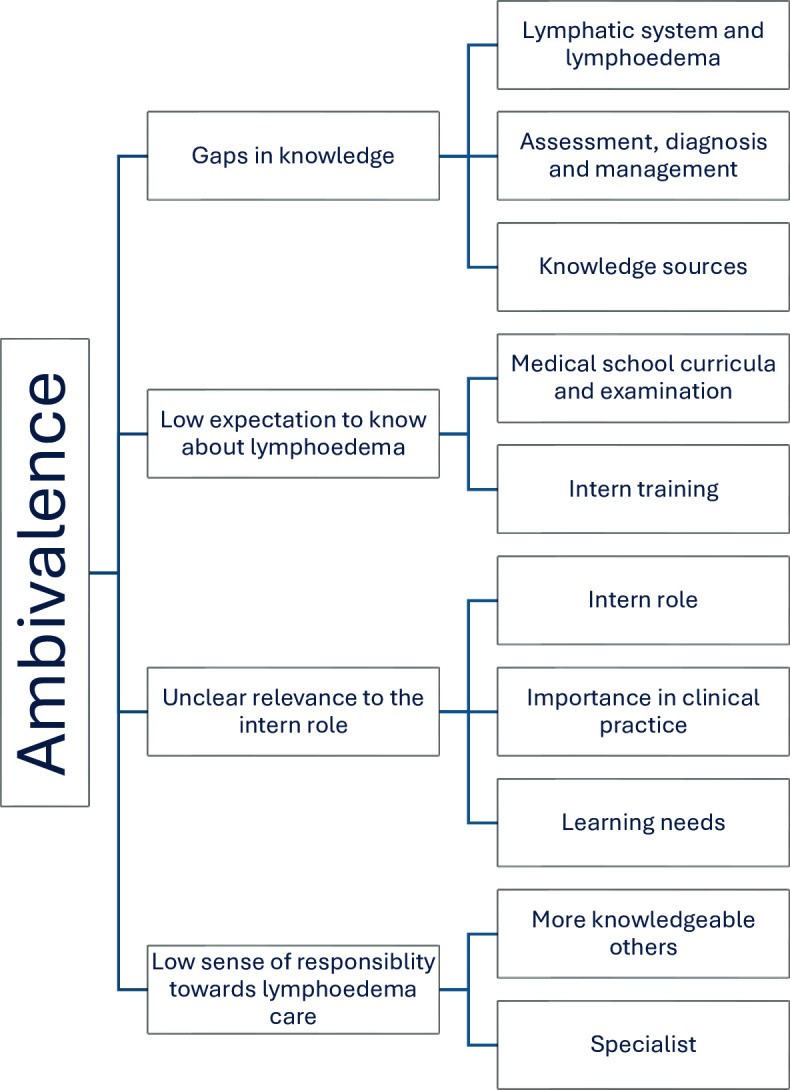
The overarching theme was one of ambivalence. Participants noted that they had knowledge gaps related to lymphoedema (theme 1), but were not concerned by them, as they did not consider lymphoedema a condition they were expected to know about at medical school or in clinical practice (theme 2). Furthermore, they questioned the relevance of lymphoedema to their role (theme 3) and they considered lymphoedema care to be the responsibility of others (theme 4).
These findings suggest a discord between what interns in this study recall being taught about lymphoedema and what current literature suggests newly graduated doctors should know. Future research is needed to explore the extent to which these findings extend to the perceptions of more senior doctors and how these findings impact the unmet needs of people with lymphoedema in Australia.
淋巴水肿的及时评估、诊断和管理需要知识渊博的医生。这项定性研究探讨了澳大利亚实习医生(医学专业毕业后第一年的毕业生)对于以下方面的想法和感受:(i)他们对淋巴系统和淋巴水肿的理解;(ii)澳大利亚医学学位课程中与淋巴水肿相关的内容;(iii)他们如何看待自己对淋巴水肿的理解和医学培训对其临床实践的影响。
对在澳大利亚完成研究生一年级实习的医生进行了定性半结构化访谈。访谈通过Microsoft Teams或电话进行,进行视频录制,逐字转录,并使用主题分析进行分析。数据中识别出的归纳性(数据驱动)代码被组织成主题。
首要主题是矛盾心理。参与者指出他们在淋巴水肿方面存在知识空白(主题1),但并不为此担忧,因为他们认为淋巴水肿不是他们在医学院或临床实践中应该了解的病症(主题2)。此外,他们质疑淋巴水肿与他们角色的相关性(主题3),并认为淋巴水肿护理是其他人的责任(主题4)。
这些发现表明,本研究中的实习医生所回忆起的关于淋巴水肿的所学内容与当前文献中提出的新毕业医生应知晓的内容之间存在不一致。需要进一步研究以探讨这些发现扩展到更资深医生认知的程度,以及这些发现如何影响澳大利亚淋巴水肿患者未得到满足的需求。