Escobar de González Wendy Yesenia, Aguirre de Rodríguez Katleen Argentina, Castañeda Monroy Vianney, Patiño-Marín Nuria, Medina-Solís Carlo E, Niño-Martínez Nereyda, Terán-Figueroa Yolanda
Research Center, Faculty of Dentistry, University of El Salvador, San Salvador, SLV.
Health Research and Development Center, University of El Salvador, San Salvador, SLV.
Cureus. 2024 Dec 21;16(12):e76140. doi: 10.7759/cureus.76140. eCollection 2024 Dec.
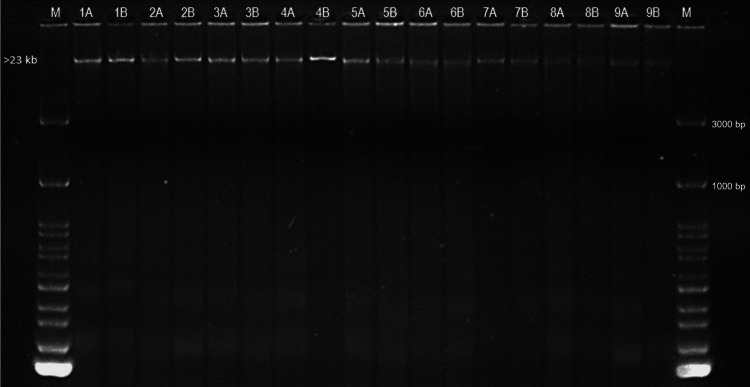
In large-scale molecular studies, a protocol that generates high yields and quality DNA for future polymerase chain reaction (PCR) assays is needed. The collection of buccal cells by cytobrush may represent an efficient, noninvasive, and inexpensive method for obtaining genetic material from school populations. The aim of this study was to develop a method to obtain genomic DNA from buccal cells of schoolchildren, and the DNA was extracted immediately after collecting the buccal cell samples and after storing the samples for 8 months at -20 °C to establish the feasibility of the method for epidemiological studies.
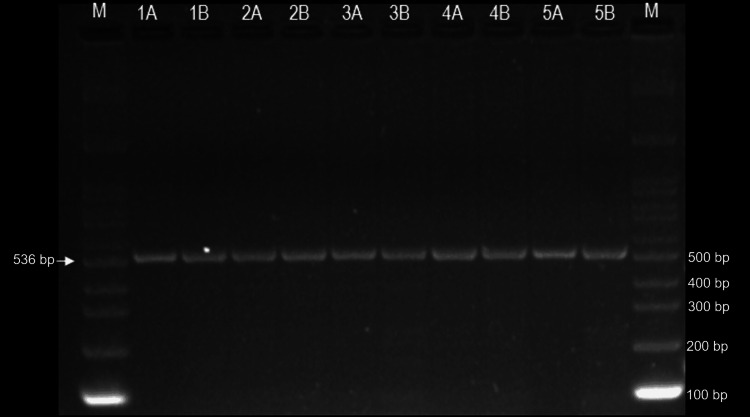
Forty-five Salvadoran schoolchildren aged between seven and fifteen years participated. Two samples of buccal cells were collected with cytobrush from each subject. The yield of the extracted DNA was evaluated by spectrophotometry, and purity was measured using optical density (OD) 260/280. The functional quality was assessed by PCR and established by amplifying the 536 bp region of the gene.
The yield was 65.70 μg for the immediate extraction group and 47.63 μg for the extraction group after eight months of storage at -20°C. The purity measured was 2.0 for immediate extraction and 1.9 for extraction after eight months. The functional quality was greater than 90% for both groups.
This protocol can be used to obtain DNA of high yield, purity, and functional quality from schoolchildren for genetic epidemiological studies based on PCR. This method is effective whether DNA is extracted immediately after collection or after buccal cell samples have been stored at 20°C for eight months.
在大规模分子研究中,需要一种能为未来聚合酶链反应(PCR)检测产生高产率和高质量DNA的方案。通过细胞刷收集颊细胞可能是一种从学校人群中获取遗传物质的有效、非侵入性且廉价的方法。本研究的目的是开发一种从学童颊细胞中获取基因组DNA的方法,并在收集颊细胞样本后立即以及在-20°C下储存8个月后提取DNA,以确定该方法在流行病学研究中的可行性。
45名年龄在7至15岁之间的萨尔瓦多学童参与了研究。从每个受试者身上用细胞刷收集两份颊细胞样本。通过分光光度法评估提取的DNA产量,并使用光密度(OD)260/280测量纯度。通过PCR评估功能质量,并通过扩增该基因的536 bp区域来确定。
立即提取组的产量为65.70μg,在-20°C下储存8个月后的提取组产量为47.63μg。立即提取时测得的纯度为2.0,8个月后提取的纯度为1.9。两组的功能质量均大于90%。
该方案可用于从学童中获取高产率、高纯度和高质量功能的DNA,用于基于PCR的遗传流行病学研究。无论在收集后立即提取DNA还是在颊细胞样本在20°C下储存8个月后提取,该方法都是有效的。