Ge Beilei, McDonald Ryan C, Yang Qianru, Domesle Kelly J, Sarria Saul, Li Xin, Hsu Chih-Hao, Jarvis Karen G, Tadesse Daniel A
Office of Applied Science, Center for Veterinary Medicine, U.S. Food and Drug Administration, Laurel, Maryland, USA.
Office of Applied Microbiology and Technology, U.S. Food and Drug Administration, Laurel, Maryland, USA.
Appl Environ Microbiol. 2025 Feb 19;91(2):e0223024. doi: 10.1128/aem.02230-24. Epub 2025 Jan 22.
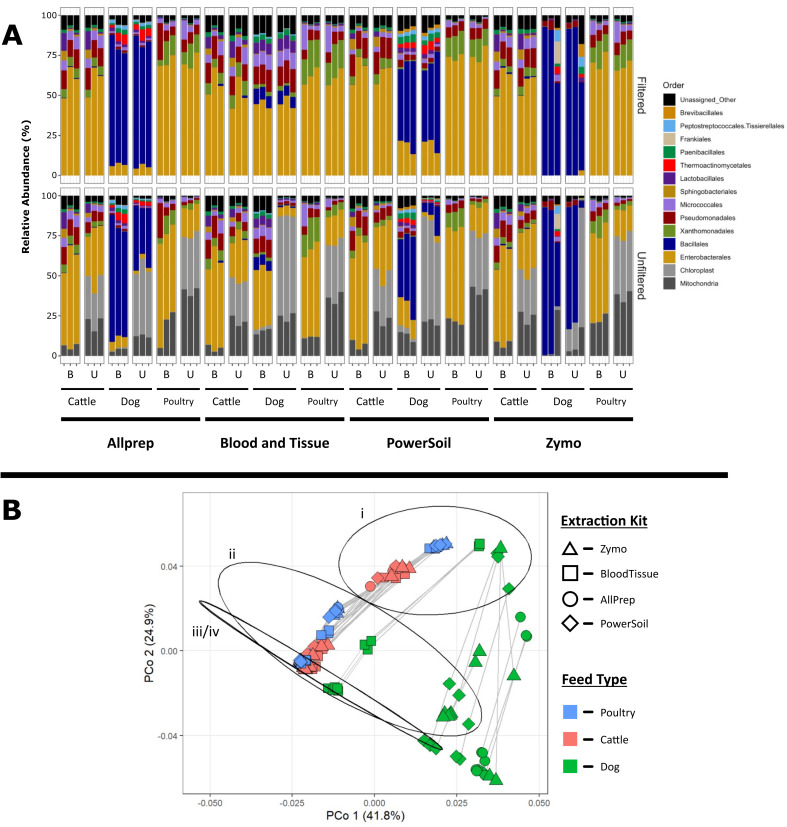
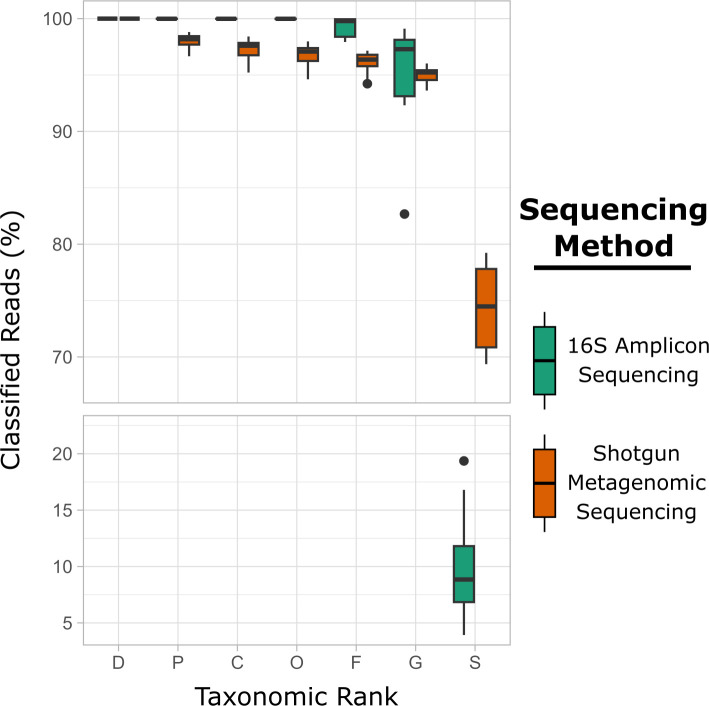
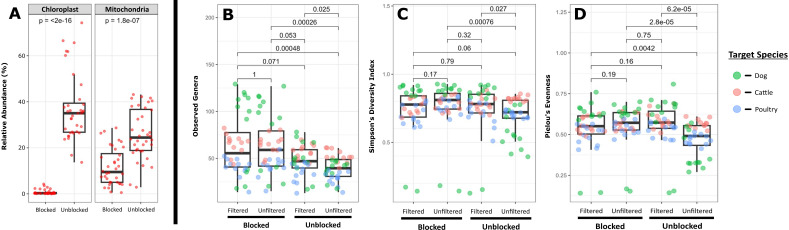
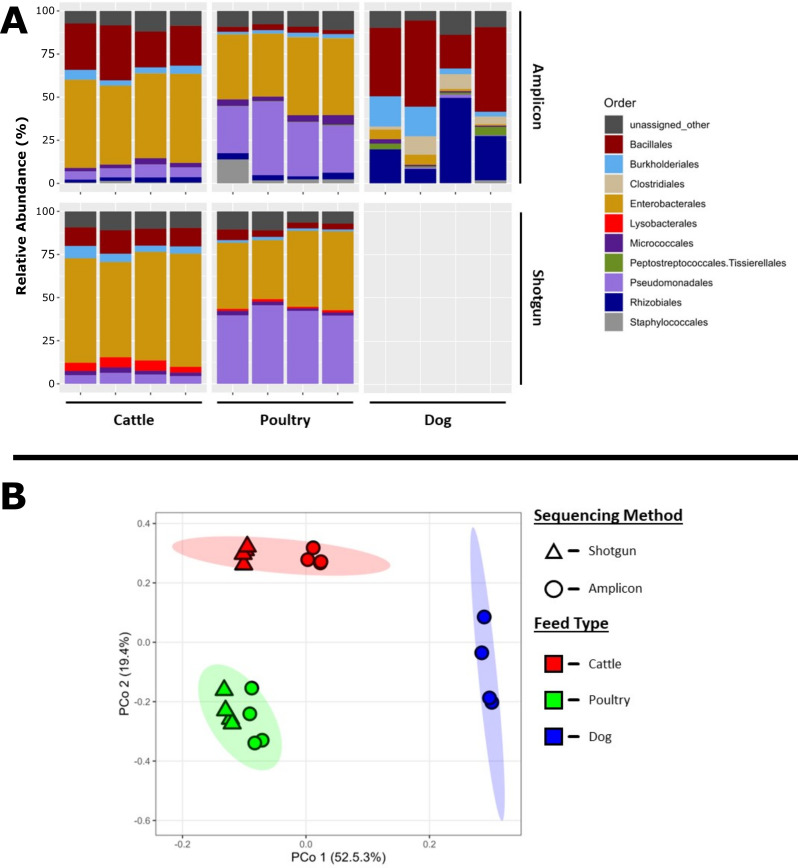
As a diverse and complex food matrix, the animal food microbiota and repertoire of antimicrobial resistance (AMR) genes remain to be better understood. In this study, 16S rRNA gene amplicon sequencing and shotgun metagenomics were applied to three types of animal food samples (cattle feed, dry dog food, and poultry feed). ZymoBIOMICS mock microbial community was used for workflow optimization including DNA extraction kits and bead-beating conditions. The four DNA extraction kits (AllPrep PowerViral DNA/RNA Kit, DNeasy Blood & Tissue Kit, DNeasy PowerSoil Kit, and ZymoBIOMICS DNA Miniprep Kit) were compared in animal food as well as the use of peptide nucleic acid blockers for 16S rRNA gene amplicon sequencing. Distinct microbial community profiles were generated, which varied by animal food type and DNA extraction kit. Employing peptide nucleic acid blockers prior to 16S rRNA gene amplicon sequencing was comparable with post-sequencing filtering at removing chloroplast and mitochondrial sequences. There was a good agreement between 16S rRNA gene amplicon sequencing and shotgun metagenomics on community profiles in animal feed data sets; however, they differed in taxonomic resolution, with the latter superior at resolving at the species level. Although the overall prevalence of AMR genes was low, resistome analysis of animal feed data sets by shotgun metagenomics revealed 10 AMR gene/protein families, including beta-lactamases, erythromycin/lincomycin/pristinamycin/tylosin, fosfomycin, phenicol, and quinolone. Future expansion of microbiome and resistome profiling in animal food will help better understand the bacterial and AMR gene diversity in these commodities and help guide pathogen control and AMR prevention efforts.IMPORTANCEWith the growing interest and application of metagenomics in understanding the structure/composition and function of diverse microbial communities along the One Health continuum, this study represents one of the first attempts to employ these advanced sequencing technologies to characterize the microbiota and AMR genes in animal food. We unraveled the effects of DNA extraction kits on sample analysis by 16S rRNA gene amplicon sequencing and showed similar efficacies of two strategies at removing chloroplast and mitochondrial reads. The in-depth analysis using shotgun metagenomics shed light on the community compositions and the presence of an array of AMR genes in animal food. This exploration of microbiomes and resistomes in representative animal food samples by both sequencing approaches laid important groundwork for future metagenomic investigations to gain a better understanding of the baseline/core microbiomes and associated AMR functions in these diverse commodities and help guide pathogen control and AMR prevention efforts.
作为一种多样且复杂的食物基质,动物食物中的微生物群和抗菌药物耐药性(AMR)基因库仍有待更深入了解。在本研究中,16S rRNA基因扩增子测序和鸟枪法宏基因组学被应用于三种动物食物样本(牛饲料、干狗粮和家禽饲料)。使用ZymoBIOMICS模拟微生物群落对包括DNA提取试剂盒和珠磨条件在内的流程进行优化。在动物食物样本中比较了四种DNA提取试剂盒(AllPrep PowerViral DNA/RNA试剂盒、DNeasy Blood & Tissue试剂盒、DNeasy PowerSoil试剂盒和ZymoBIOMICS DNA微量制备试剂盒)以及在16S rRNA基因扩增子测序中使用肽核酸阻断剂的情况。生成了不同的微生物群落图谱,这些图谱因动物食物类型和DNA提取试剂盒而异。在16S rRNA基因扩增子测序之前使用肽核酸阻断剂在去除叶绿体和线粒体序列方面与测序后过滤相当。在动物饲料数据集的群落图谱方面,16S rRNA基因扩增子测序和鸟枪法宏基因组学之间有很好的一致性;然而,它们在分类分辨率上有所不同,后者在物种水平的分辨率上更具优势。尽管AMR基因的总体流行率较低,但通过鸟枪法宏基因组学对动物饲料数据集进行的耐药基因组分析揭示了10个AMR基因/蛋白家族,包括β-内酰胺酶、红霉素/林可霉素/ pristinamycin /泰乐菌素、磷霉素、氯霉素和喹诺酮。未来对动物食物中微生物组和耐药基因组分析的扩展将有助于更好地了解这些商品中的细菌和AMR基因多样性,并有助于指导病原体控制和AMR预防工作。
重要性
随着宏基因组学在理解“同一健康”连续体中不同微生物群落的结构/组成和功能方面的兴趣和应用不断增加,本研究是首次尝试使用这些先进测序技术来表征动物食物中的微生物群和AMR基因之一。我们揭示了DNA提取试剂盒对16S rRNA基因扩增子测序样本分析的影响,并表明两种去除叶绿体和线粒体读数的策略具有相似的效果。使用鸟枪法宏基因组学的深入分析揭示了动物食物中的群落组成和一系列AMR基因的存在。通过这两种测序方法对代表性动物食物样本中的微生物组和耐药基因组进行的探索为未来的宏基因组学研究奠定了重要基础,以便更好地了解这些不同商品中的基线/核心微生物组以及相关的AMR功能,并有助于指导病原体控制和AMR预防工作。