Megli Christina J, Carlin Sophia M, Giacobe Elizabeth J, Hillebrand Gideon H, Hooven Thomas A
Department of Obstetrics and Gynecology, University of Pittsburgh School of Medicine, Pittsburgh, USA.
Magee-Womens Research Institute, UPMC Medical Center, Pittsburgh, USA.
Virulence. 2025 Dec;16(1):2451173. doi: 10.1080/21505594.2025.2451173. Epub 2025 Jan 23.
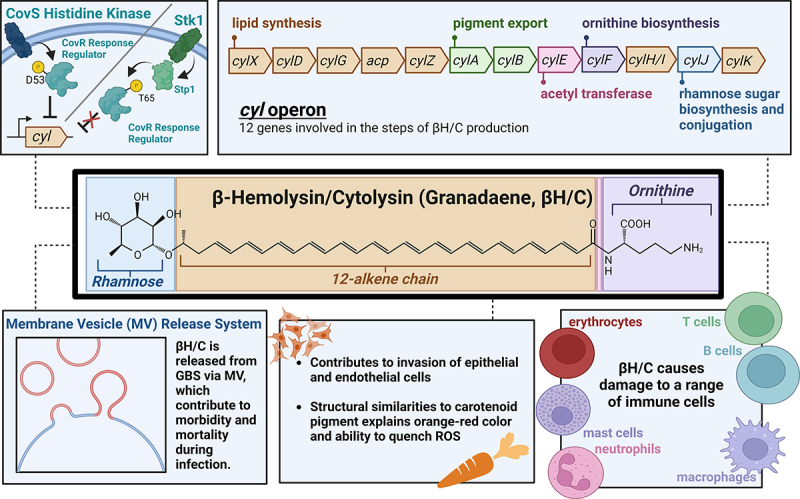
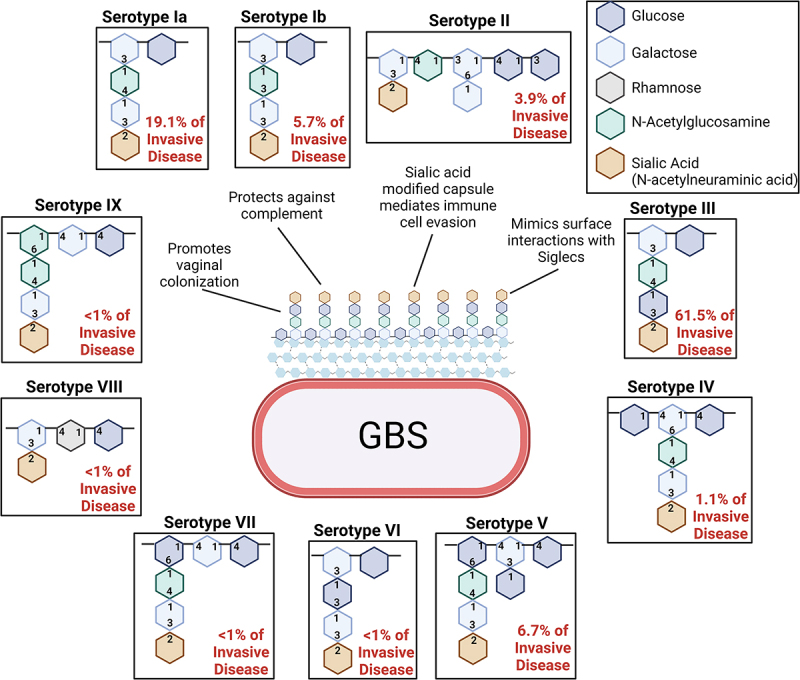
This review summarizes key virulence factors associated with group B (GBS), a significant pathogen particularly affecting pregnant women, fetuses, and infants. Beginning with an introduction to the historical transition of GBS from a zoonotic pathogen to a prominent cause of human infections, particularly in the perinatal period, the review describes major disease manifestations caused by GBS, including sepsis, meningitis, chorioamnionitis, pneumonia, and others, linking each to specific virulence mechanisms. A detailed exploration of the genetic basis for GBS pathogenicity follows, emphasizing the roles of capsules in pathogenesis and immune evasion. The paper also examines the molecular structures and functions of key GBS surface proteins, such as pili, serine-rich repeat proteins, and fibrinogen-binding proteins, which facilitate colonization and disease. Additionally, the review discusses the significance of environmental sensing and response systems, like the two-component systems, in adapting GBS to different host environments. We conclude by addressing current efforts in vaccine development, underscoring the need for effective prevention strategies against this pervasive pathogen.
本综述总结了与B族链球菌(GBS)相关的关键毒力因子,GBS是一种重要病原体,尤其会影响孕妇、胎儿和婴儿。本综述首先介绍了GBS从一种人畜共患病原体到人类感染(尤其是围产期感染)的主要病因的历史转变,接着描述了GBS引起的主要疾病表现,包括败血症、脑膜炎、绒毛膜羊膜炎、肺炎等,并将每种表现与特定的毒力机制联系起来。随后详细探讨了GBS致病性的遗传基础,强调了荚膜在发病机制和免疫逃逸中的作用。本文还研究了GBS关键表面蛋白的分子结构和功能,如菌毛、富含丝氨酸重复蛋白和纤维蛋白原结合蛋白,这些蛋白有助于细菌定植和致病。此外,综述还讨论了环境感知和应答系统(如双组分系统)在使GBS适应不同宿主环境方面的重要性。我们在结尾处论述了当前疫苗研发工作,强调了针对这种普遍存在的病原体制定有效预防策略的必要性。