Robles-Vera Iñaki, Jarit-Cabanillas Aitor, Brandi Paola, Martínez-López María, Martínez-Cano Sarai, Rodrigo-Tapias Manuel, Femenía-Muiña Marcos, Redondo-Urzainqui Ana, Nuñez Vanesa, González-Correa Cristina, Moleón Javier, Duarte Juan, Conejero Laura, Mata-Martínez Pablo, Díez-Rivero Carmen María, Bergón-Gutiérrez Marta, Fernández-López Iván, Gómez Manuel J, Quintas Ana, Dopazo Ana, Sánchez-Cabo Fátima, Pariente Esther, Del Fresno Carlos, Subiza José Luis, Iborra Salvador, Sancho David
Centro Nacional de Investigaciones Cardiovasculares (CNIC), Madrid, Spain.
Centro Nacional de Investigaciones Cardiovasculares (CNIC), Madrid, Spain; Department of Immunology, Ophthalmology and ENT, School of Medicine, Universidad Complutense de Madrid, 12 de Octubre Health Research Institute (imas12), Madrid, Spain.
Immunity. 2025 Feb 11;58(2):381-396.e9. doi: 10.1016/j.immuni.2024.12.012. Epub 2025 Jan 22.
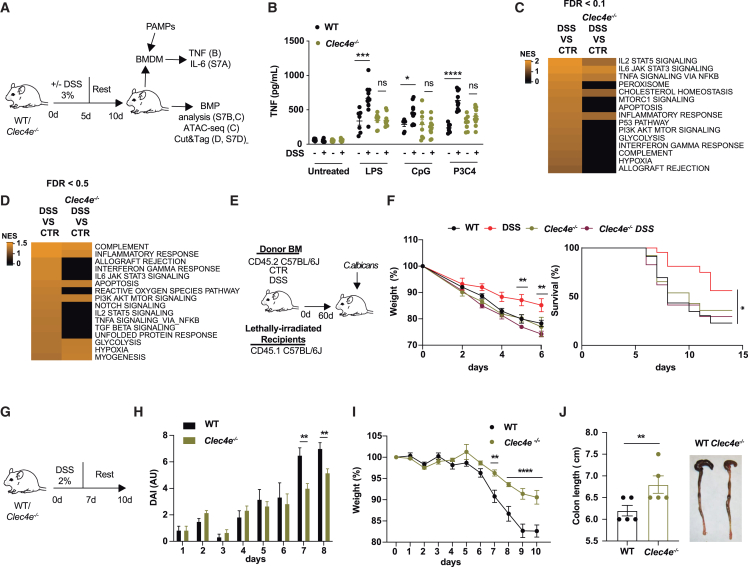
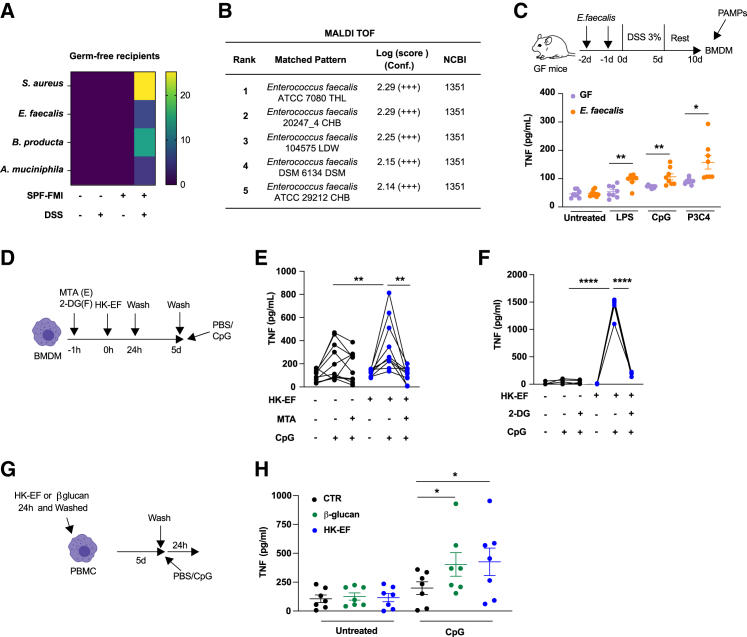
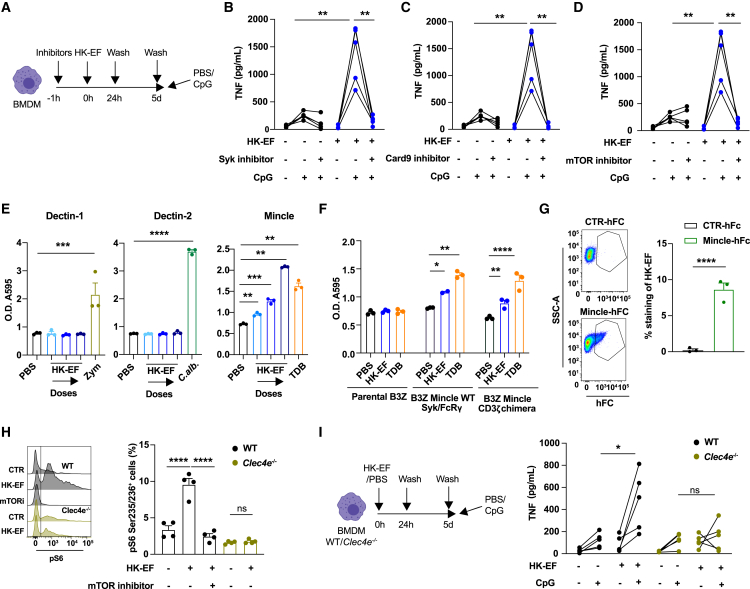
Impairment of the intestinal barrier allows the systemic translocation of commensal bacteria, inducing a proinflammatory state in the host. Here, we investigated innate immune responses following increased gut permeability upon administration of dextran sulfate sodium (DSS) in mice. We found that Enterococcus faecalis translocated to the bone marrow following DSS treatment and induced trained immunity (TI) hallmarks in bone-marrow-derived mouse macrophages and human monocytes. DSS treatment or heat-killed E. faecalis reprogrammed bone marrow progenitors (BMPs), resulting in enhanced inflammatory responses in vitro and in vivo and protection against subsequent pathogen infections. The C-type lectin receptor Mincle (Clec4e) was essential for E. faecalis-induced TI in BMPs. Clec4e mice showed impaired TI upon E. faecalis administration and reduced pathology following DSS treatment. Thus, Mincle sensing of E. faecalis induces TI that may have long-term effects on pathologies associated with increased gut permeability.
肠道屏障受损会使共生细菌发生全身移位,从而在宿主体内引发促炎状态。在此,我们研究了在小鼠中给予硫酸葡聚糖钠(DSS)后肠道通透性增加时的固有免疫反应。我们发现,粪肠球菌在DSS处理后转移至骨髓,并在骨髓来源的小鼠巨噬细胞和人单核细胞中诱导出训练免疫(TI)特征。DSS处理或热灭活的粪肠球菌对骨髓祖细胞(BMP)进行了重编程,导致体内外炎症反应增强,并对随后的病原体感染产生保护作用。C型凝集素受体Mincle(Clec4e)对粪肠球菌诱导的BMP中的TI至关重要。给予粪肠球菌后,Clec4e基因敲除小鼠表现出TI受损,且DSS处理后的病理变化减轻。因此,Mincle对粪肠球菌的识别诱导了TI,这可能对与肠道通透性增加相关的病理状况产生长期影响。