Gautam Namrata, Dutta Debopriya, Mittal Saurabh, Alam Perwez, Emad Nasr A, Al-Sabri Mohamed H, Verma Suraj Pal, Talegaonkar Sushama
Department of Pharmaceutics, School of Pharmaceutical Sciences, Delhi Pharmaceutical Sciences & Research University, Pushp Vihar, Sector 3, New Delhi, 110017, India.
Department of Pharmaceutics, Amity Institute of Pharmacy, Amity University, Noida, 201303, U.P, India.
Sci Rep. 2025 Jan 23;15(1):2967. doi: 10.1038/s41598-025-85463-8.
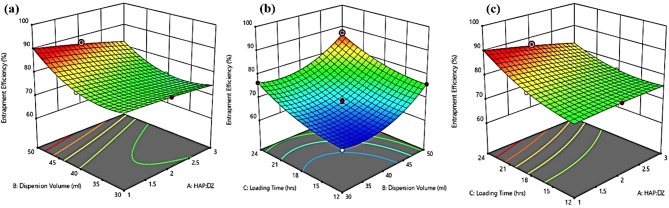
The repercussions of hormone replacement therapy (HRT) and bisphosphonates pose serious clinical challenges and warrant novel therapies for osteoporosis in menopausal women. To confront this issue, the present research aimed to design and fabricate daidzein (DZ); a phytoestrogen-loaded hydroxyapatite nanoparticles to mimic and compensate for synthetic estrogens and biomineralization. Hypothesizing this bimodal approach, hydroxyapatite nanoparticles (HAPNPs) were synthesized using the chemical-precipitation method followed by drug loading (DZHAPNPs) via sorption. The developed nanoparticles were optimized by "Design-Expert" software and underwent comprehensives in-vitro and in-vivo characterizations. The particle sizes of HAPNPs and DZHAPNPs were found to be 118.9 ± 0.15 nm and 129.3 ± 0.65 nm, respectively, consistent with their FESEM and TEM images. A notable entrapment efficiency of 87.23 ± 0.97% and drug release of 91 ± 0.85% from DZHAPNPs was observed over 90 h at pH 7.4. Moreover, the XRD and FTIR results confirmed the amorphization and compatibility of DZHAPNPs. TGA analysis indicated that the thermal stability of blank and drug-loaded nanoparticles was up to 900 °C. In an in vivo pharmacokinetic investigation, three-fold increased bioavailability of DZHAPNPs (AUC = 7427.6 µg/mLh) was obtained in comparison to daidzein solution (AUC = 2299.7 µg/mLh). The comprehensive results of the study indicate that bioceramic nanoparticles are potential carriers for DZ delivery.
激素替代疗法(HRT)和双膦酸盐的不良反应带来了严峻的临床挑战,因此需要为绝经后女性的骨质疏松症开发新的治疗方法。为解决这一问题,本研究旨在设计并制备大豆苷元(DZ)负载的羟基磷灰石纳米颗粒,一种植物雌激素负载的纳米颗粒,以模拟和补充合成雌激素并实现生物矿化。基于这种双功能方法的假设,采用化学沉淀法合成了羟基磷灰石纳米颗粒(HAPNPs),随后通过吸附法进行药物负载(DZHAPNPs)。通过“Design-Expert”软件对制备的纳米颗粒进行优化,并进行了全面的体外和体内表征。HAPNPs和DZHAPNPs的粒径分别为118.9±0.15 nm和129.3±0.65 nm,与场发射扫描电子显微镜(FESEM)和透射电子显微镜(TEM)图像一致。在pH 7.4条件下,DZHAPNPs在90小时内的包封率高达87.23±0.97%,药物释放率为91±0.85%。此外,X射线衍射(XRD)和傅里叶变换红外光谱(FTIR)结果证实了DZHAPNPs的非晶化和相容性。热重分析(TGA)表明,空白和载药纳米颗粒的热稳定性高达900℃。在体内药代动力学研究中,与大豆苷元溶液(AUC = 2299.7 µg/mLh)相比,DZHAPNPs的生物利用度提高了三倍(AUC = 7427.6 µg/mLh)。该研究的综合结果表明,生物陶瓷纳米颗粒是递送DZ的潜在载体。