Kawai Tomoko, Jwa Seung Chik, Ogawa Kohei, Tanaka Hisako, Aoto Saki, Kamura Hiromi, Morisaki Naho, Fujiwara Takeo, Hata Kenichiro
Division of Fetal Development, National Research Institute for Child Health and Development, Tokyo 157-8535, Japan.
Department of Obstetrics and Gynecology, Jichi Medical University, Shimono 329-0498, Japan.
Nutrients. 2025 Jan 20;17(2):368. doi: 10.3390/nu17020368.
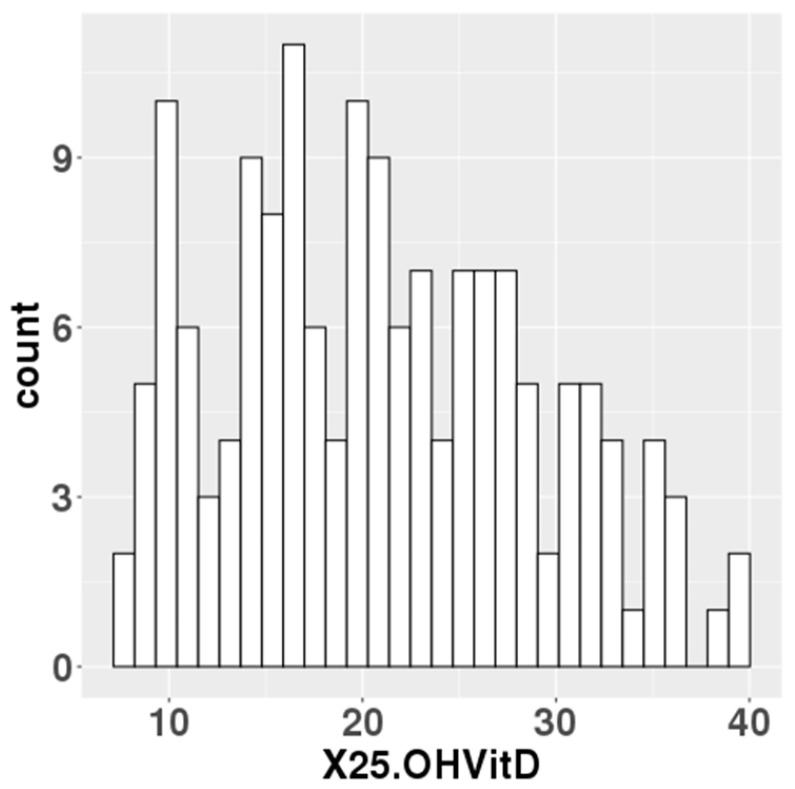
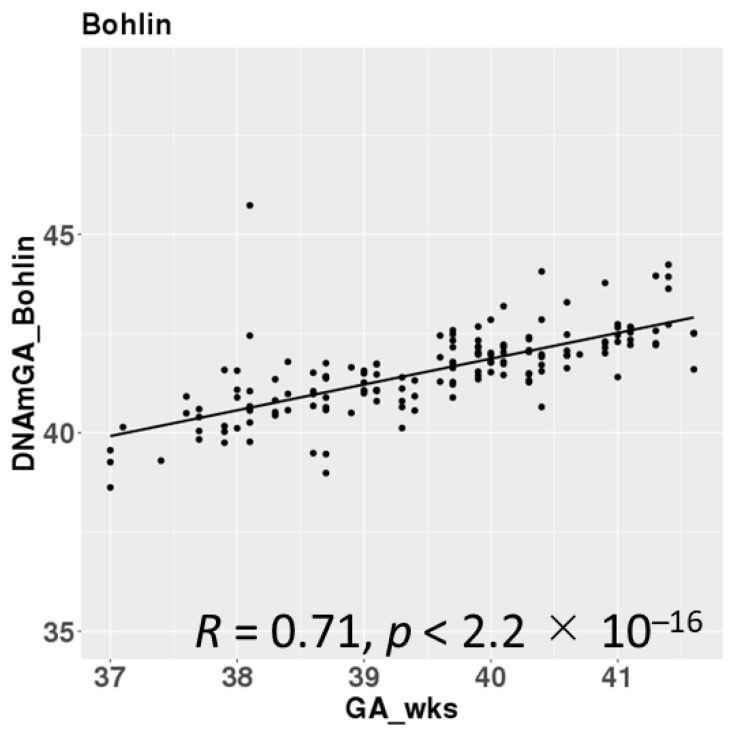
BACKGROUND/OBJECTIVES: The DNA methylation of neonatal cord blood can be used to accurately estimate gestational age. This is known as epigenetic gestational age. The greater the difference between epigenetic and chronological gestational age, the greater the association with an inappropriate perinatal fetal environment and development. Maternal vitamin D deficiency is common in Japan. The aim of this study was to investigate the associations between maternal serum vitamin D levels and epigenetic gestational age acceleration at birth in Japan.
The data were obtained from the hospital-based birth cohort study conducted at the National Center for Child Health and Development in Tokyo, Japan. Maternal blood was collected in the second trimester to measure the serum vitamin D concentration. Cord blood was collected at birth to measure serum vitamin D and to extract DNA. DNA methylation was assessed using an Illumina methylation EPIC array. Epigenetic gestational age was calculated using the "methylclock" R package. Linear regression analysis was performed to see associations.
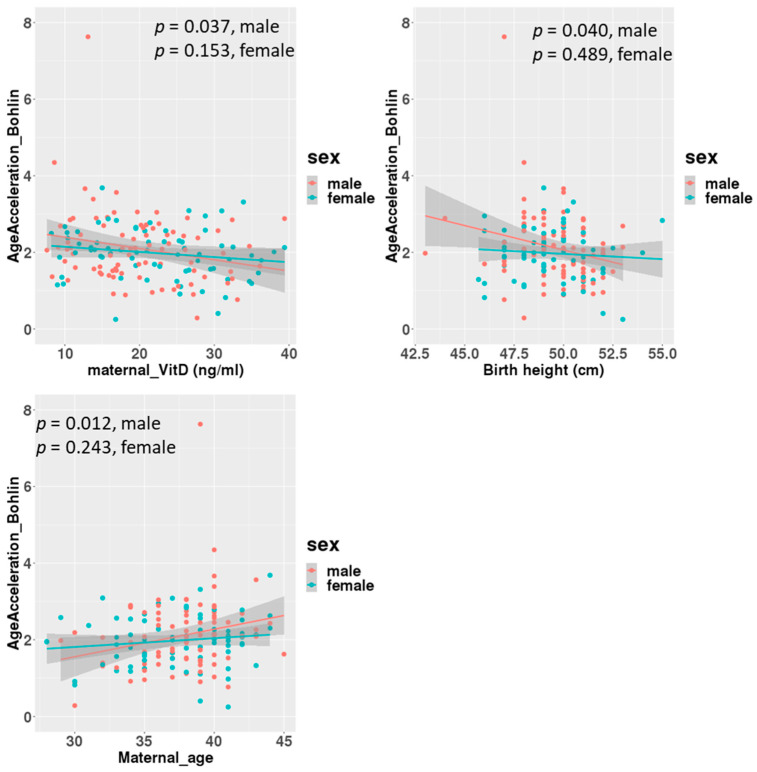
Maternal serum vitamin D levels in the second trimester were negatively associated with epigenetic gestational age acceleration at birth when calculated by Bohlin's method (regression coefficient [95% CI]: -0.022 [-0.039, -0.005], = 157), which was still significant after considering infants' sex (-0.022 [-0.039, -0.005]). Cord blood serum vitamin D levels were not associated with epigenetic age acceleration. Maternal age at delivery and birth height were associated in positive and negative ways with epigenetic gestational age acceleration, respectively (0.048 [0.012, 0.085] and -0.075 [-0.146, -0.003]).
Maternal vitamin D deficiency was related to an infant's epigenetic gestational age acceleration at birth. These findings suggest that the association between fetal development and maternal vitamin D levels may involve the fetal epigenetic regulation of the fetus.
背景/目的:新生儿脐带血的DNA甲基化可用于准确估计胎龄。这被称为表观遗传胎龄。表观遗传胎龄与实际胎龄之间的差异越大,与围产期胎儿环境和发育异常的关联就越大。在日本,孕妇维生素D缺乏很常见。本研究的目的是调查日本孕妇血清维生素D水平与出生时表观遗传胎龄加速之间的关联。
数据来自于在日本东京国立儿童健康与发展中心进行的基于医院的出生队列研究。在孕中期采集孕妇血液以测量血清维生素D浓度。在出生时采集脐带血以测量血清维生素D并提取DNA。使用Illumina甲基化EPIC芯片评估DNA甲基化。使用“甲基时钟”R软件包计算表观遗传胎龄。进行线性回归分析以观察关联。
根据博林方法计算,孕中期孕妇血清维生素D水平与出生时表观遗传胎龄加速呈负相关(回归系数[95%CI]:-0.022[-0.039,-0.005],n=157),在考虑婴儿性别后仍具有显著性(-0.022[-0.039,-0.005])。脐带血血清维生素D水平与表观遗传年龄加速无关。分娩时孕妇年龄和出生身高分别与表观遗传胎龄加速呈正相关和负相关(0.048[0.012,0.085]和-0.075[-0.146,-0.003])。
孕妇维生素D缺乏与婴儿出生时的表观遗传胎龄加速有关。这些发现表明,胎儿发育与孕妇维生素D水平之间的关联可能涉及胎儿的表观遗传调控。