Tang Jiajia, Fan Longmei, Huang Tianyu, Yang Rongrong, Yang Xinqi, Liao Yuanjian, Zuo Mingshun, Zhang Neng, Zhang Jiangrong
School of Nursing, Zunyi Medical University, Zunyi, China.
Department of Urology, the Affiliated Hospital of ZunYi Medical University, Zunyi, China.
Front Immunol. 2025 Jan 10;15:1467527. doi: 10.3389/fimmu.2024.1467527. eCollection 2024.
Most patients initially diagnosed with non-muscle invasive bladder cancer (NMIBC) still have frequent recurrence after urethral bladder tumor electrodesiccation supplemented with intravesical instillation therapy, and their risk of recurrence is difficult to predict. Risk prediction models used to predict postoperative recurrence in patients with NMIBC have limitations, such as a limited number of included cases and a lack of validation. Therefore, there is an urgent need to develop new models to compensate for the shortcomings and potentially provide evidence for predicting postoperative recurrence in NMIBC patients.
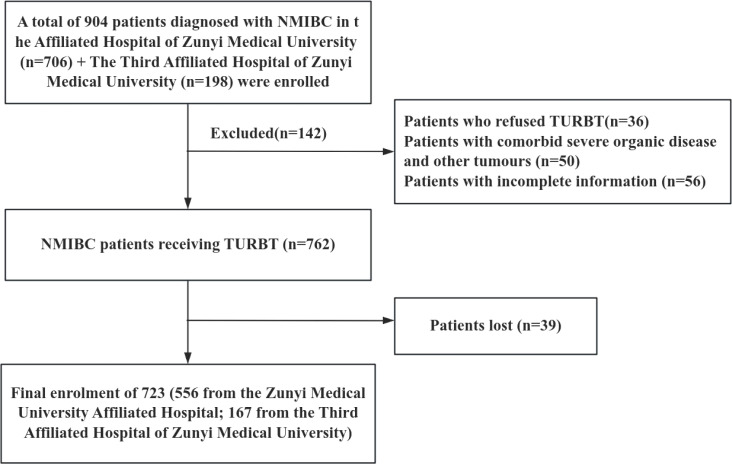
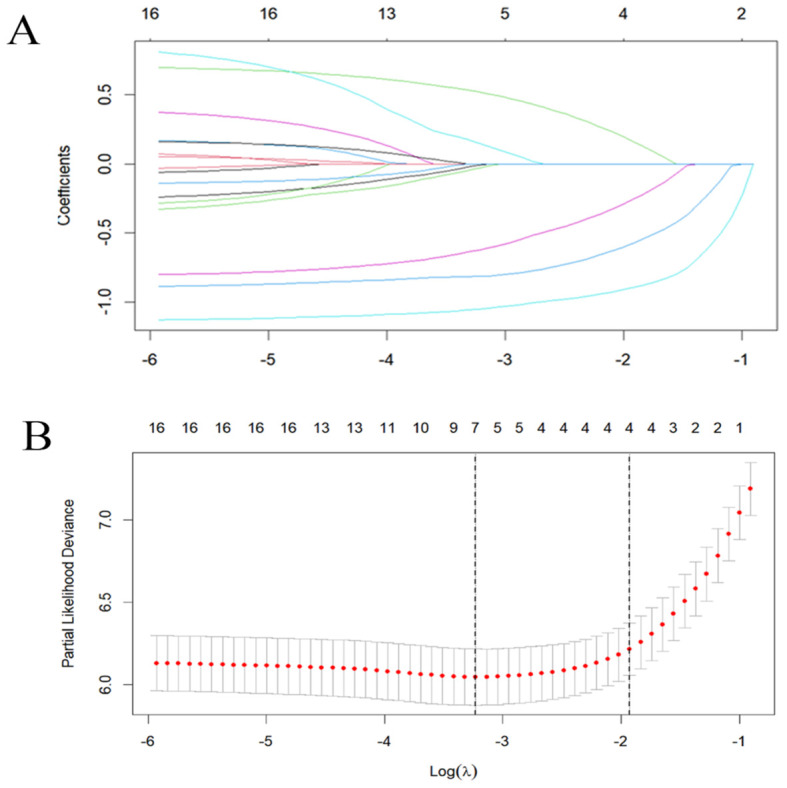
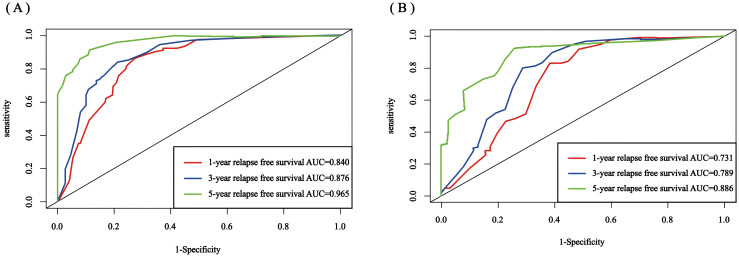
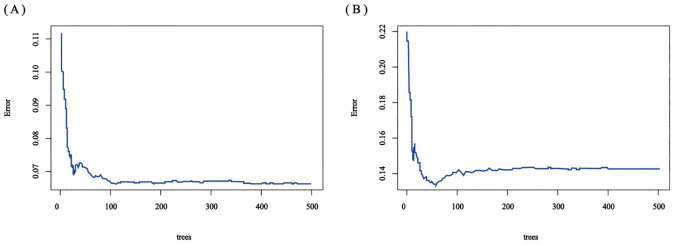
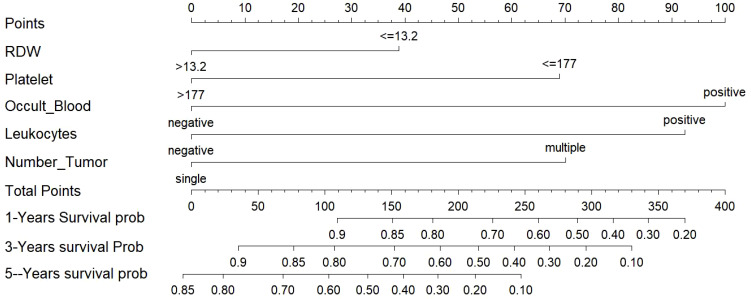
Clinicopathologic characteristics and follow-up data were retrospectively collected from 556 patients with NMIBC who underwent transurethral resection of bladder tumors by electrocautery (TURBT) from January 2014 to December 2023 at the Affiliated Hospital of Zunyi Medical University and 167 patients with NMIBC who underwent the same procedure from January 2018 to April 2024 at the Third Affiliated Hospital of Zunyi Medical University. Independent risk factors affecting the recurrence of NMIBC were screened using the least absolute shrinkage and selection operator (Lasso) and Cox regression analysis. Cox risk regression models and randomized survival forest (RSF) models were developed. The optimal model was selected by comparing the area under the curve (AUC) of the working characteristics of the subjects in both and presented as a column-line graph.
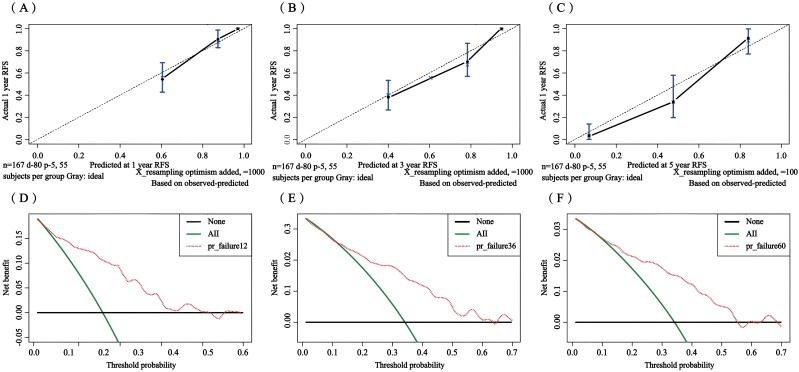
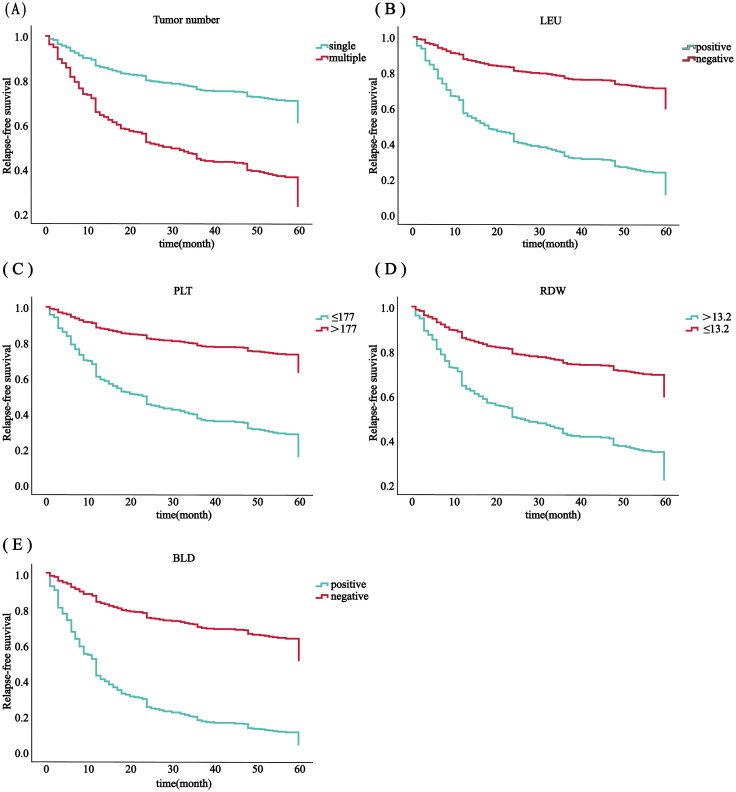
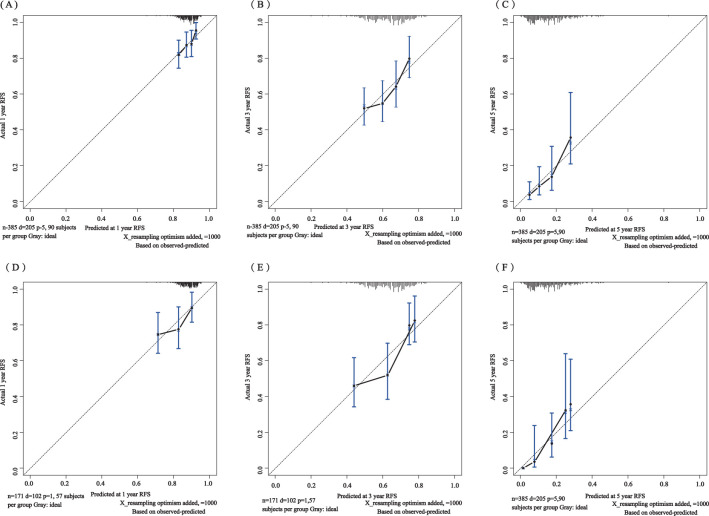
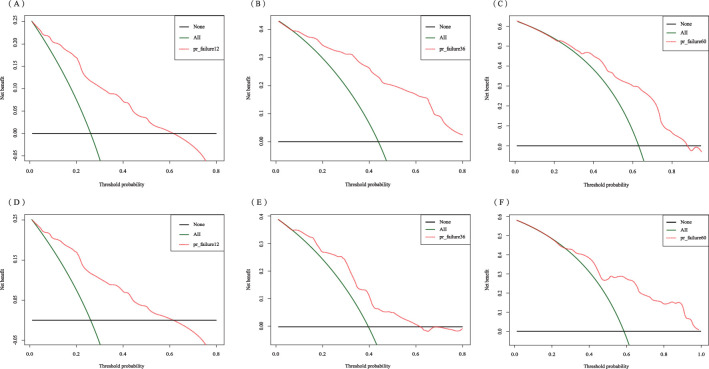
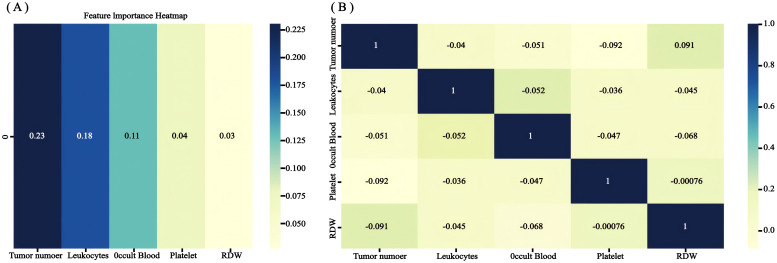
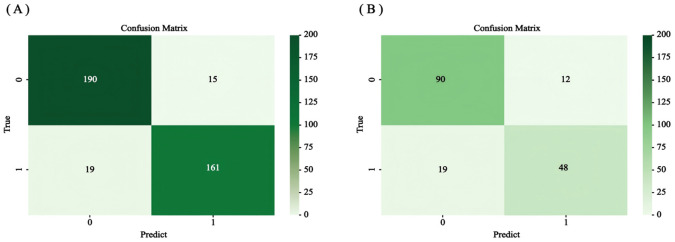
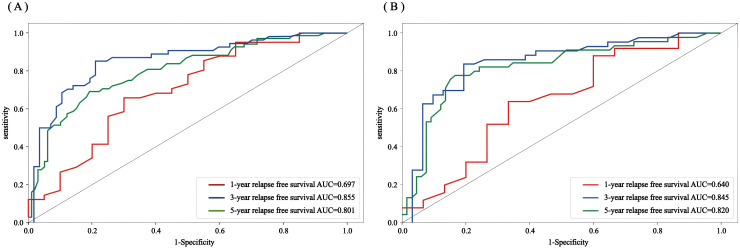
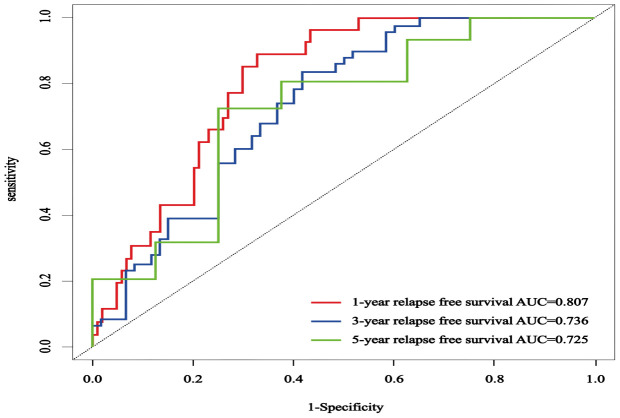
The study included data from 566 patients obtained from the affiliated hospital of Zunyi Medical University and 167 patients obtained from the third affiliated hospital of Zunyi Medical University. Tumor number, urine leukocytes, urine occult blood, platelets, and red blood cell distribution width were confirmed as independent risk factors predicting RFS by Lasso-Cox regression analysis. The Cox proportional risk regression model and RSF model were constructed based on Lasso, which showed good predictive efficacy in both training and validation sets, especially the traditional Cox proportional risk regression model. In addition, the discrimination, consistency, and clinical utility of the column-line graph were assessed using C-index, area under the curve (AUC), calibration curve, and decision curve analysis (DCA). Patients at high risk of recurrence can be identified early based on risk stratification.
Internal and external validation has demonstrated that the model is highly discriminative and stable and can be used to assess the risk of early recurrence in NMIBC patients and to guide clinical decision-making.
大多数初诊为非肌层浸润性膀胱癌(NMIBC)的患者在经尿道膀胱肿瘤电灼术联合膀胱灌注治疗后仍频繁复发,且其复发风险难以预测。用于预测NMIBC患者术后复发的风险预测模型存在局限性,如纳入病例数量有限且缺乏验证。因此,迫切需要开发新的模型以弥补这些不足,并有可能为预测NMIBC患者术后复发提供依据。
回顾性收集2014年1月至2023年12月在遵义医科大学附属医院接受经尿道膀胱肿瘤电切术(TURBT)的556例NMIBC患者以及2018年1月至2024年4月在遵义医科大学第三附属医院接受相同手术的167例NMIBC患者的临床病理特征和随访数据。使用最小绝对收缩和选择算子(Lasso)和Cox回归分析筛选影响NMIBC复发的独立危险因素。构建Cox风险回归模型和随机生存森林(RSF)模型。通过比较两者受试者工作特征曲线下面积(AUC)来选择最佳模型,并以柱状线图呈现。
该研究纳入了来自遵义医科大学附属医院的566例患者和来自遵义医科大学第三附属医院的167例患者的数据。通过Lasso-Cox回归分析确定肿瘤数量、尿白细胞、尿潜血、血小板和红细胞分布宽度为预测无复发生存期(RFS)的独立危险因素。基于Lasso构建了Cox比例风险回归模型和RSF模型,二者在训练集和验证集均显示出良好的预测效能,尤其是传统的Cox比例风险回归模型。此外,使用C指数、曲线下面积(AUC)、校准曲线和决策曲线分析(DCA)评估柱状线图的区分度、一致性和临床实用性。基于风险分层可早期识别复发高风险患者。
内部和外部验证表明,该模型具有高度的区分度和稳定性,可用于评估NMIBC患者早期复发风险并指导临床决策。