Abdulmahdi Mohanad Ahmed, Al-Khursan Amin Habbeb
Department of Physics, College of Science, University of Thi-Qar, Nasiriya, Iraq.
Nasiriya Nanotechnology Research Laboratory (NNRL), College of Science, University of Thi- Qar, Nasiriya, Iraq.
Sci Rep. 2025 Jan 27;15(1):3418. doi: 10.1038/s41598-025-86417-w.
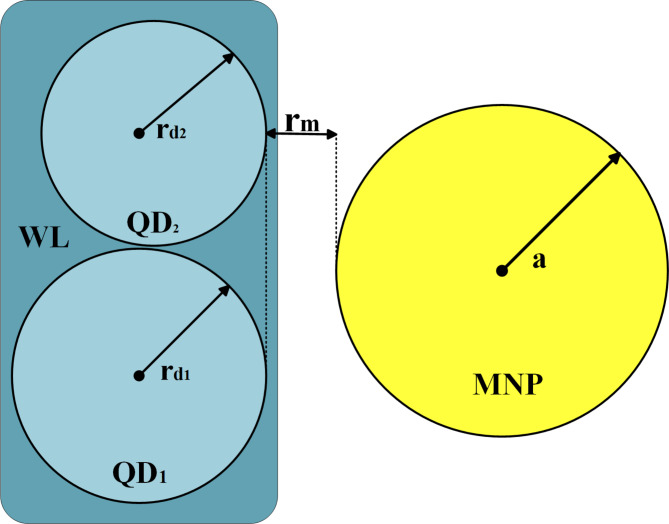
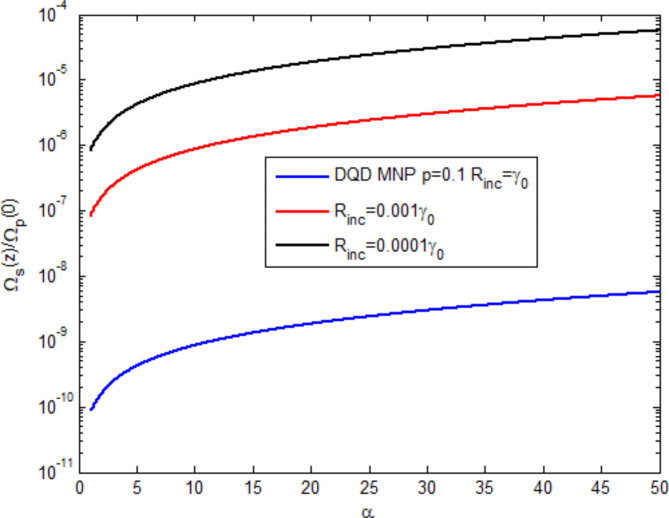
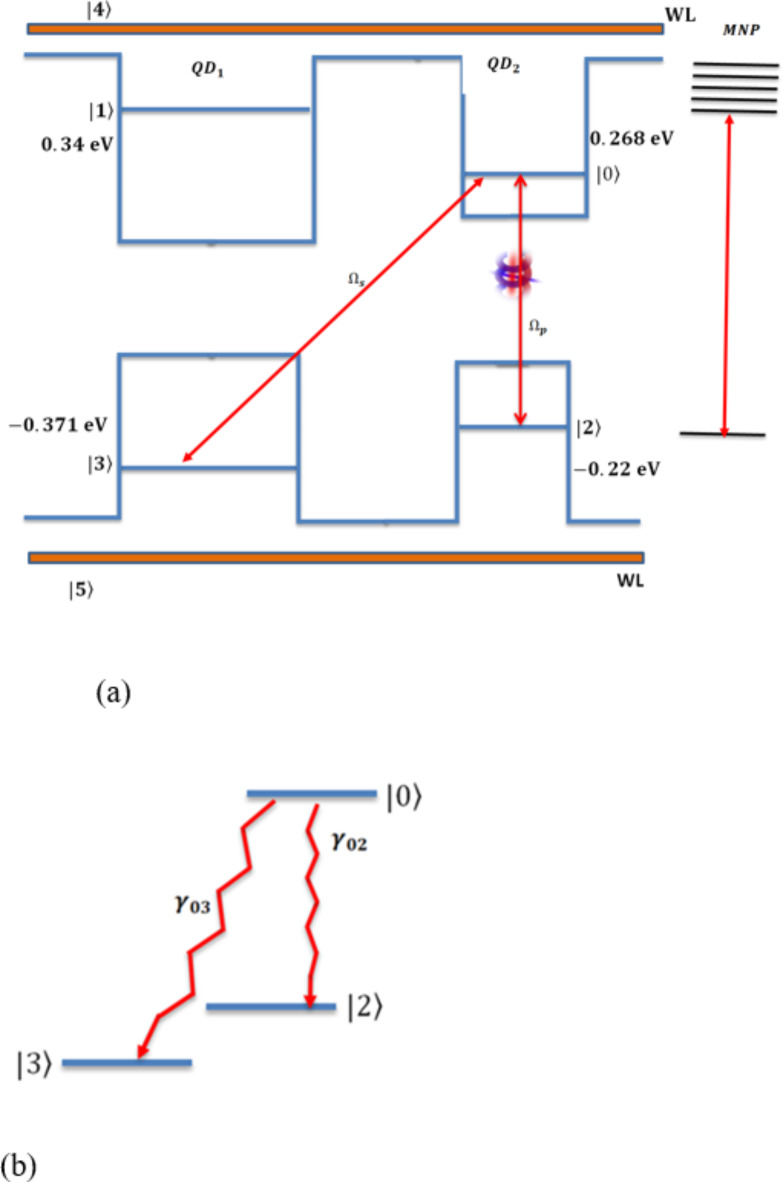
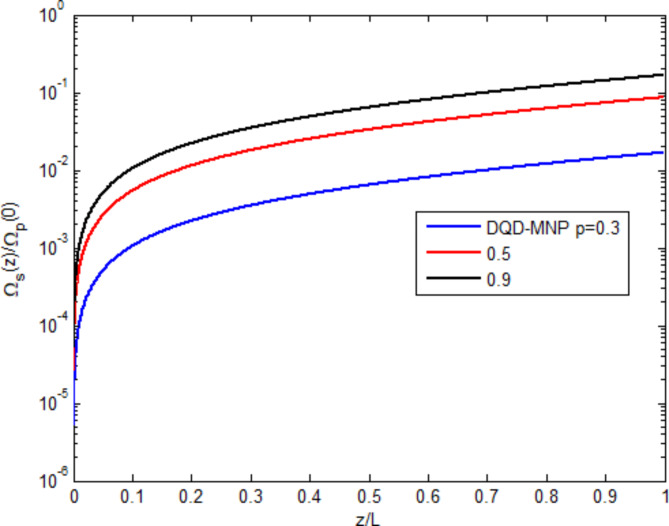
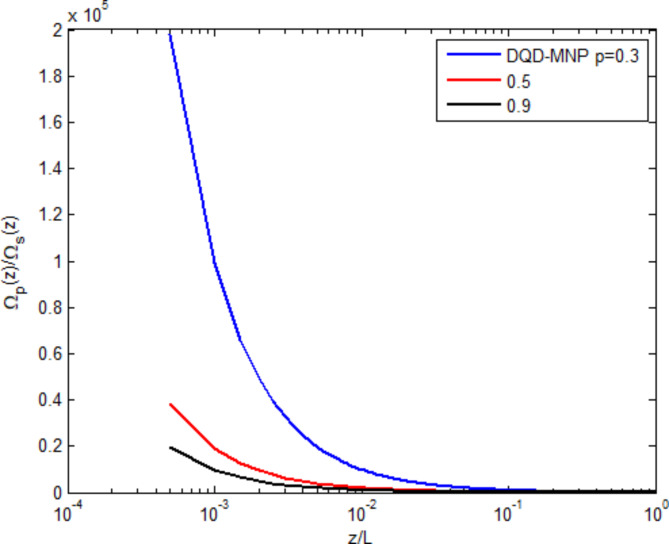
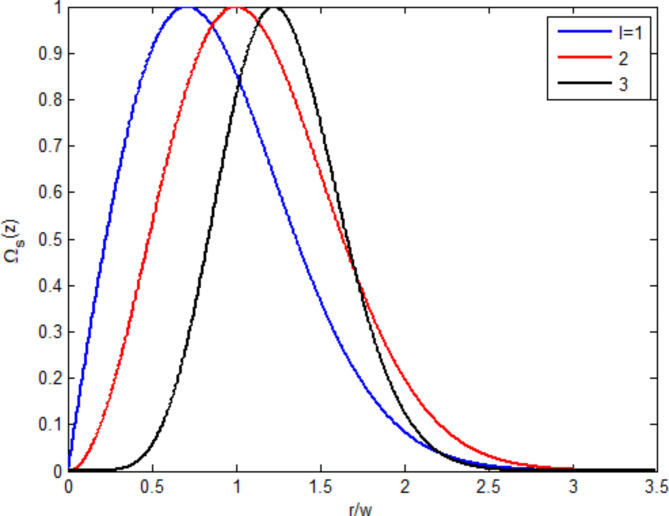
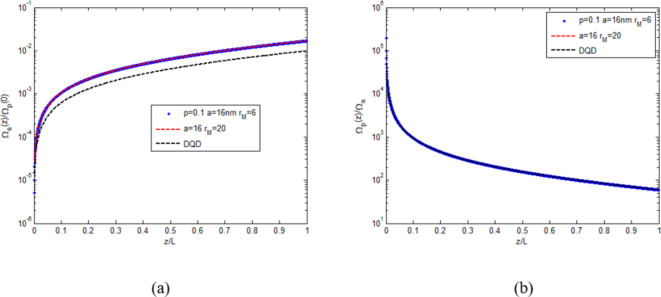
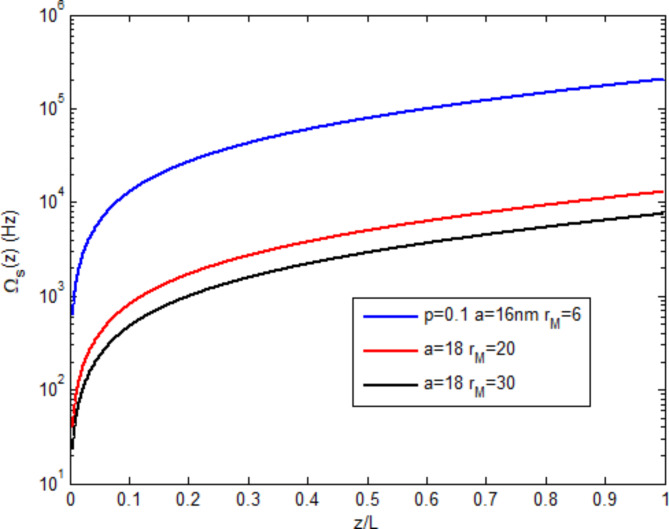
This work studies the generation of the orbital angular momentum (OAM) beam in the double quantum dot-metal nanoparticle (DQD-MNP) system under the application of the OAM beam. First, an analytical model is derived to attain the relations of probe and generated fields as a distance function in the DQD-MNP system under OAM applied field and spontaneously generated coherence (SGC) components. The calculation here is of material property; it differs from others by calculating energy states of the DQDs and the computation of the transition momenta between quantum dot (QD)-QD and QD-wetting layer (WL) transitions. The orthogonalized plane wave (OPW) calculates QD-WL transitions and their momenta. The momentum calculation is essential to specify the Rabi frequency of the input field. Such characteristics are not used in earlier models. The results show that SGC is vital in increasing the generated field. The signal field generated in the DQD-MNP system doubles that from the DQD system alone. So, the DQD-MNP system is preferred to the DQD system. The generated field in the DQD-MNP for the strong coupling DQD-MNP system is higher than that for the weak coupling. Increasing the distance separating the DQD-MNP reduces the generated field. Higher OAM number reduce the generated field at a long distance in the device. The model is then extended to study the effect of incoherent pumping ([Formula: see text]) and the relations are modified to cover this part. The results show that [Formula: see text] reduces the generated field. While the results that compare the weak and strong coupling appear for the first, others compare well to the literature.
这项工作研究了在轨道角动量(OAM)光束作用下双量子点 - 金属纳米粒子(DQD - MNP)系统中OAM光束的产生。首先,推导了一个解析模型,以获得在OAM应用场和自发产生相干(SGC)分量下,DQD - MNP系统中探测场和产生场与距离的函数关系。这里的计算涉及材料特性;它与其他计算的不同之处在于计算双量子点的能态以及量子点(QD) - QD和QD - 润湿层(WL)跃迁之间的跃迁动量。正交平面波(OPW)用于计算QD - WL跃迁及其动量。动量计算对于确定输入场的拉比频率至关重要。早期模型未使用此类特性。结果表明,SGC对于增加产生场至关重要。DQD - MNP系统中产生的信号场是仅DQD系统产生信号场的两倍。因此,DQD - MNP系统优于DQD系统。强耦合DQD - MNP系统中产生的场高于弱耦合系统。增加DQD - MNP之间的距离会降低产生的场。在器件中距离较长时,较高的OAM数会降低产生的场。然后扩展该模型以研究非相干泵浦([公式:见原文])的影响,并修改关系以涵盖这一部分。结果表明,[公式:见原文]会降低产生的场。虽然首次出现了比较弱耦合和强耦合的结果,但其他结果与文献中的结果吻合良好。