Thurman Carl L, McNamara John C, Shih Hsi-Te, Capparelli Mariana V
Department of Biology University of Northern Iowa Cedar Falls Iowa USA.
Departamento de Biologia, FFCLRP Universidade de São Paulo São Paulo Brazil.
Ecol Evol. 2025 Jan 27;15(1):e70646. doi: 10.1002/ece3.70646. eCollection 2025 Jan.
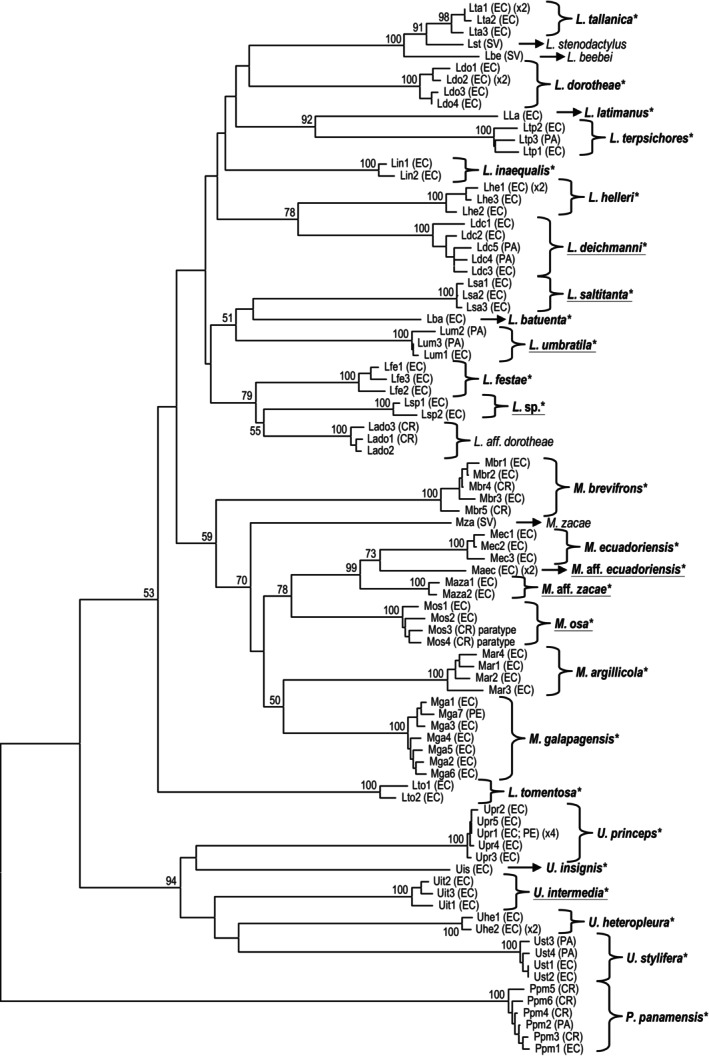
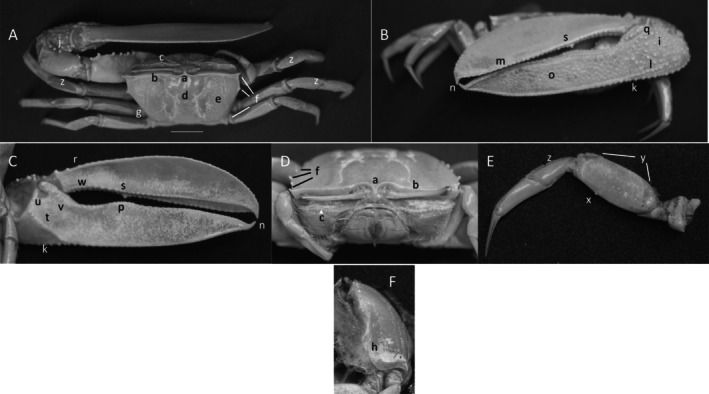
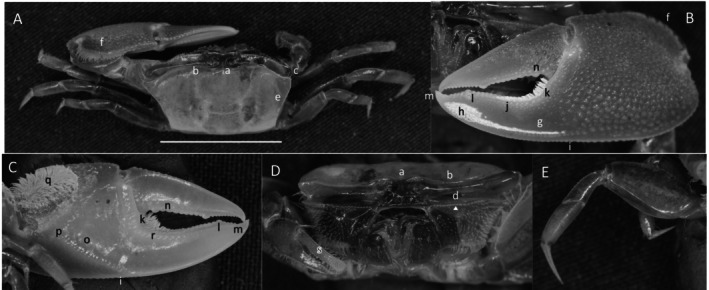
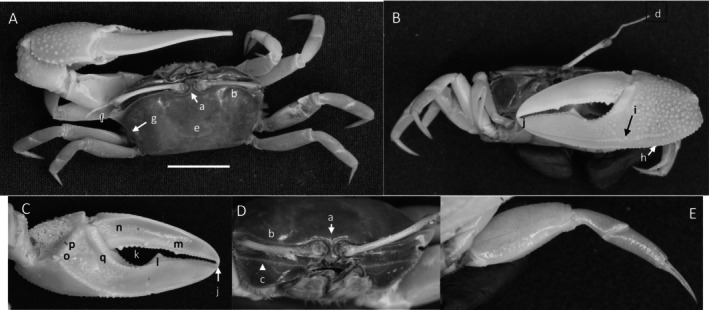
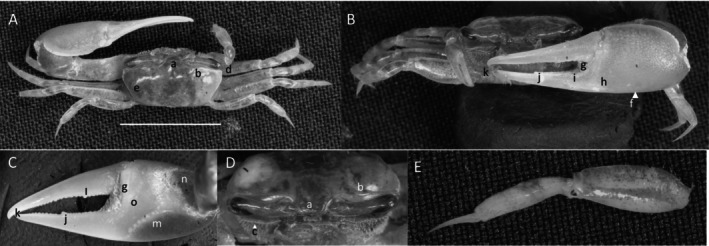
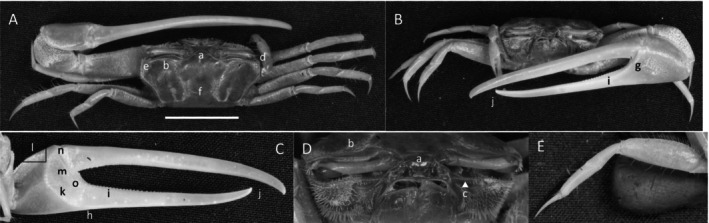
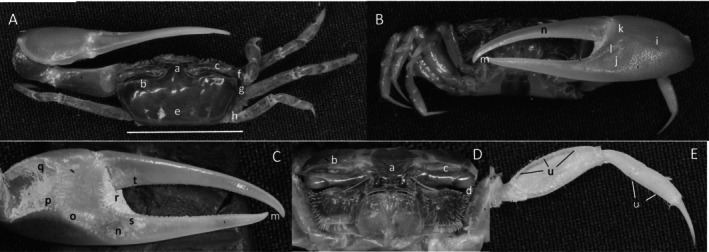
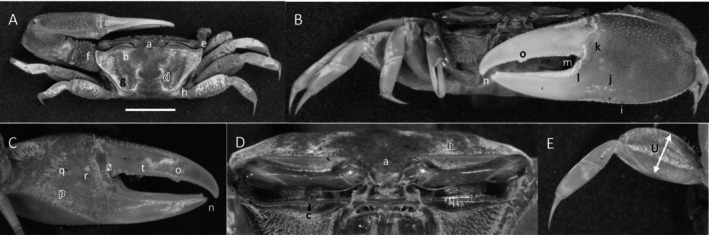
Neotropical regions near the equator are recognized as speciation "hot spots" reflecting their abundant biodiversity. In western South America, the coasts of Panama, Colombia, Ecuador, the Galápagos Archipelago, and northern Peru form the Tropical Eastern Pacific biome. This area has the greatest heterogeneity of sympatric fiddler crab species of any portion of the planet. Since the coastal fauna has not been assessed for almost 50 years, we studied fiddler crab species diversity in Ecuador and on the Galápagos Archipelago. Preserved collecting records for various species were examined at the U.S. National Museum of Natural History, Washington, DC, the American Museum of Natural History, New York, and the Naturalis Biodiversity Center, Leiden, the Netherlands. During a field study, 51 locations were collected resulting in over 870 preserved specimens (120 lots) along the 2237-km (1390 mi) coast of Ecuador and on three Galápagos Islands. A neighbor-joining tree was constructed using the Kimura 2-parameter model with a partial DNA sequence of the cytochrome oxidase-subunit 1 gene (COI) for a barcoding study. Twenty-five taxa were collected during the surveys, while two more were noted from the literature and museum collections. Five published species are new to Ecuador. The species assemblage was divided among four genera: , , and . Morphological definitions and photographic images are given for 27 species. COI sequences were obtained for 27 operational taxonomic units from Ecuador, with three morphologically indistinguishable cryptic or pseudocryptic taxa also revealed. Based on species distributions, it appears that the area between Cabo San Lorenzo and Punta Santa Elena serves as a weak barrier separating some "northern" from "southern" taxa. Since coastal Ecuador is undergoing rapid economic development, the construction of maricultural facilities and the deforestation of mangroves promote wholesale habitat destruction. As habitat diversity is reduced, it is expected that there will be, in general, a local decline in fiddler crab species diversity with some taxa becoming rare or extinct.
赤道附近的新热带地区被认为是物种形成的“热点”,反映了其丰富的生物多样性。在南美洲西部,巴拿马、哥伦比亚、厄瓜多尔的海岸、加拉帕戈斯群岛和秘鲁北部形成了热带东太平洋生物群落。该地区拥有地球上任何区域中同域招潮蟹物种最大的异质性。由于近50年来尚未对沿海动物群进行评估,我们研究了厄瓜多尔和加拉帕戈斯群岛的招潮蟹物种多样性。在美国华盛顿特区的美国国家自然历史博物馆、纽约的美国自然历史博物馆以及荷兰莱顿的国家生物多样性中心,查阅了各种物种的保存收集记录。在一项实地研究中,沿着厄瓜多尔2237公里(1390英里)的海岸以及三个加拉帕戈斯岛屿收集了51个地点的样本,获得了超过870个保存标本(120批)。使用Kimura 2-参数模型,基于细胞色素氧化酶亚基1基因(COI)的部分DNA序列构建了邻接树,用于条形码研究。调查期间收集到25个分类单元,另外从文献和博物馆收藏中记录到2个。有5个已发表的物种是厄瓜多尔新发现的。物种组合分为四个属: 、 、 和 。给出了27个物种的形态学定义和照片图像。从厄瓜多尔获得了27个操作分类单元的COI序列,还发现了3个形态上无法区分的隐存或拟隐存分类单元。根据物种分布情况,似乎圣洛伦索角和圣埃伦娜角之间的区域是一个薄弱屏障,将一些“北部”和“南部”分类单元分隔开来。由于厄瓜多尔沿海地区正在经历快速的经济发展,海水养殖设施的建设和红树林的砍伐导致大规模栖息地破坏。随着栖息地多样性的减少,预计总体上招潮蟹物种多样性会在当地下降,一些分类单元会变得稀有或灭绝。