Albano Casey, Nabawy Ahmed, Tran Wyatt C, Prithviraj Malavika, Kado Takehiro, Hassan Muhammad Aamir, Makabenta Jessa Marie V, Rotello Vincent M, Morita Yasu S
Department of Microbiology, University of Massachusetts, Amherst, Massachusetts, USA.
Department of Chemistry, University of Massachusetts, Amherst, Massachusetts, USA.
Microbiol Spectr. 2025 Mar 4;13(3):e0216624. doi: 10.1128/spectrum.02166-24. Epub 2025 Jan 28.
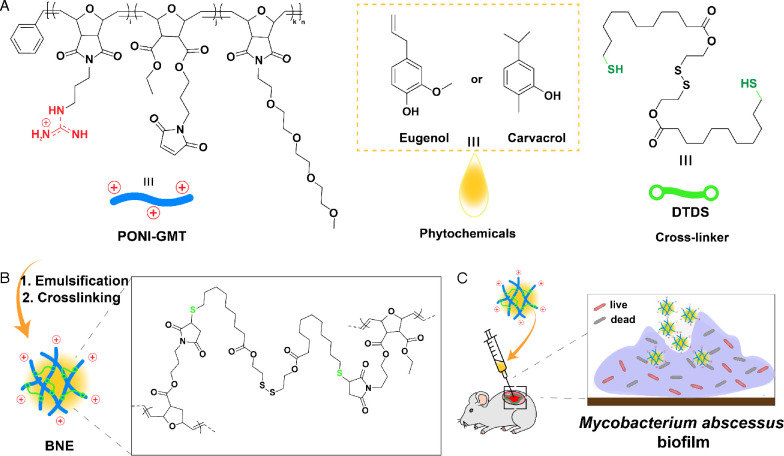
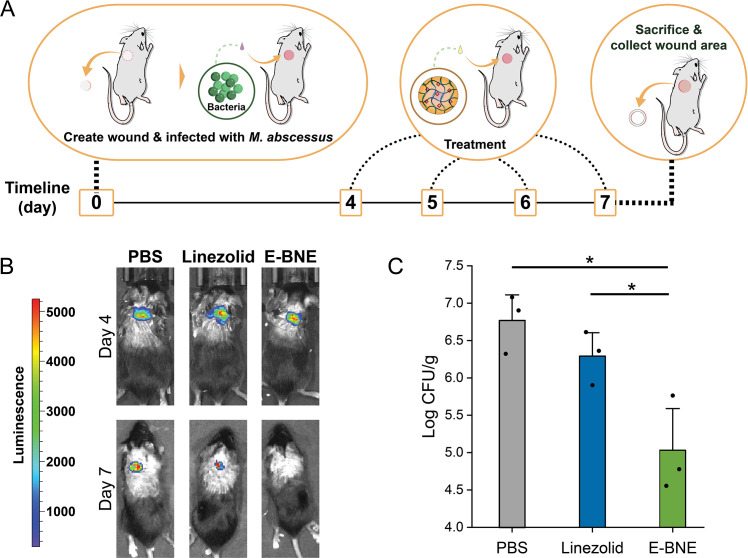
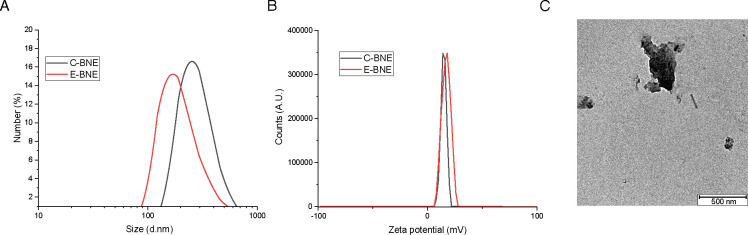
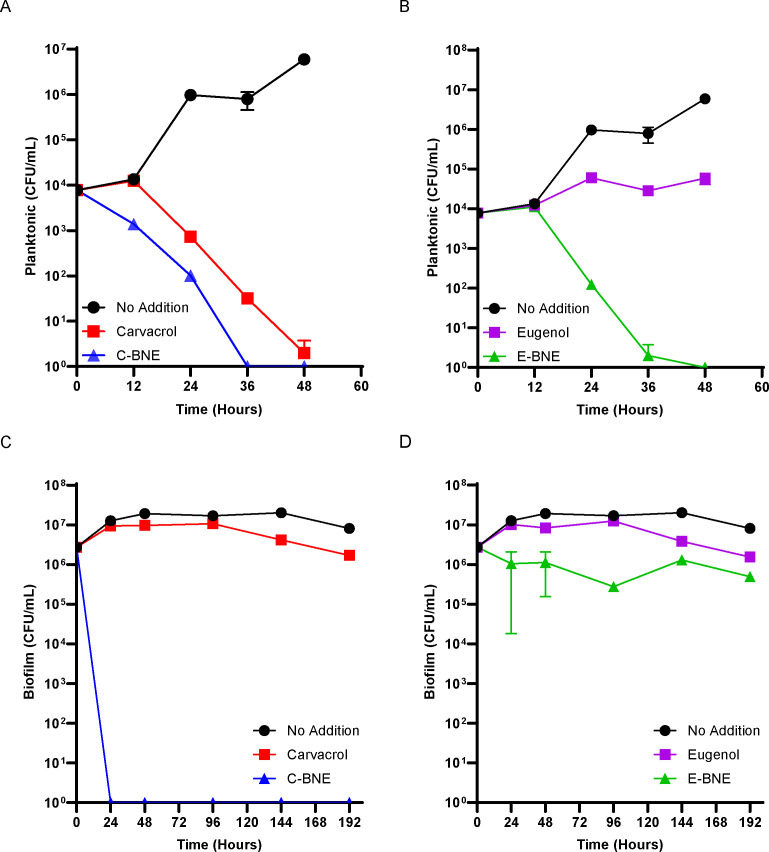
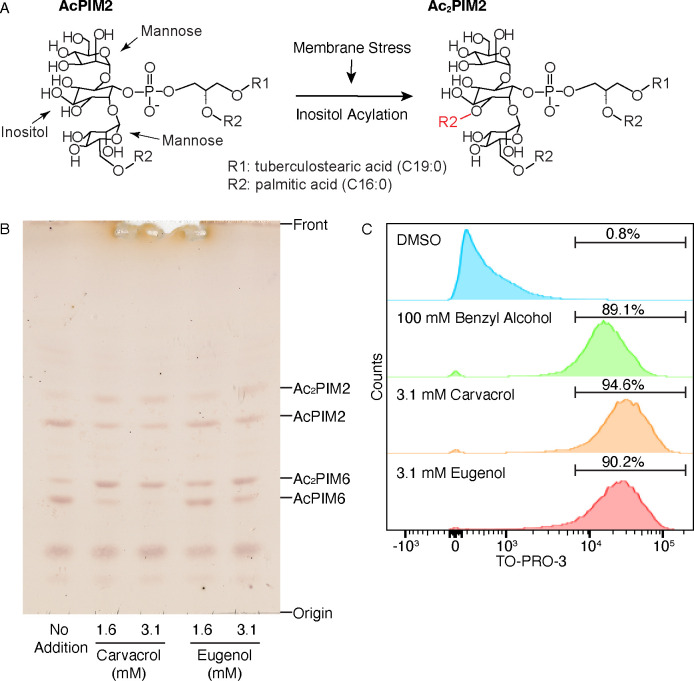
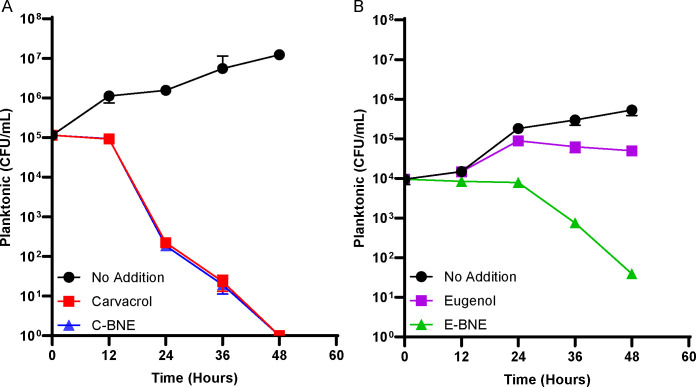
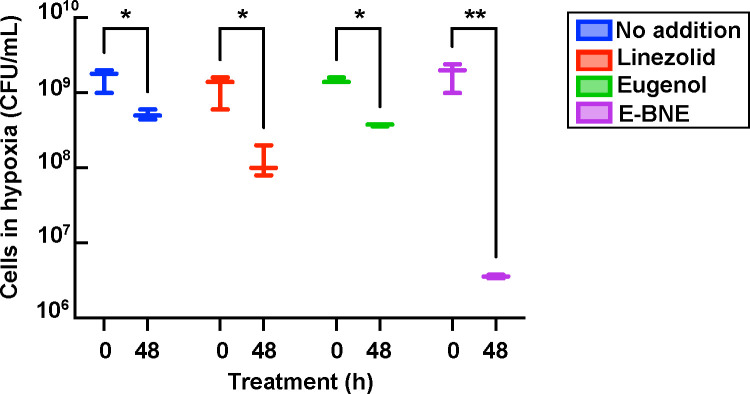
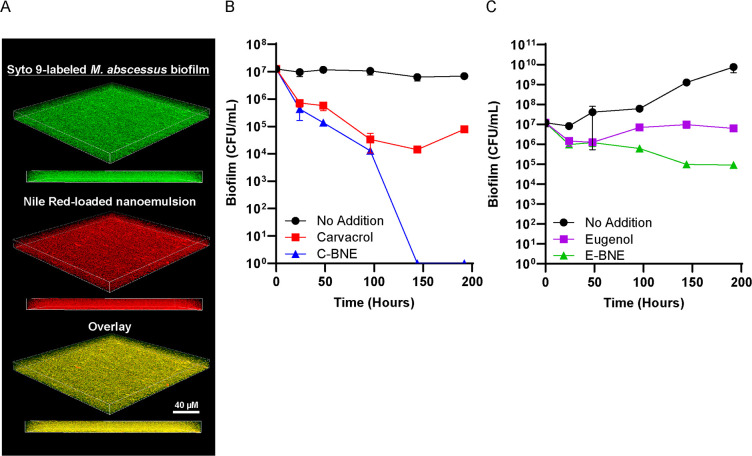
is an acid-fast, aerobic, non-motile, and biofilm-forming bacterium. The increasing prevalence of mycobacterial infections makes it necessary to find new methods to combat the resistance of bacteria to conventional antibiotics. is an emerging pathogen that is intrinsically drug resistant due to several factors, including an impermeable cell envelope, drug efflux pumps, target-modifying enzymes, and the ability to form thick, robust biofilms. Phytochemicals are promising antimicrobials; however, their poor solubility in water and their inability to penetrate biofilms render them inefficient in killing bacterial biofilms. In this study, we demonstrate the efficacy of polymer-stabilized phytochemical nanoemulsions in killing biofilms. These nanoemulsions improve the solubility and stability of the phytochemicals and enable biofilm penetration and eradication. We show that the phytochemical emulsions effectively eliminated in an biofilm model and killed non-replicating persister cells in the Wayne hypoxia model. These nanoemulsions were also effective in a wound infection model. These findings demonstrate the potential of polymer-stabilized phytochemical nanoemulsions as a promising alternative to conventional antibiotics for the treatment of mycobacterial infections.
is among the opportunistic bacterial pathogens that cause nontuberculous mycobacterial diseases. The infection caused by is difficult to treat because the bacterium is resistant to many of the currently available antibiotics, limiting chemotherapeutic strategies. Furthermore, it forms biofilms in clinically relevant settings, making the infection difficult to treat. Many phytochemicals have potent antimicrobial activities, but their hydrophobicity limits clinical applications. In this study, we tested a new drug delivery strategy where hydrophobic plant phytochemicals were emulsified with a biodegradable nanosponge. We show that the emulsification makes phytochemicals such as carvacrol and eugenol more effective against biofilms. We further demonstrate that nanoemulsified phytochemicals can kill hypoxia-induced dormant and effectively improve skin wound infection in mice. Our data pave the way to use phytochemical nanosponge as a platform to create synergy by combining other antimycobacterial drugs.
是一种抗酸、需氧、不运动且形成生物膜的细菌。分枝杆菌感染患病率的不断上升使得有必要寻找新方法来对抗细菌对传统抗生素的耐药性。是一种新兴病原体,由于多种因素,包括不可渗透的细胞壁、药物外排泵、靶点修饰酶以及形成厚实、坚固生物膜的能力,它具有内在的耐药性。植物化学物质是有前景的抗菌剂;然而,它们在水中的溶解度差以及无法穿透生物膜使得它们在杀死细菌生物膜方面效率低下。在本研究中,我们证明了聚合物稳定的植物化学纳米乳剂在杀死生物膜方面的功效。这些纳米乳剂提高了植物化学物质的溶解度和稳定性,并能够穿透和根除生物膜。我们表明,植物化学乳剂在生物膜模型中有效地消除了,并在韦恩缺氧模型中杀死了非复制性持留菌细胞。这些纳米乳剂在伤口感染模型中也有效。这些发现证明了聚合物稳定的植物化学纳米乳剂作为治疗分枝杆菌感染的传统抗生素的有前景替代品的潜力。
是导致非结核分枝杆菌疾病的机会性细菌病原体之一。由引起的感染难以治疗,因为该细菌对许多目前可用的抗生素耐药,限制了化疗策略。此外,它在临床相关环境中形成生物膜,使得感染难以治疗。许多植物化学物质具有强大的抗菌活性,但它们的疏水性限制了临床应用。在本研究中,我们测试了一种新的药物递送策略,其中疏水性植物化学物质与可生物降解的纳米海绵乳化。我们表明,乳化使香芹酚和丁香酚等植物化学物质对生物膜更有效。我们进一步证明,纳米乳化的植物化学物质可以杀死缺氧诱导的休眠,并有效改善小鼠皮肤伤口感染。我们的数据为使用植物化学纳米海绵作为通过结合其他抗分枝杆菌药物产生协同作用平台铺平了道路。