Lee Jongbok, Kang Hyeonjeong, Chen Branson, Na Yoosu, Khatri Ismat, Soares Fraser, He Housheng Hansen, Law Arjun D, Pan Tianzhong, Gerbitz Armin, Zhu Xiaoyu, Minden Mark D, Zhang Li
Toronto General Hospital Research Institute, University Health Network, Toronto, ON, Canada.
Department of Biochemistry and Molecular Biology, University of Calgary, Calgary, AB, Canada.
J Exp Clin Cancer Res. 2025 Jan 28;44(1):28. doi: 10.1186/s13046-024-03247-w.
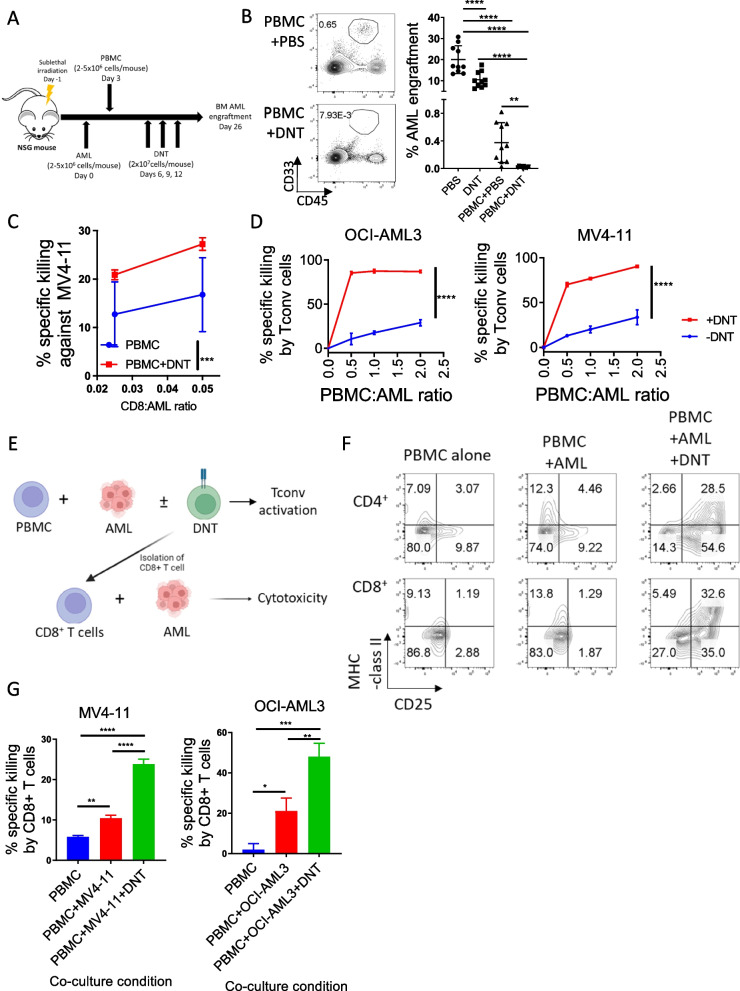
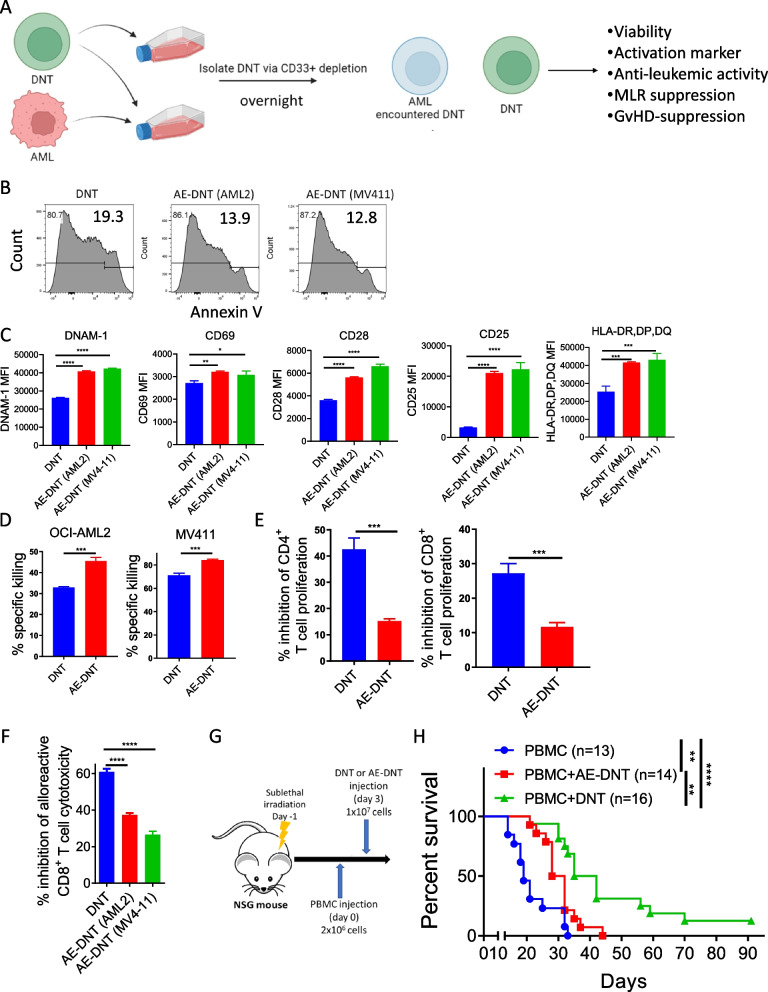
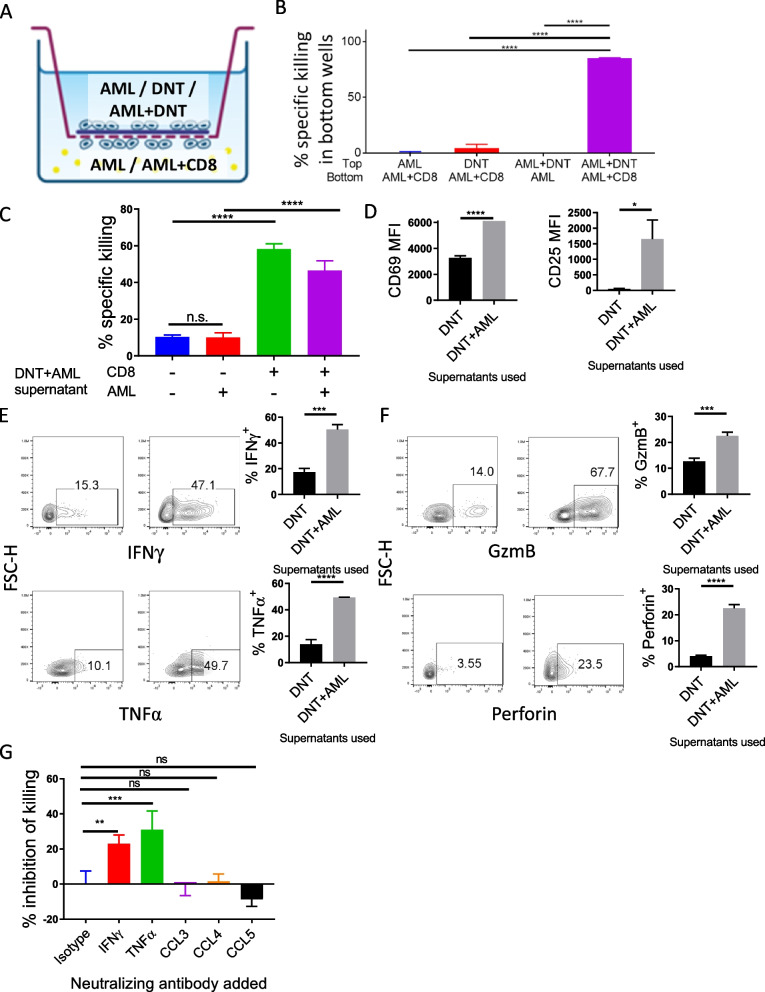
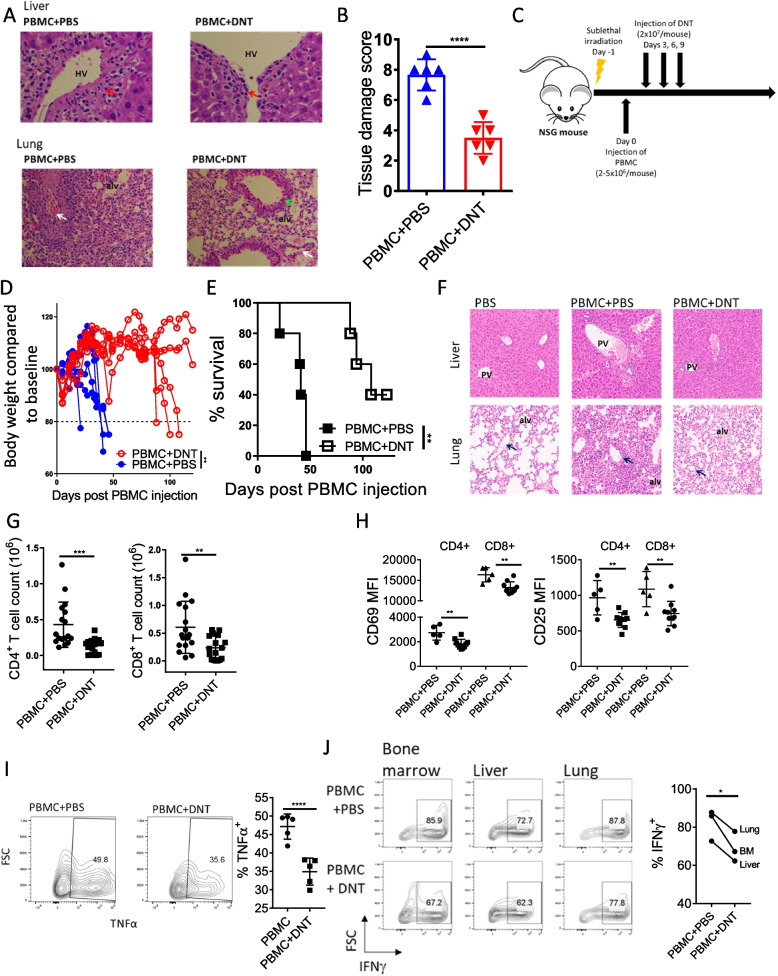
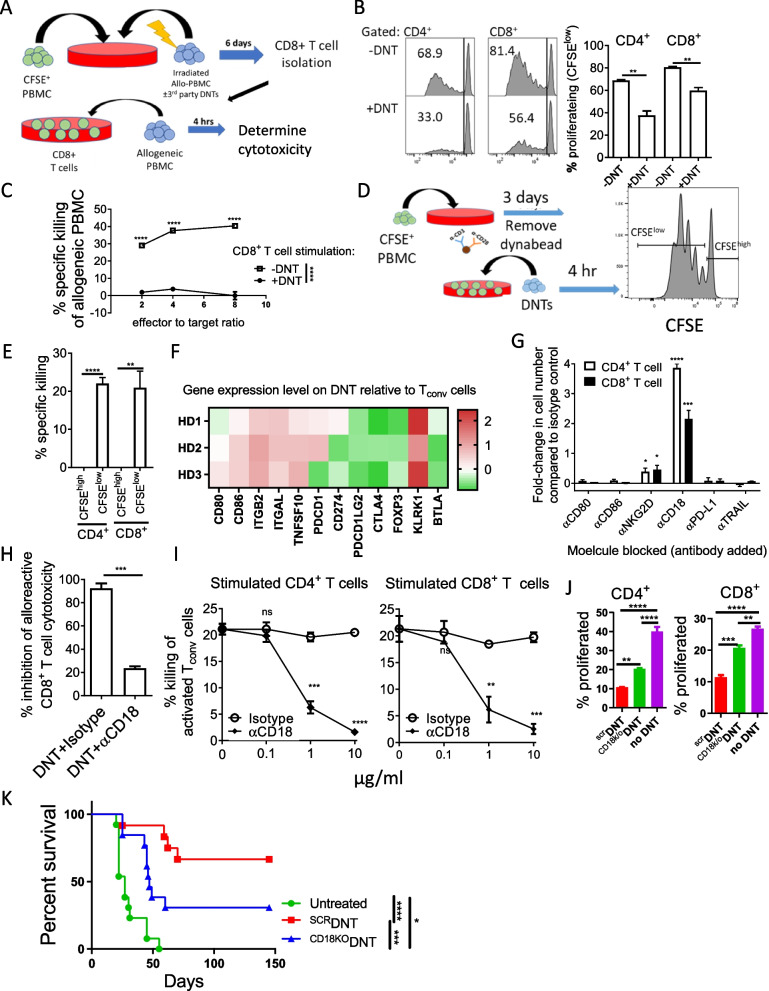
Allogeneic hematopoietic stem cell transplantation (allo-HSCT) is a second-line treatment with curative potential for leukemia patients. However, the prognosis of allo-HSCT patients with disease relapse or graft-versus-host disease (GvHD) is poor. CD4 or CD8 conventional T (Tconv) cells are critically involved in mediating anti-leukemic immune responses to prevent relapse and detrimental GvHD. Hence, treatment for one increases the risk of the other. Thus, therapeutic strategies that can address relapse and GvHD are considered the Holy Grail of allo-HSCT. CD3CD4CD8 double-negative T cells (DNTs) are unconventional mature T cells with potent anti-leukemia effects with "off-the-shelf" potential. A phase I clinical trial demonstrated the feasibility, safety, and potential efficacy of allogeneic DNT therapy for patients with relapsing acute myeloid leukemia (AML) post-allo-HSCT. Here, we studied the impact of DNTs on the anti-leukemic and GvHD-inducing activities of Tconv cells. DNTs synergized with Tconv cells to mediate superior anti-leukemic activity. Mechanistically, DNTs released soluble factors which activated and evoked potent anti-leukemic activities of Tconv cells. In contrast, DNTs suppressed GvHD-inducing activities of Tconv cells in a CD18-dependent manner by mediating cytotoxicity against proliferative Tconv cells. The seemingly opposite immunological activities of DNTs were dictated by the presence or absence of AML cells. Collectively, these results support the potential of DNTs as an adjuvant to allo-HSCT to address both disease relapse and GvHD.
异基因造血干细胞移植(allo-HSCT)是白血病患者具有治愈潜力的二线治疗方法。然而,疾病复发或移植物抗宿主病(GvHD)的allo-HSCT患者预后较差。CD4或CD8传统T(Tconv)细胞在介导抗白血病免疫反应以预防复发和有害的GvHD中起关键作用。因此,针对其中一种情况的治疗会增加另一种情况的风险。因此,能够解决复发和GvHD的治疗策略被认为是allo-HSCT的圣杯。CD3CD4CD8双阴性T细胞(DNTs)是具有强大抗白血病作用且具有“现成可用”潜力的非常规成熟T细胞。一项I期临床试验证明了异基因DNT治疗对allo-HSCT后复发的急性髓系白血病(AML)患者的可行性、安全性和潜在疗效。在此,我们研究了DNTs对Tconv细胞抗白血病和诱导GvHD活性的影响。DNTs与Tconv细胞协同作用以介导更强的抗白血病活性。从机制上讲,DNTs释放可溶性因子,激活并引发Tconv细胞强大的抗白血病活性。相反,DNTs通过介导对增殖性Tconv细胞的细胞毒性,以CD18依赖的方式抑制Tconv细胞诱导GvHD的活性。DNTs看似相反的免疫活性取决于AML细胞的存在与否。总体而言,这些结果支持DNTs作为allo-HSCT辅助手段来解决疾病复发和GvHD的潜力。