Furuya Kishio, Hirata Hiroaki, Kobayashi Takeshi, Ishiguro Hiroshi, Sokabe Masahiro
Department Human Nutrition, Nagoya University Graduate School of Medicine, Nagoya, Japan.
Mechanobiology Laboratory, Nagoya University Graduate School of Medicine, Nagoya, Japan.
Front Cell Dev Biol. 2025 Jan 15;12:1519642. doi: 10.3389/fcell.2024.1519642. eCollection 2024.
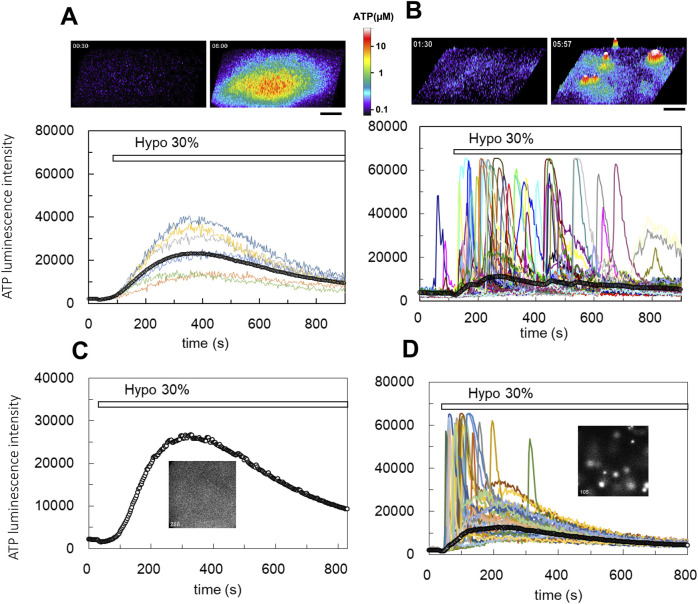
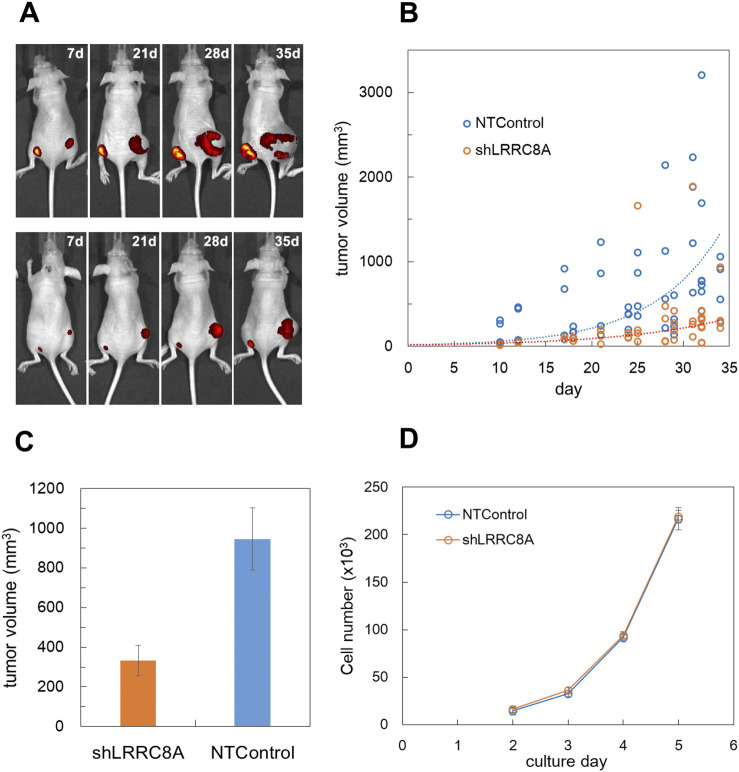
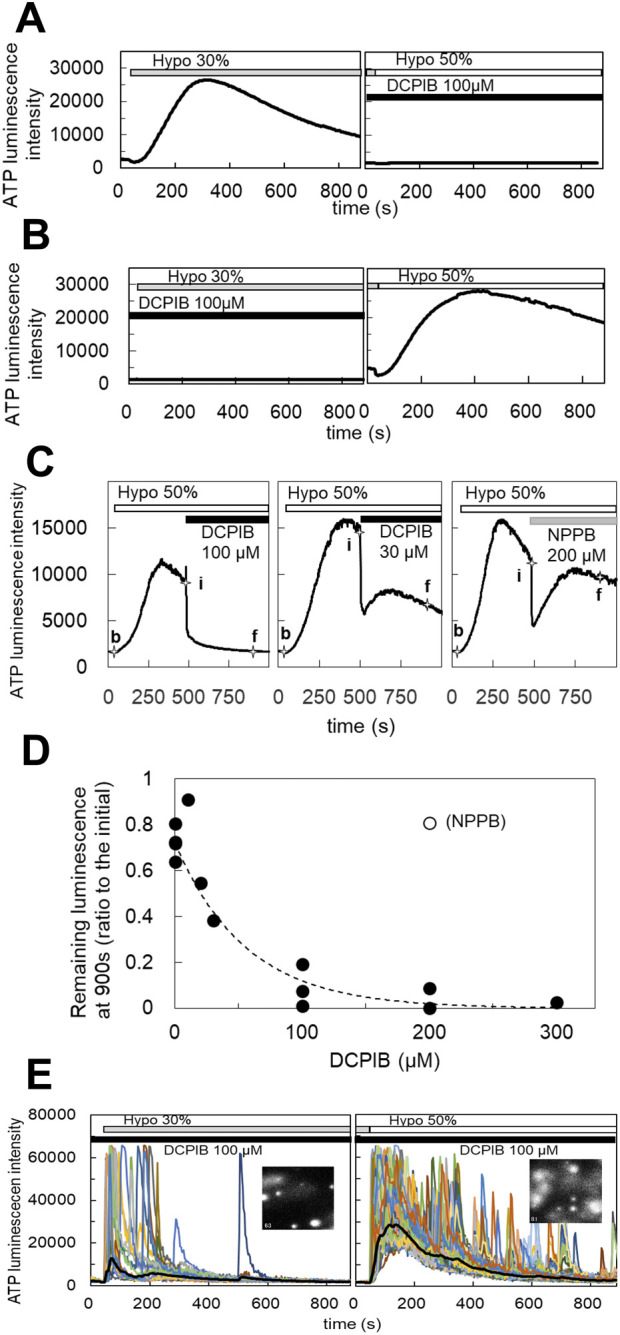
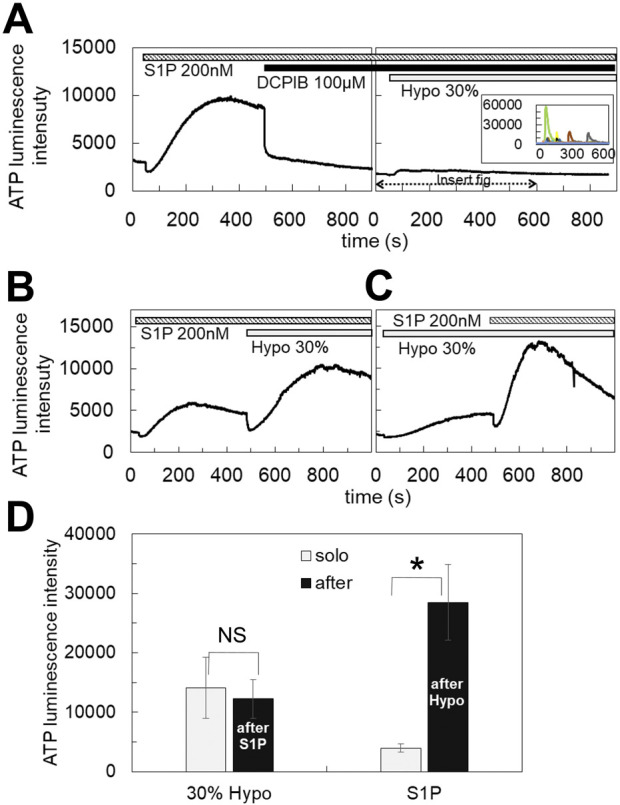
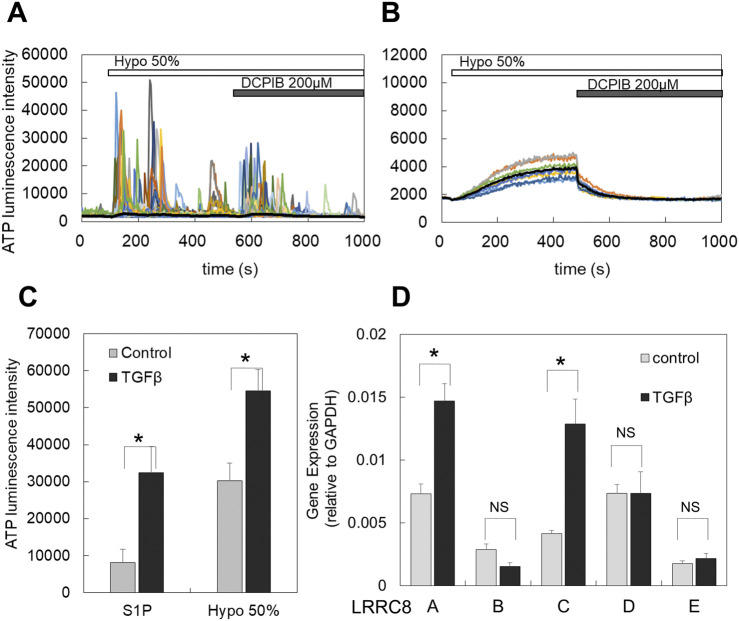
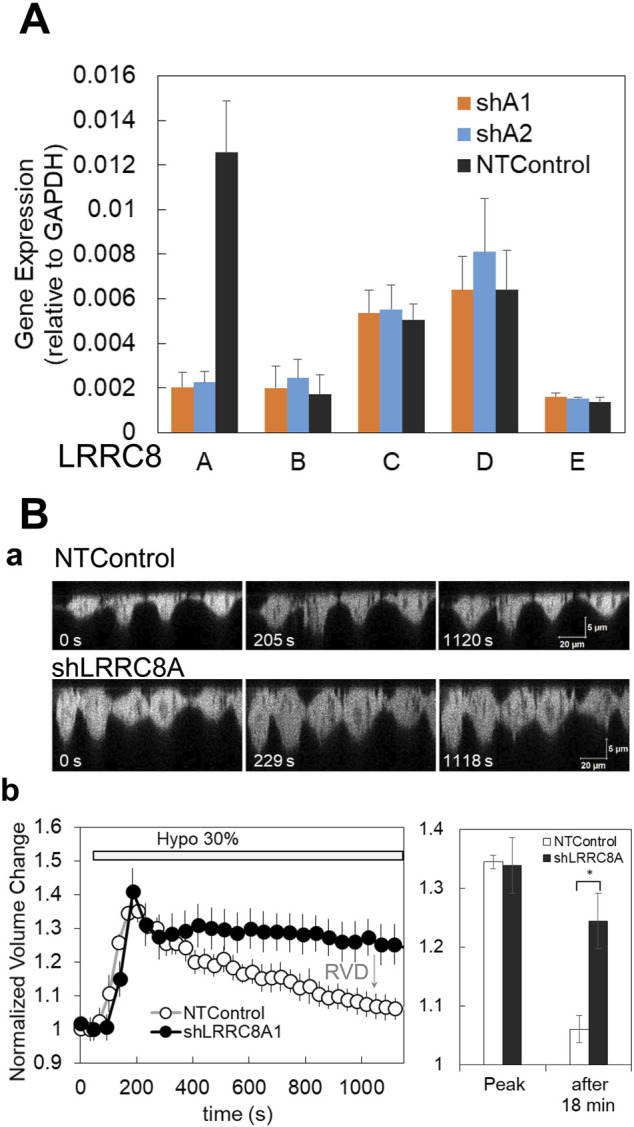
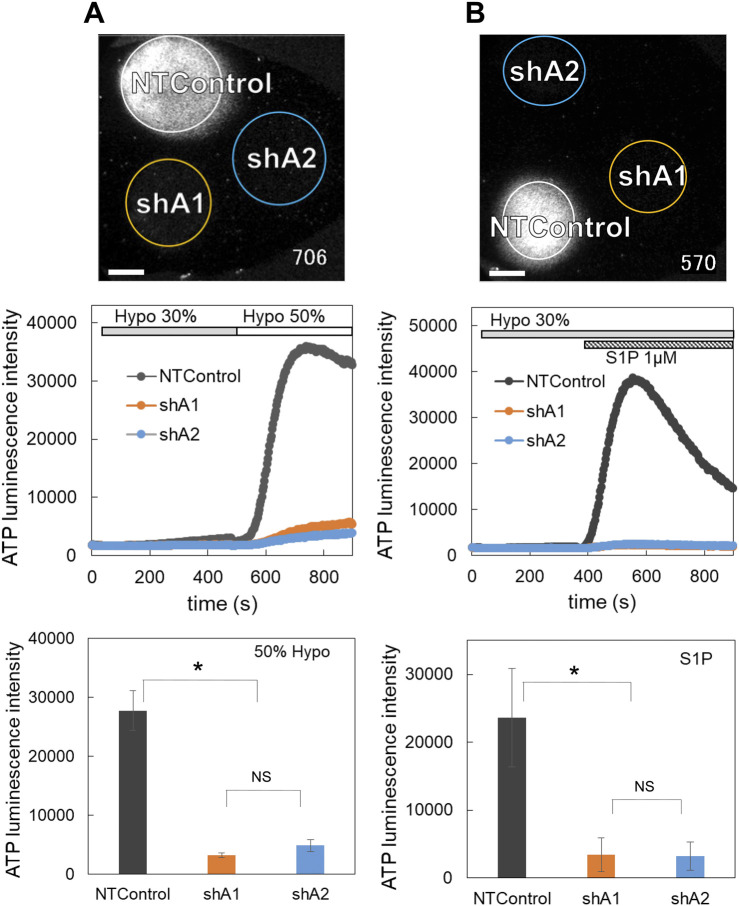
The high interstitial ATP concentration in the cancer microenvironment is a major source of adenosine, which acts as a strong immune suppressor. However, the source of ATP release has not been elucidated. We measured ATP release during hypotonic stress using a real-time ATP luminescence imaging system in breast cell lines and in primary cultured mammary cells. In breast cell lines, ATP was released with a slowly rising diffuse pattern, whereas in primary cultured cells, ATP was intermittently released with transient-sharp peaks. The diffuse ATP release pattern changed to a transient-sharp pattern by cholera toxin treatment and the reverse change was induced by transforming growth factor (TGF) β treatment. DCPIB, an inhibitor of volume-regulated anion channels (VRACs), suppressed the diffuse pattern. The inflammatory mediator sphingosine-1-phosphate (S1P) induced a diffuse ATP release pattern isovolumetrically. Knockdown of the A isoform of leucine-rich repeat-containing protein 8 (LRRC8A), the essential molecular entity of VRACs, using shRNA suppressed the diffuse pattern. In the nude mouse xenograft model, LRRC8A knockdown suppressed the tumorigenesis of subcutaneously implanted breast cancer cells. These results suggest that abundantly expressed VRACs are a conduit of ATP release in undifferentiated cells, including cancer cells.
癌症微环境中高浓度的间质ATP是腺苷的主要来源,腺苷是一种强大的免疫抑制剂。然而,ATP释放的来源尚未阐明。我们使用实时ATP发光成像系统在乳腺癌细胞系和原代培养的乳腺细胞中测量了低渗应激期间的ATP释放。在乳腺癌细胞系中,ATP以缓慢上升的弥散模式释放,而在原代培养细胞中,ATP以短暂尖锐峰值间歇性释放。霍乱毒素处理使弥散性ATP释放模式转变为短暂尖锐模式,而转化生长因子(TGF)β处理则诱导相反的变化。容积调节性阴离子通道(VRACs)抑制剂DCPIB抑制了弥散模式。炎症介质鞘氨醇-1-磷酸(S1P)等容诱导了弥散性ATP释放模式。使用shRNA敲低富含亮氨酸重复序列蛋白8(LRRC8A)的A亚型,即VRACs的必需分子实体,抑制了弥散模式。在裸鼠异种移植模型中,LRRC8A敲低抑制了皮下植入的乳腺癌细胞的肿瘤发生。这些结果表明,大量表达的VRACs是包括癌细胞在内的未分化细胞中ATP释放的通道。