Sommerfeld Romeo, Ermler Paul, Fehr Jana, Bergner Benjamin, Lopez David, Sanoff Scott, Neelon Francis A, Kuo Anthony, McDowell William, Li Yi-Ju, Fox Smilla, Ghajar Abdullatif, Gensch Elena, Lorenz Cedric, Preiss Martin, Richter Tom, Luft Friedrich C, Klemmer Philip, Bohannon Anastacia, Lippert Christoph, Lin Pao-Hwa
Hasso Plattner Institute for Digital Engineering, University of Postdam, Potsdam, Germany.
Medicine, Nephrology Division, Duke University Medical Center, Durham, North Carolina, USA.
BMJ Nutr Prev Health. 2024 Dec 25;7(2):e000949. doi: 10.1136/bmjnph-2024-000949. eCollection 2024.
In the early 1940s, before antihypertensive drugs were available, the Rice Diet Programme (RDP) was developed to treat severe hypertension and, later, diabetes and obesity. Despite significant advancements in dietary management for these conditions since then, debates remain regarding the proper guidelines for sodium and macronutrients intakes. The patient care records of RDP offer a unique source of longitudinal examination of a very low sodium (<10 mmol/day), fat, cholesterol and protein diet on blood pressure (BP), other health markers and survival.
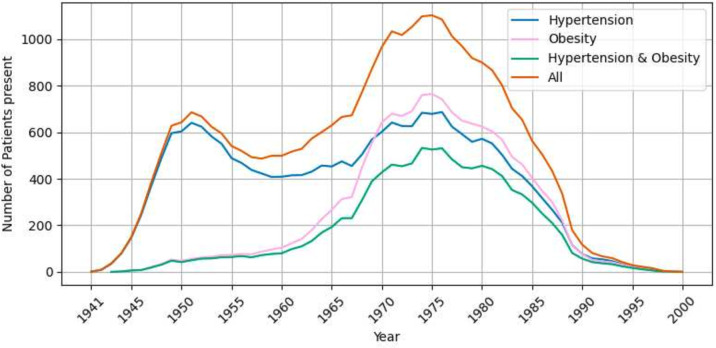
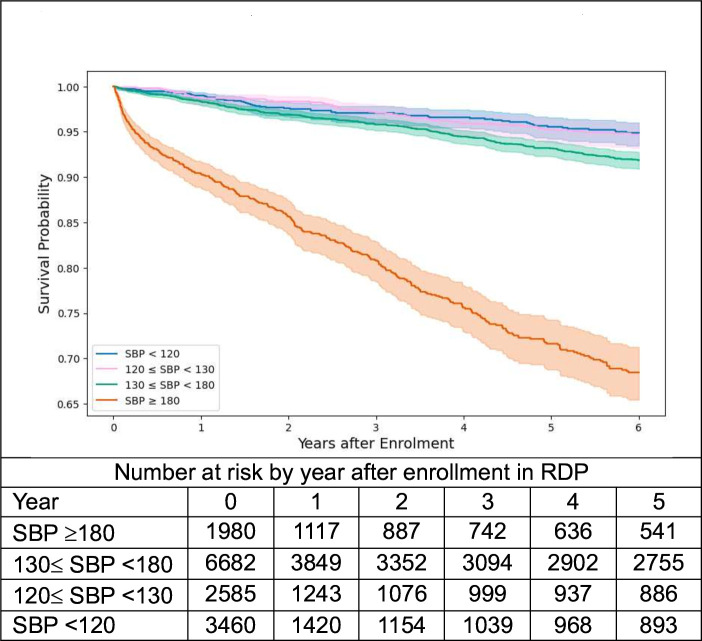
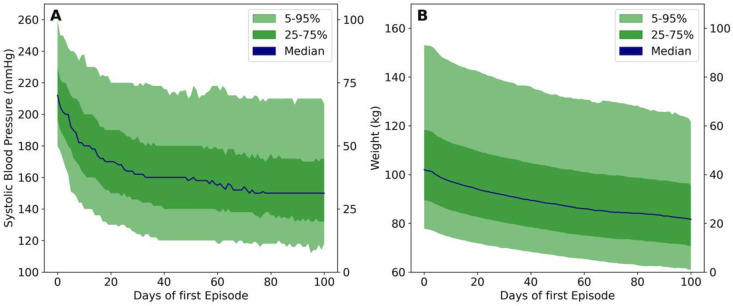
In 2019, the Rice Diet Database Project (RDDP) digitised handwritten patient care records and retinal photographs of 17 487 RDP participants, establishing a digital database for analyses. Manual transcription accuracy exceeded 97%. We used regression models to investigate the impact of dietary adherence on systolic BP (SBP) and body weight. Further, we performed Kaplan-Meier survival analysis to compare 5-year survival probability of participants defined by baseline level of SBP.
The database encompasses a wide array of health markers, including BP, weight, urine chloride (UCl) concentration and retinal features that offer a unique resource for studying the impact of the RDP on hypertension, diabetes and obesity. Initial analysis shows reductions in BP and weight as well as improved survival in participants with severe hypertension, underscoring the effectiveness of the diet. The data also permit examining the safety of extreme dietary sodium reduction.The database has numerous strengths (large patient population; extensive, long-term measurements and the use of UCl excretion to document dietary adherence) and limitations (missing data; temporal changes in methodologies over 50 years and lack of control subjects).
The RDDP database allows exploration of the effects of a diet extremely low in sodium, protein, fat and cholesterol on health indicators and patient survival. This report highlights the database's potential for detailed and intricate future analyses.
20世纪40年代初,在抗高血压药物问世之前,大米饮食计划(RDP)被制定用于治疗重度高血压,后来也用于治疗糖尿病和肥胖症。尽管从那时起在这些病症的饮食管理方面取得了重大进展,但关于钠和常量营养素摄入的适当指南仍存在争议。RDP的患者护理记录提供了一个独特的纵向研究来源,可用于研究极低钠(<10 mmol/天)、脂肪、胆固醇和蛋白质饮食对血压(BP)、其他健康指标和生存率的影响。
2019年,大米饮食数据库项目(RDDP)将17487名RDP参与者的手写患者护理记录和视网膜照片数字化,建立了一个用于分析的数字数据库。人工转录准确率超过97%。我们使用回归模型来研究饮食依从性对收缩压(SBP)和体重的影响。此外,我们进行了Kaplan-Meier生存分析,以比较根据SBP基线水平定义的参与者的5年生存概率。
该数据库包含了广泛的健康指标,包括血压、体重、尿氯(UCl)浓度和视网膜特征,为研究RDP对高血压、糖尿病和肥胖症的影响提供了独特的资源。初步分析显示,重度高血压参与者的血压和体重降低,生存率提高,突出了该饮食的有效性。这些数据还允许研究极端降低饮食钠的安全性。该数据库有许多优点(患者群体庞大;进行了广泛、长期的测量,并使用UCl排泄来记录饮食依从性)和局限性(数据缺失;50多年来方法的时间变化以及缺乏对照对象)。
RDDP数据库允许探索极低钠、蛋白质、脂肪和胆固醇饮食对健康指标和患者生存的影响。本报告强调了该数据库在未来进行详细和复杂分析的潜力。