Su Yu-Ting, Quagliato Sydney M, St Louis Brendyn M, Abdelaziz Mohamed H, He Yuan, Bondage Devanand, Lehman Stephanie S, Lee Pei-Chung
Department of Biological Sciences, College of Liberal Arts and Sciences, Wayne State University, Detroit, MI 48202.
Department of Biochemistry, Microbiology, and Immunology, School of Medicine, Wayne State University, Detroit, MI 48201.
Proc Natl Acad Sci U S A. 2025 Feb 4;122(5):e2418613122. doi: 10.1073/pnas.2418613122. Epub 2025 Jan 30.
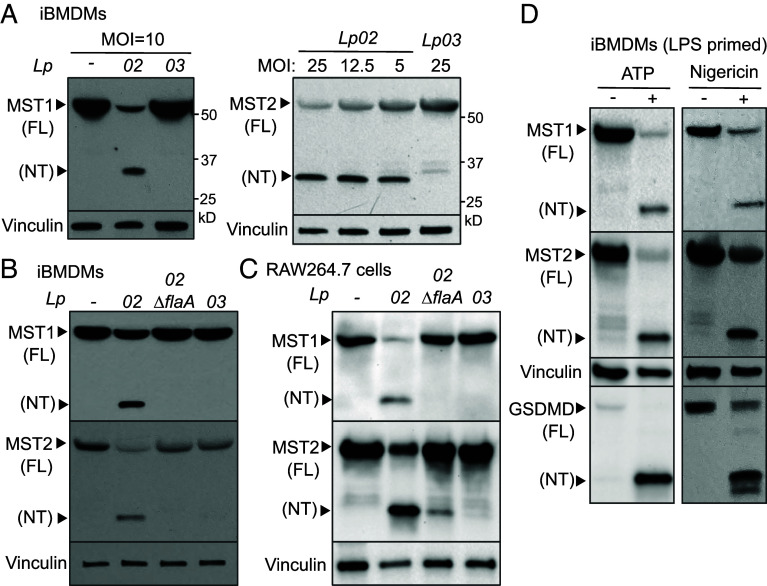
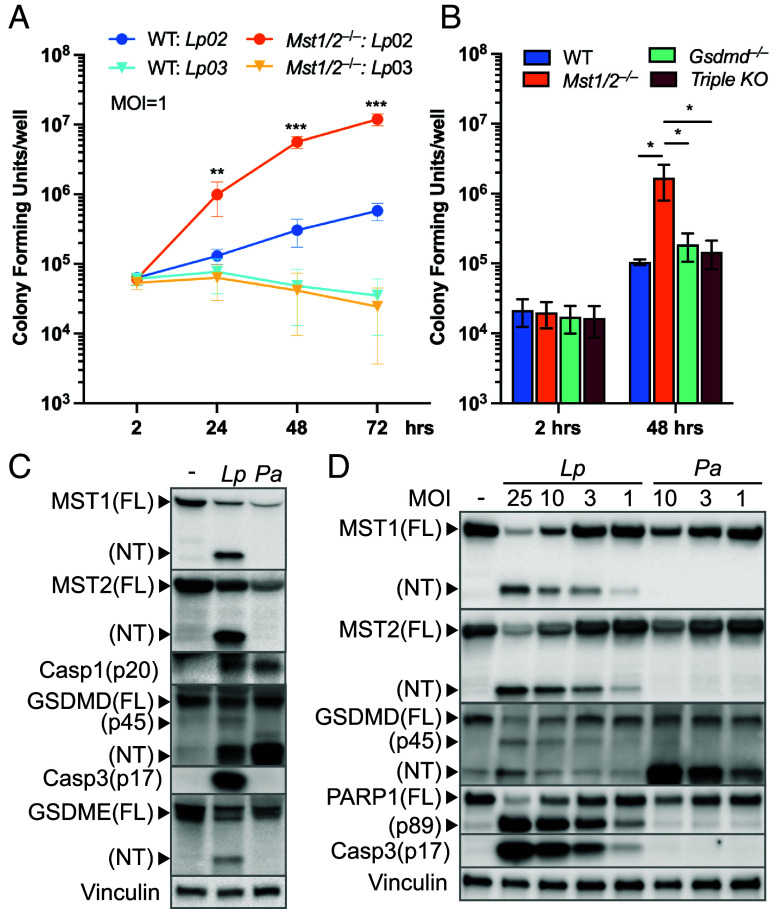
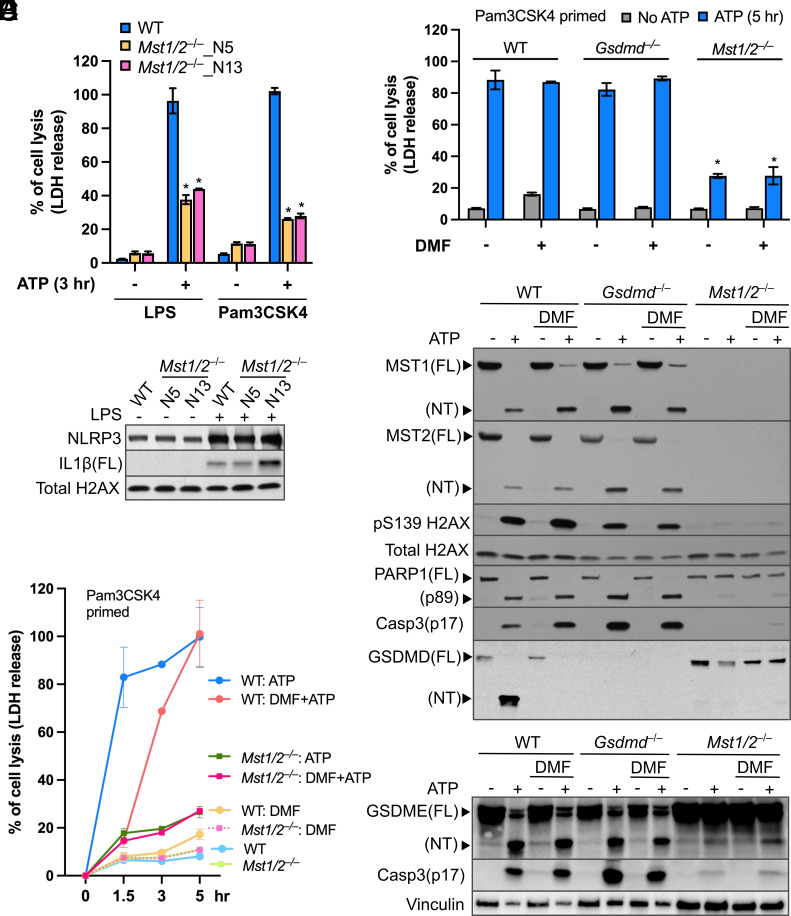
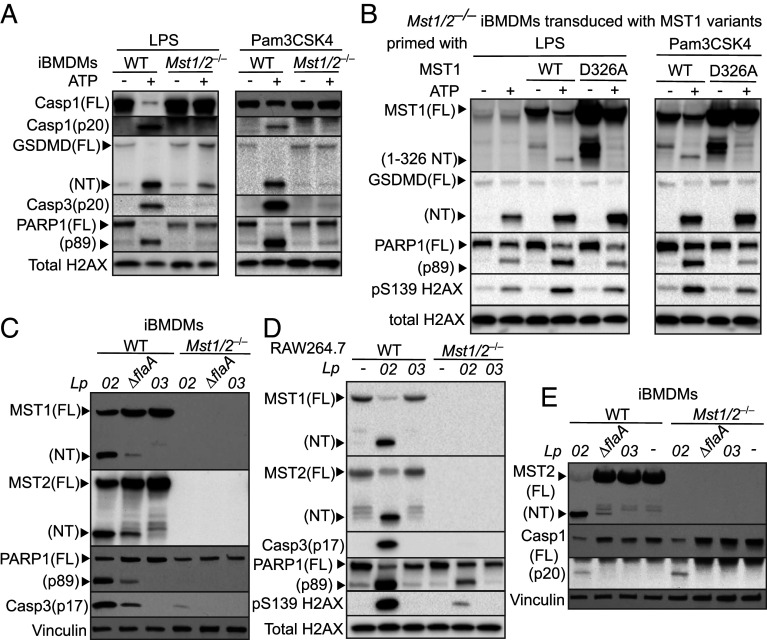
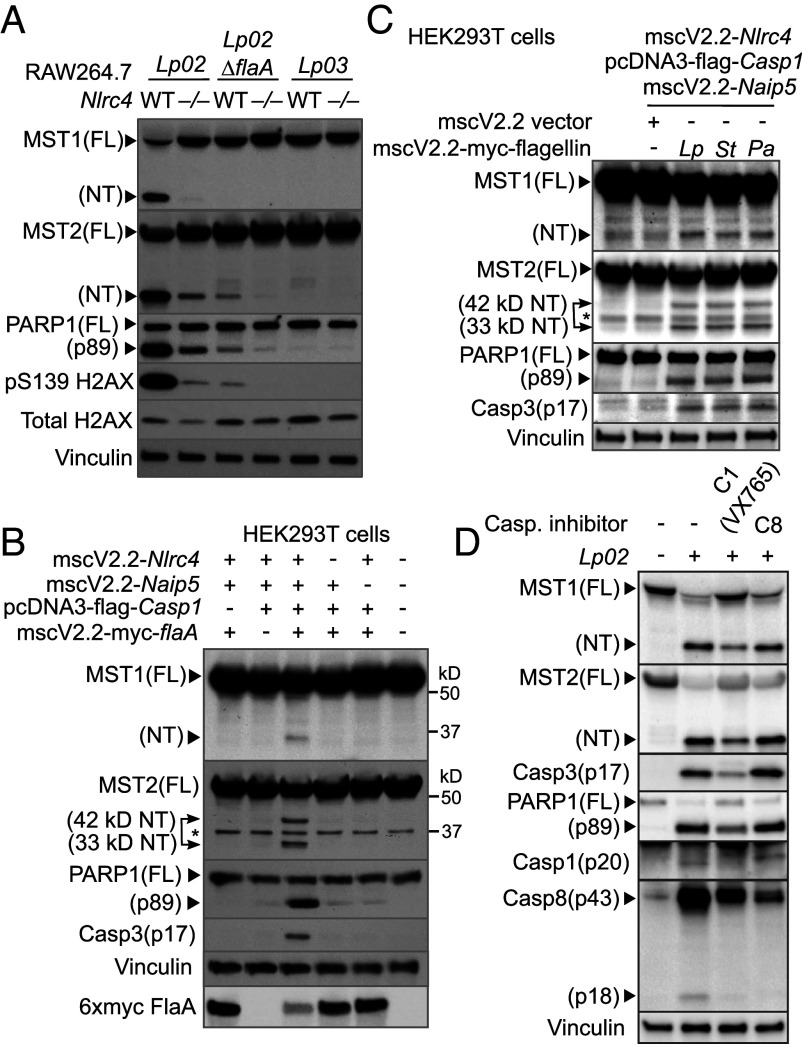
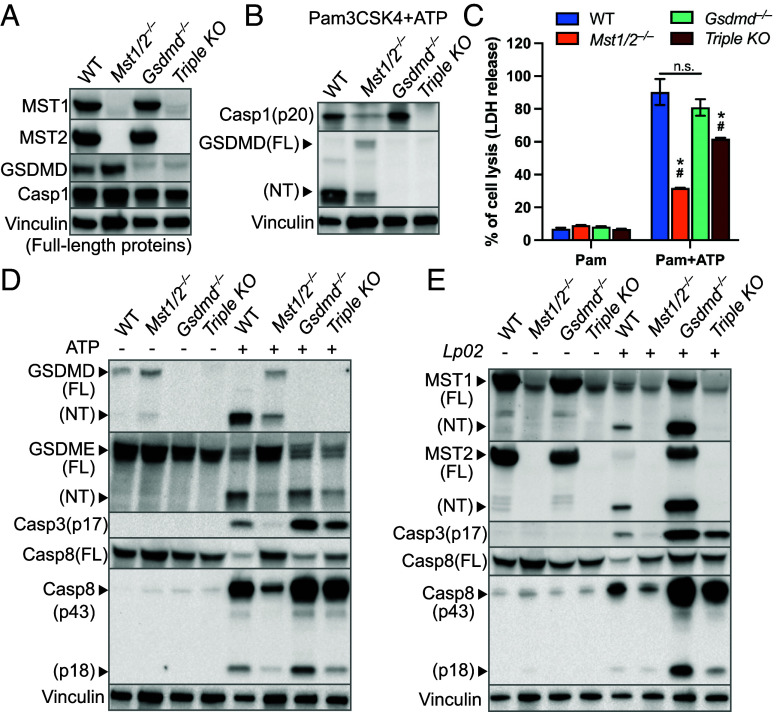
The mammalian Hippo kinases, MST1 and MST2, regulate organ development and suppress tumor formation by balancing cell proliferation and death. In macrophages, inflammasomes detect molecular patterns from invading pathogens or damaged host cells and trigger programmed cell death. In addition to lytic pyroptosis, the signatures associated with apoptosis are induced by inflammasome activation, but how the inflammasomes coordinate different cell death processes remains unclear. Here, we identify the crucial role of MST1/2 in inflammasome-triggered cell death. Macrophages proteolytically convert full-length MST1/2 into the MST1/2 N-terminal fragments (MST1/2-NT) when the NLRC4 inflammasome detects flagellin from the pathogenic bacterium, . Activation of the NLRP3 inflammasome by the damage-associated molecular pattern, extracellular ATP, also produces MST1/2-NT. Caspase-1, the protease activated by these inflammasomes, directly cleaves MST1/2, and blockage of caspase-1 inhibits MST1/2-NT production in macrophages challenged with . Importantly, MST1/2-NT production is critical for macrophages to trigger a set of death processes associated with apoptosis upon inflammasome activation and knocking out causes dysregulated gasdermin protein cleavage for pyroptotic death. Furthermore, macrophages lacking MST1/2 have increased susceptibility to virulent revealing that the Hippo kinases are important restriction factors against the pathogen. These findings demonstrate that proteolytic cleavage of MST1/2 induced by inflammatory stimuli is an immune pathway to regulate programmed cell death in macrophages and uncover a unique link between the tumor-suppressive Hippo kinases and the inflammasomes in innate immunity.
哺乳动物的Hippo激酶MST1和MST2通过平衡细胞增殖和死亡来调节器官发育并抑制肿瘤形成。在巨噬细胞中,炎性小体检测来自入侵病原体或受损宿主细胞的分子模式并触发程序性细胞死亡。除了溶解性细胞焦亡外,炎性小体激活还会诱导与细胞凋亡相关的特征,但炎性小体如何协调不同的细胞死亡过程仍不清楚。在这里,我们确定了MST1/2在炎性小体触发的细胞死亡中的关键作用。当NLRC4炎性小体检测到来自病原菌的鞭毛蛋白时,巨噬细胞会将全长MST1/2蛋白水解转化为MST1/2 N端片段(MST1/2-NT)。损伤相关分子模式细胞外ATP激活NLRP3炎性小体也会产生MST1/2-NT。这些炎性小体激活的蛋白酶Caspase-1直接切割MST1/2,阻断Caspase-1可抑制在用 攻击的巨噬细胞中MST1/2-NT的产生。重要的是,MST1/2-NT的产生对于巨噬细胞在炎性小体激活时触发一系列与细胞凋亡相关的死亡过程至关重要,敲除 会导致细胞焦亡死亡时gasdermin蛋白切割失调。此外, 缺乏MST1/2的巨噬细胞对有毒力的 易感性增加,这表明Hippo激酶是对抗病原体的重要限制因子。这些发现表明,炎症刺激诱导的MST1/2蛋白水解切割是调节巨噬细胞程序性细胞死亡的免疫途径,并揭示了肿瘤抑制性Hippo激酶与先天免疫中的炎性小体之间的独特联系。