King Hannah A D, Brammer Daniel, Lewitus Eric, Fennessey Christine M, Manalang Kimberly M, Shrader Hannah R, Andrew Shayne, Kuri Phillip, Lind Matthew, Pham Phuc, Sanders-Buell Eric, Bai Hongjun, Mason Rosemarie, Song Kaimei, McCarthy Elizabeth, Helmold Hait Sabrina, Todd John-Paul, Pegu Amarendra, Foulds Kathryn E, Lifson Jeffrey D, Keele Brandon F, Rolland Morgane, Roederer Mario, Bolton Diane L
U.S. Military HIV Research Program, Center for Infectious Disease Research, Walter Reed Army Institute of Research, Silver Spring, MD 20910.
Henry M. Jackson Foundation for the Advancement of Military Medicine, Bethesda, MD 20817.
Proc Natl Acad Sci U S A. 2025 Feb 4;122(5):e2404767122. doi: 10.1073/pnas.2404767122. Epub 2025 Jan 30.
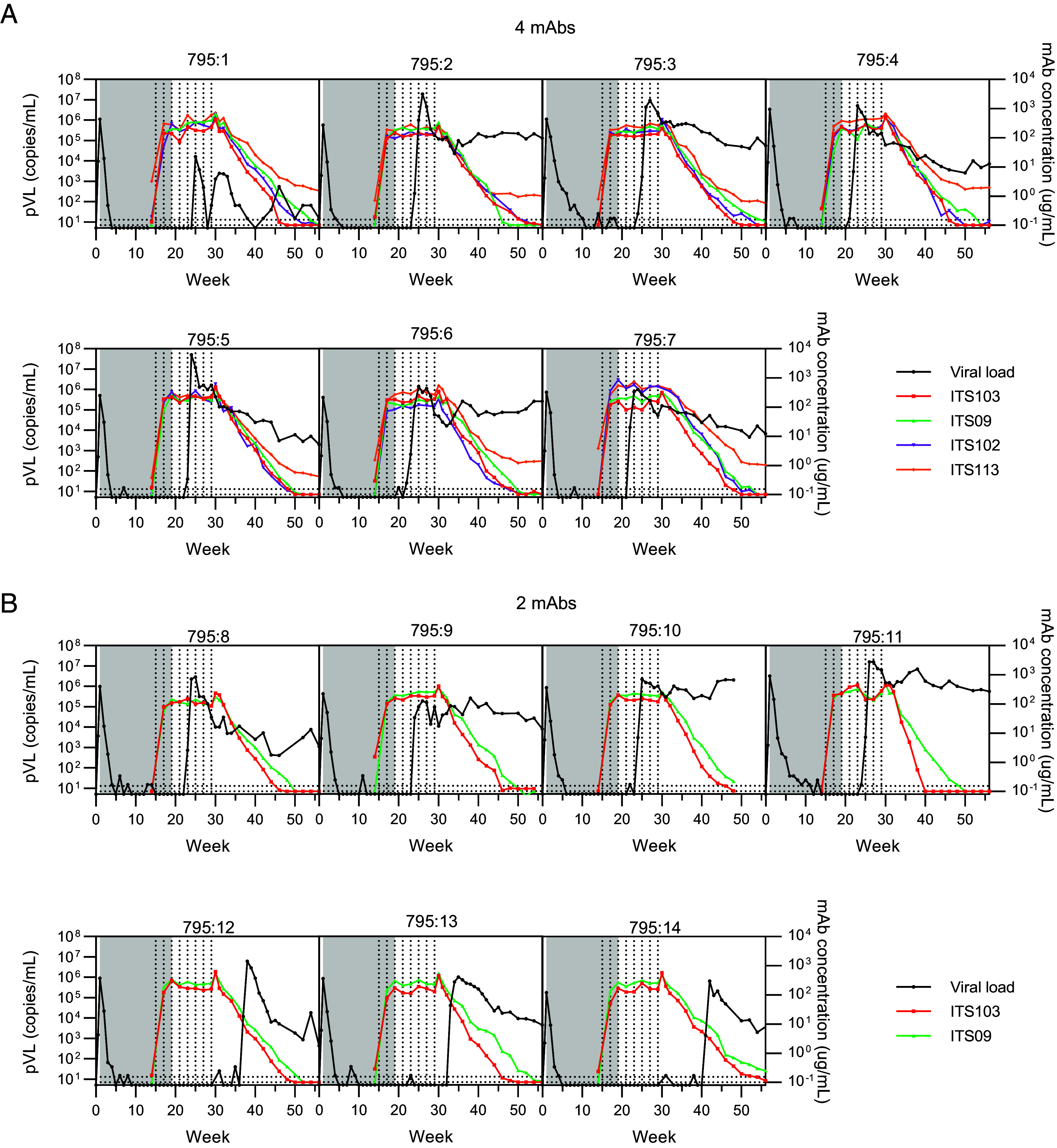
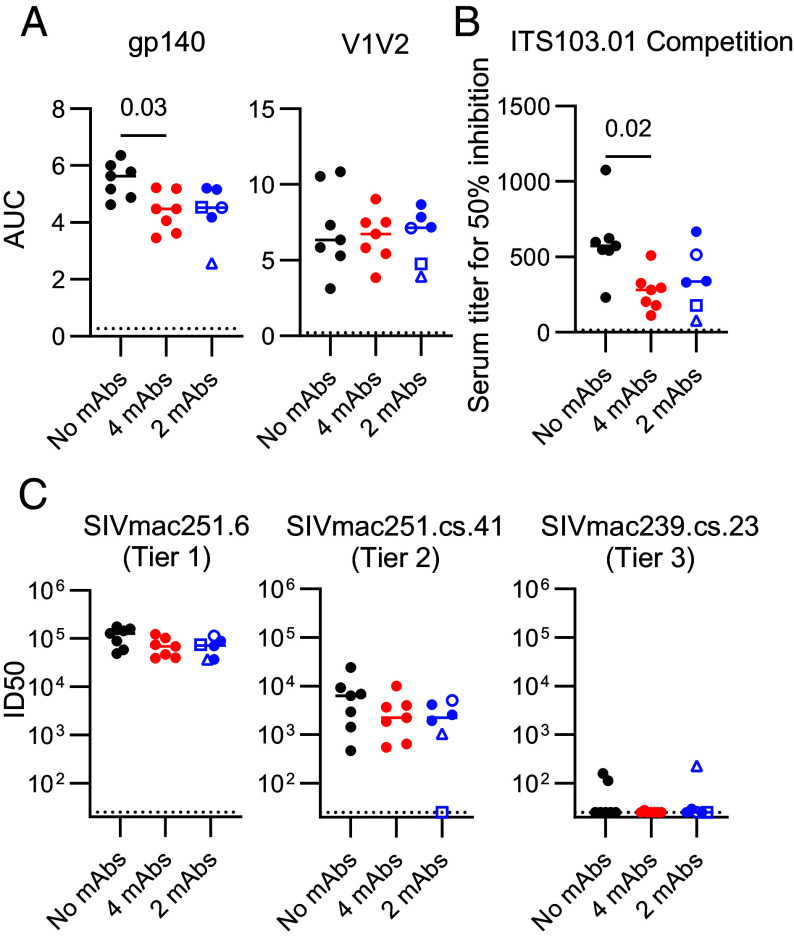
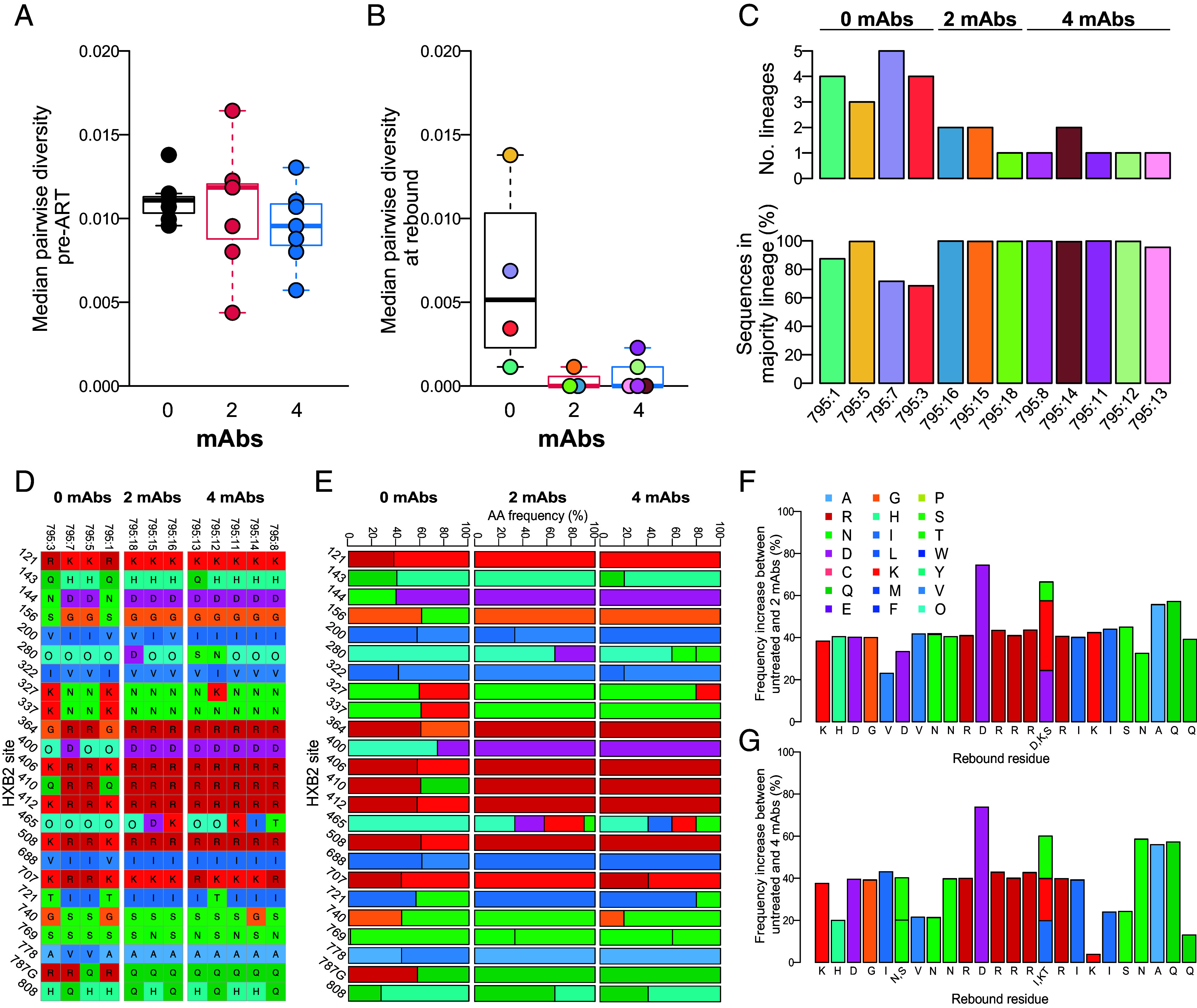
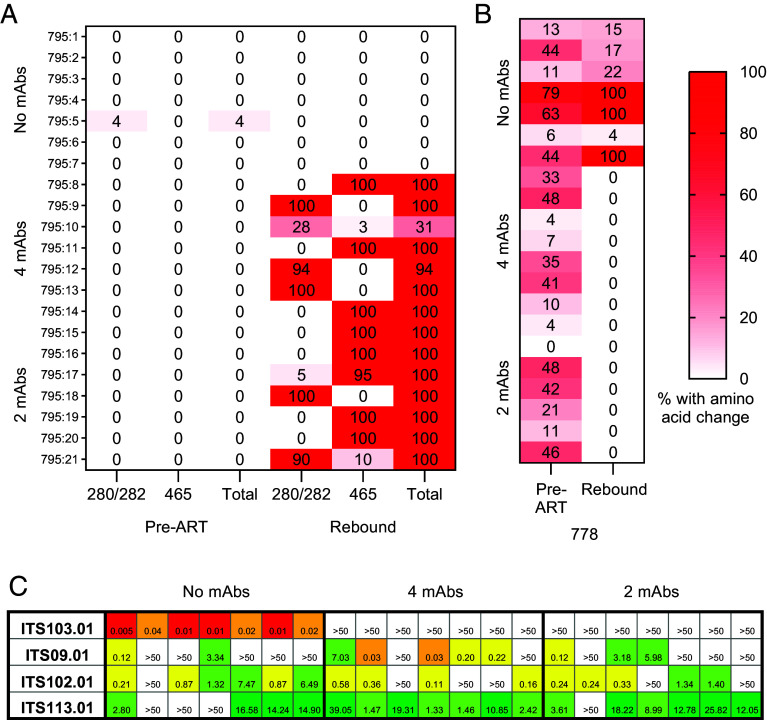
HIV-1 envelope broadly neutralizing antibodies represent a promising component of HIV-1 cure strategies. To evaluate the therapeutic efficacy of combination monoclonal antibodies (mAbs) in a rigorous nonhuman primate model, we tested different combinations of simian immunodeficiency virus (SIV) neutralizing mAbs in SIVmac251-infected rhesus macaques. Antiretroviral therapy-suppressed animals received anti-SIV mAbs targeting multiple Env epitopes spanning analytical treatment interruption (ATI) in 3 groups (n = 7 each): i) no mAb; ii) 4-mAb combination; and iii) 2-mAb combination. Each mAb was administered at 15 mg/kg, and both mAb-treated groups received ITS103.01, a highly potent CD4-binding site targeting antibody. mAb treatment delayed viral rebound, lowered rebound viremia setpoint and viral diversity, and extended animal lifespan. Compared to controls, for which viremia rebounded 2 wk following ATI, mAb infusion delayed rebound for both groups ( = 0.0003). Animals that received the 4-mAb regimen rebounded 3 to 6 wk post-ATI while the 2-mAb regimen rebounded 5 to 22 wk post-ATI. Envelope escape mutations emerged in rebound virus of mAb-treated animals that abrogated neutralization by ITS103.01, the most potent in the cocktail. These data demonstrate in vivo antiviral activity of SIV mAbs in the context of ATI via immune pressure dominated by the most potent mAb and highlight their potential in adjunctive therapeutic studies.
HIV-1包膜广泛中和抗体是HIV-1治愈策略中一个很有前景的组成部分。为了在严格的非人灵长类动物模型中评估联合单克隆抗体(mAb)的治疗效果,我们在感染了猴免疫缺陷病毒(SIV)mac251的恒河猴中测试了不同组合的SIV中和mAb。接受抗逆转录病毒治疗抑制的动物被分为3组(每组n = 7),接受靶向多个Env表位的抗SIV mAb,跨越分析性治疗中断(ATI):i)不使用mAb;ii)4种mAb组合;iii)2种mAb组合。每种mAb均以15 mg/kg的剂量给药,两个接受mAb治疗的组均接受ITS103.01,一种高效的靶向CD4结合位点的抗体。mAb治疗延迟了病毒反弹,降低了反弹病毒血症设定点和病毒多样性,并延长了动物寿命。与ATI后2周病毒血症反弹的对照组相比,mAb输注使两组的反弹均延迟(P = 0.0003)。接受4种mAb方案的动物在ATI后3至6周出现反弹,而2种mAb方案的动物在ATI后5至22周出现反弹。mAb治疗动物的反弹病毒中出现了包膜逃逸突变,这些突变消除了鸡尾酒中最有效的ITS103.01的中和作用。这些数据证明了在ATI情况下,SIV mAb通过最有效的mAb主导的免疫压力具有体内抗病毒活性,并突出了它们在辅助治疗研究中的潜力。