Yu Zhuojun, Wang Yangyang, Thomas Peter J, Chiel Hillel J
Department of Mathematics, Applied Mathematics, and Statistics, Case Western Reserve University, Cleveland, OH 44106, USA; Department of Psychology & Neuroscience Institute, Carnegie Mellon University, Pittsburgh, PA 15213, USA.
Department of Mathematics, Brandeis University, Waltham, MA 02453, USA.
J Theor Biol. 2025 May 7;604:112050. doi: 10.1016/j.jtbi.2025.112050. Epub 2025 Jan 30.
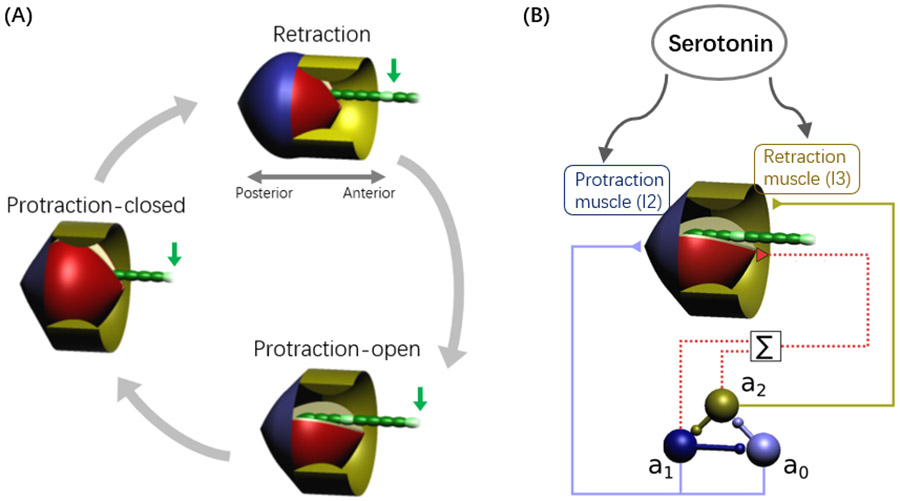
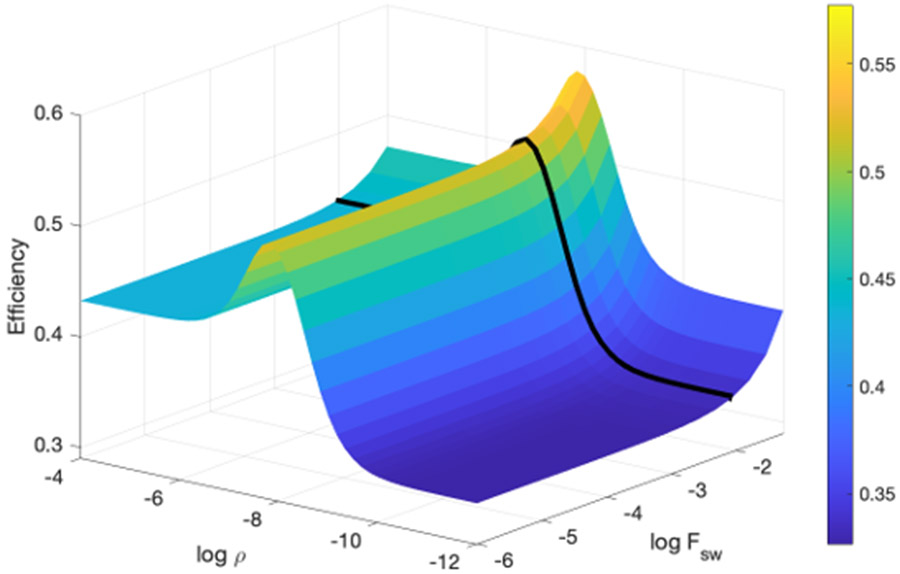
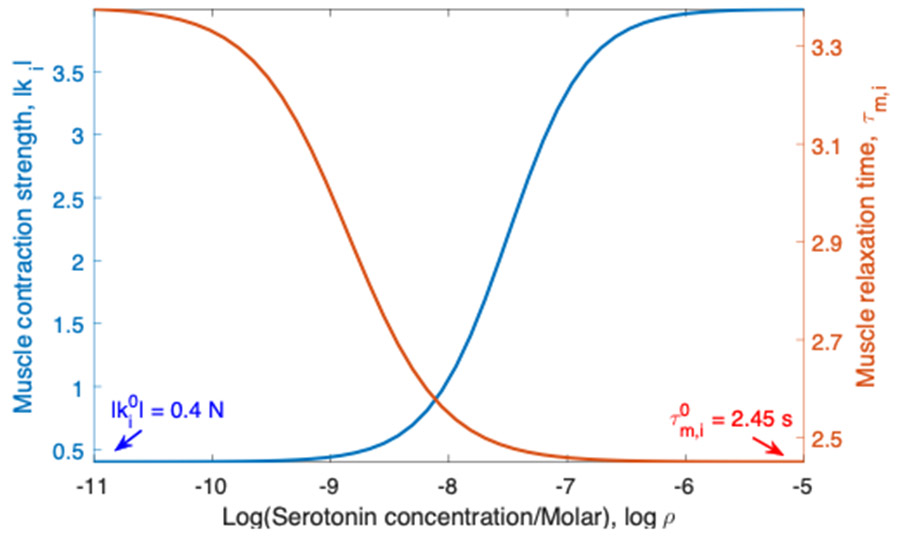
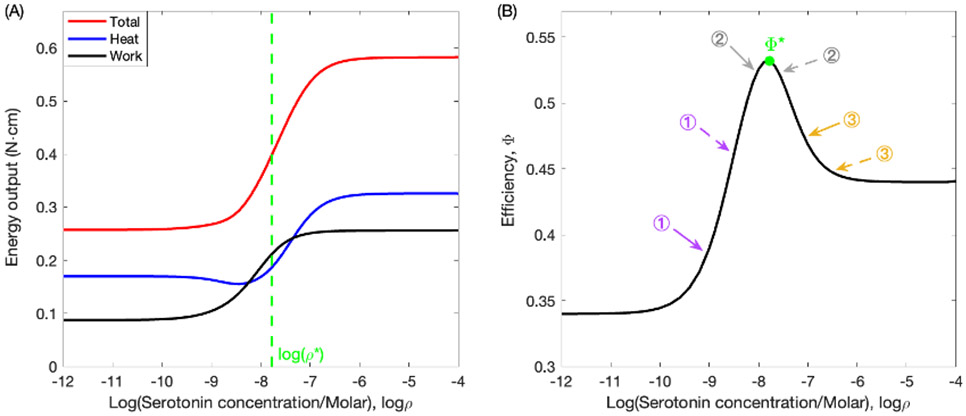
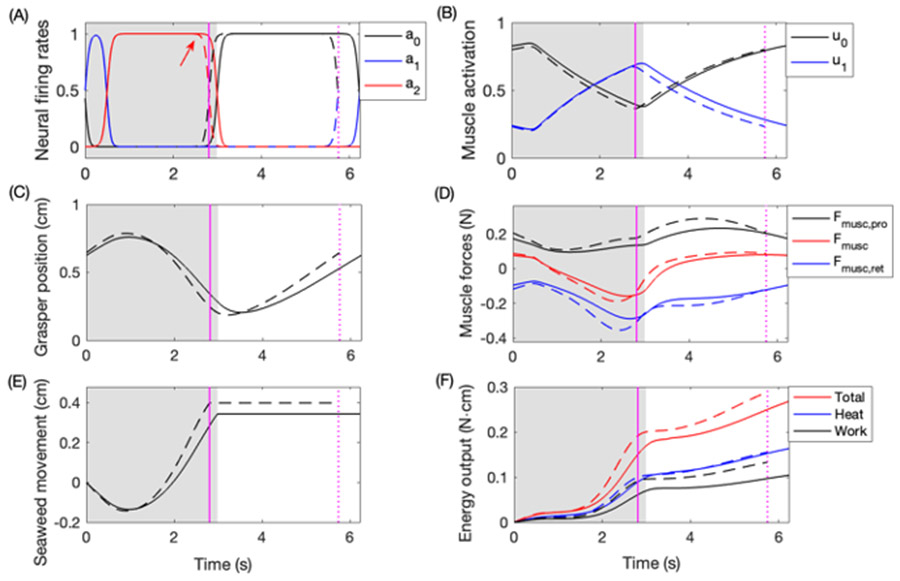
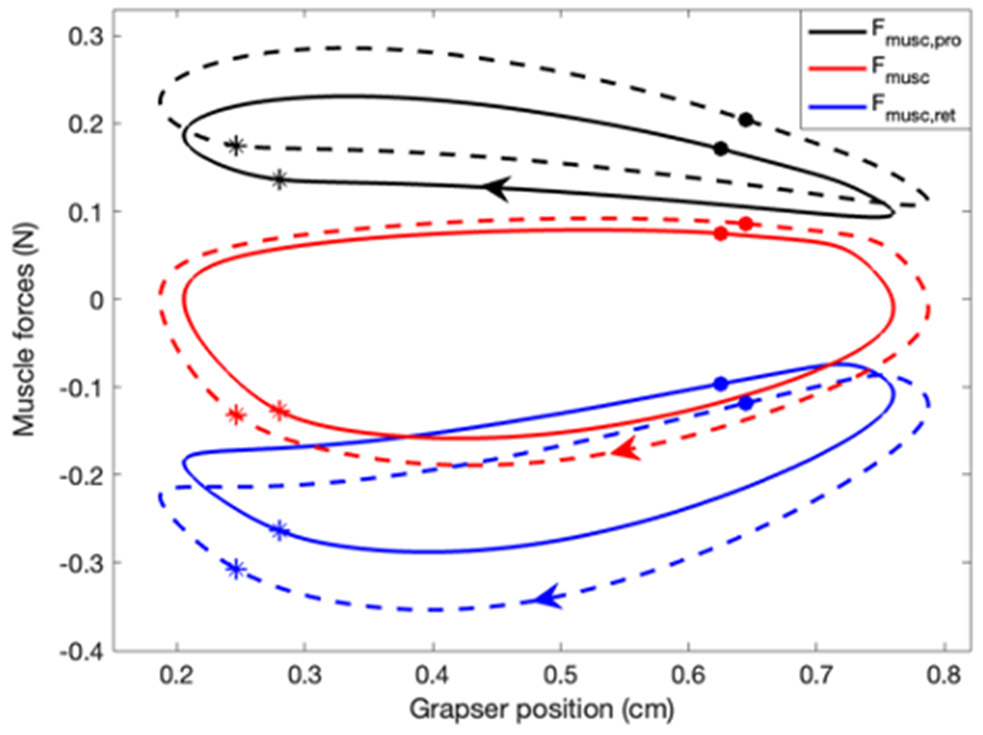
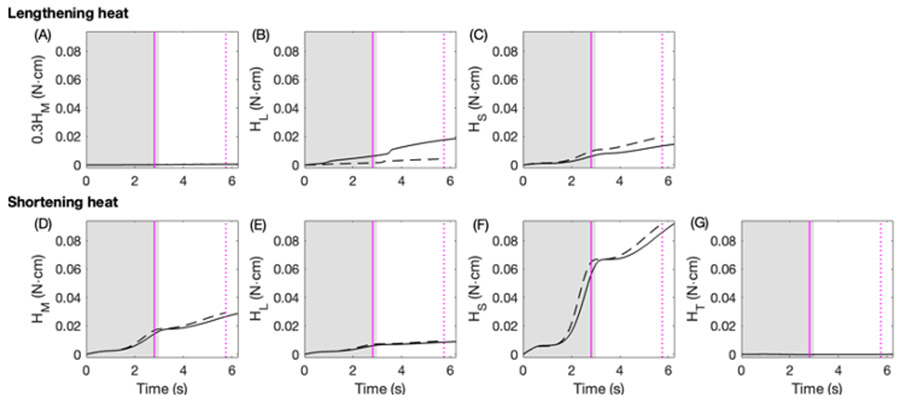
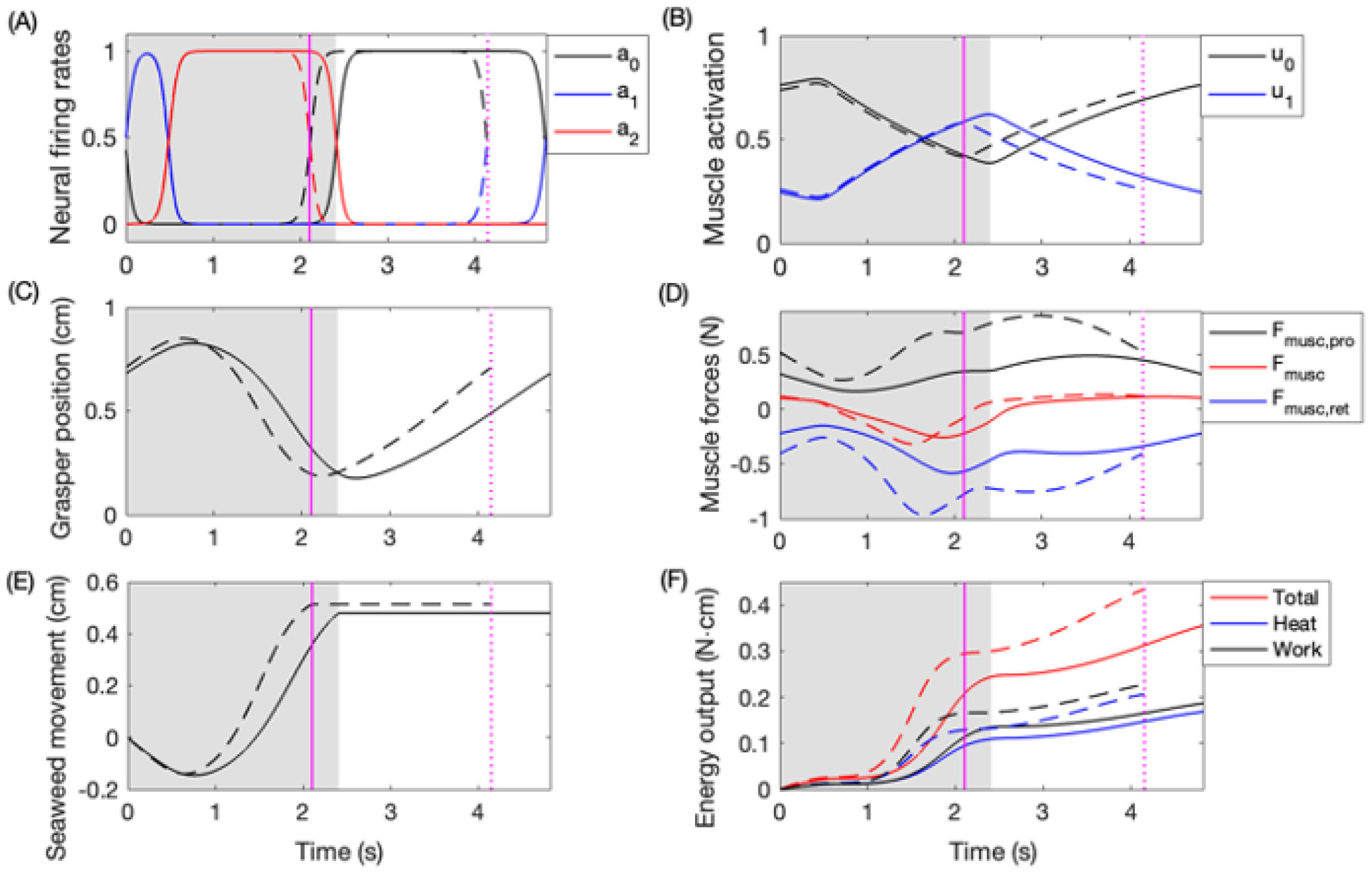
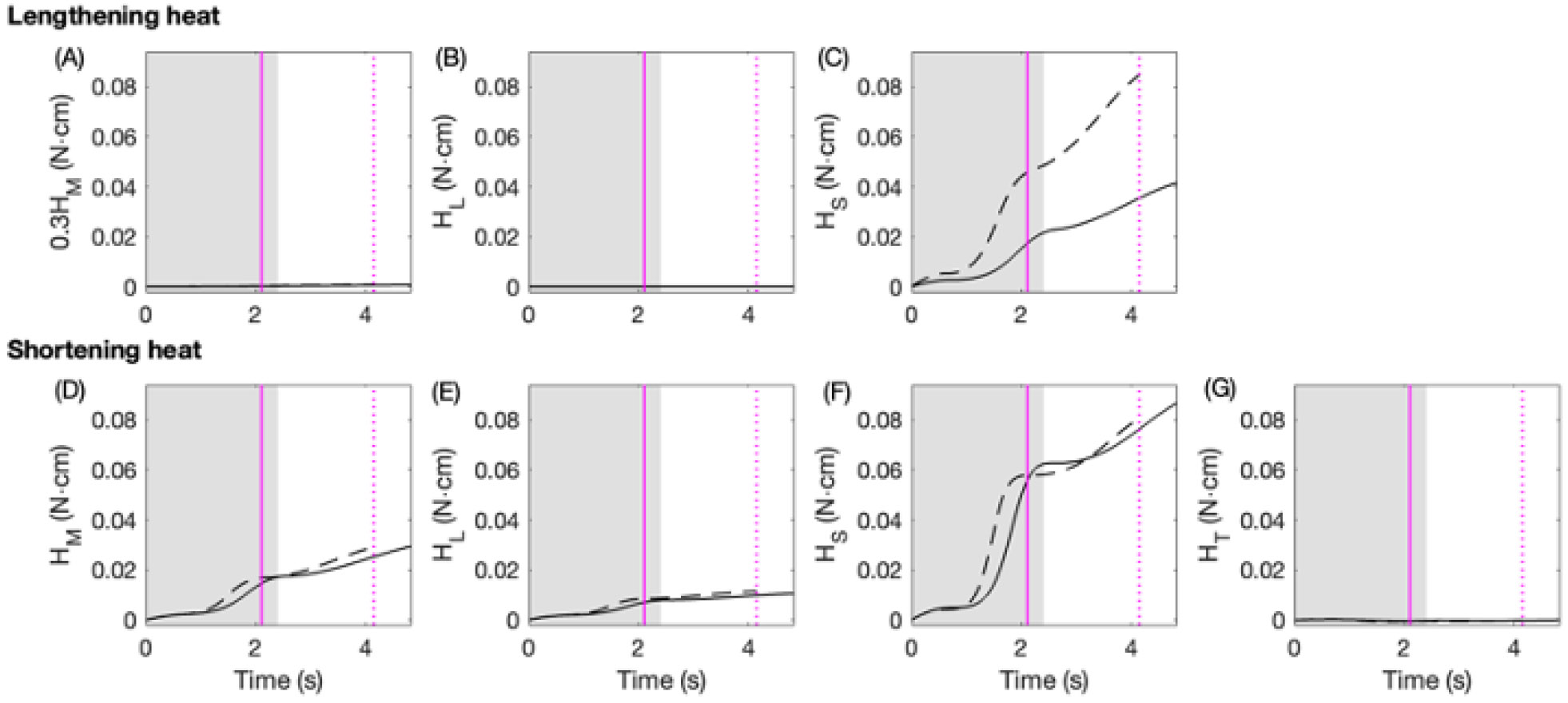
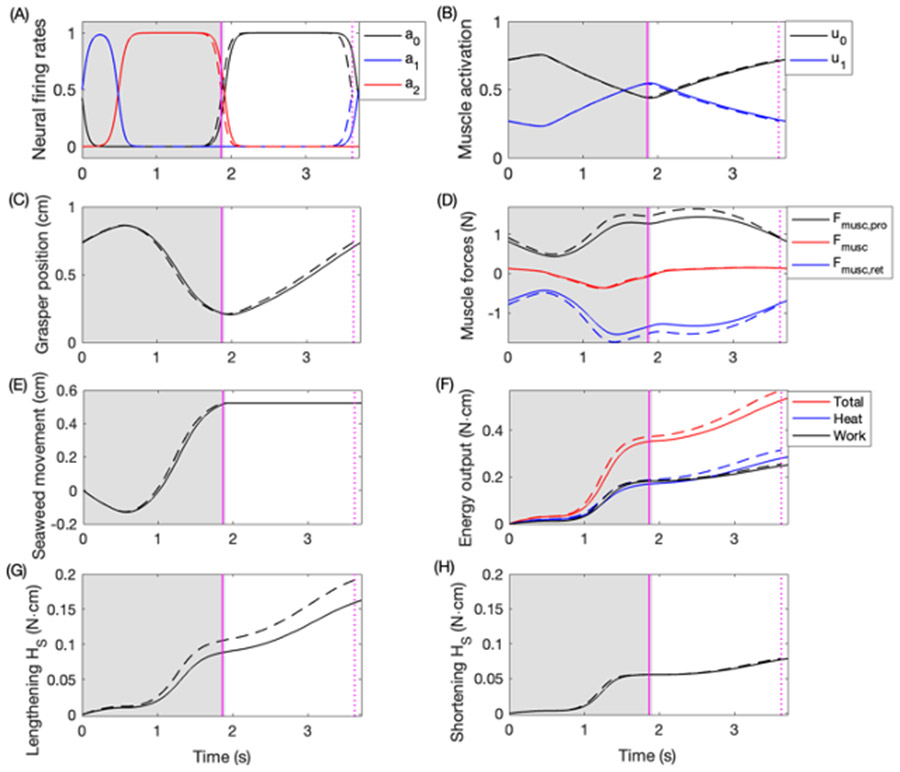
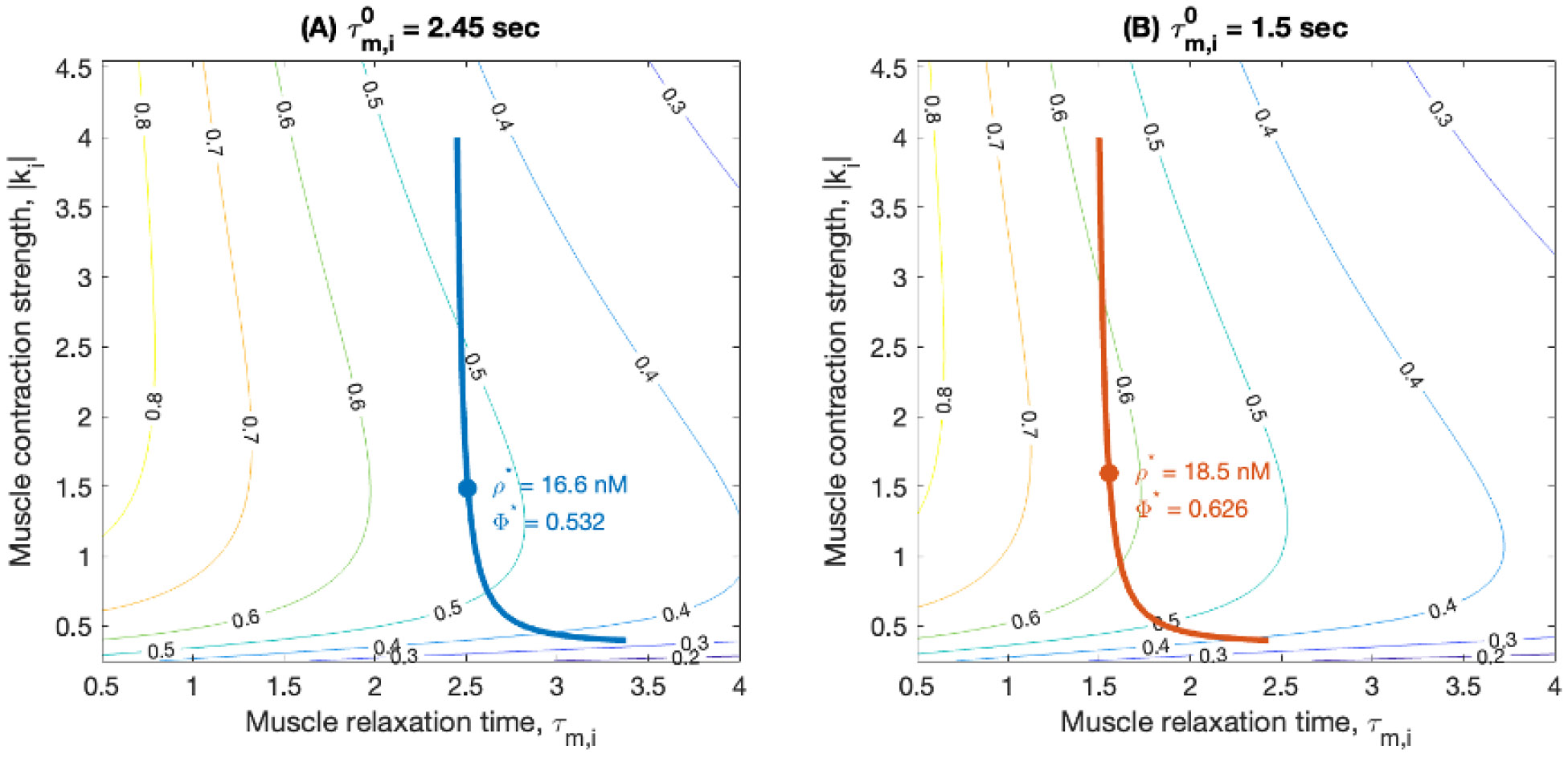
Rhythmic motor behaviors controlled by neuromechanical systems, consisting of central neural circuitry, biomechanics, and sensory feedback, show efficiency in energy expenditure. The biomechanical elements (e.g., muscles) are modulated by peripheral neuromodulation which may improve their strength and speed properties. However, there are relatively few studies on neuromodulatory control of muscle function and metabolic mechanical efficiency in neuromechanical systems. To investigate the role of neuromodulation on the system's mechanical efficiency, we consider a neuromuscular model of motor patterns for feeding in the marine mollusk Aplysia californica. By incorporating muscle energetics and neuromodulatory effects into the model, we demonstrate tradeoffs in the energy efficiency of Aplysia's rhythmic swallowing behavior as a function of the level of neuromodulation. A robust efficiency optimum arises from an intermediate level of neuromodulation, and excessive neuromodulation may be inefficient and disadvantageous to an animal's metabolism. This optimum emerges from physiological constraints imposed upon serotonergic modulation trajectories on the energy efficiency landscape. Our results may lead to experimentally testable hypotheses of the role of neuromodulation in rhythmic motor control.
由神经机械系统控制的节律性运动行为,包括中枢神经回路、生物力学和感觉反馈,在能量消耗方面表现出高效性。生物力学元件(如肌肉)受到外周神经调节的调节,这可能会改善它们的力量和速度特性。然而,关于神经机械系统中肌肉功能的神经调节控制和代谢机械效率的研究相对较少。为了研究神经调节对系统机械效率的作用,我们考虑了海蛞蝓加州海兔进食运动模式的神经肌肉模型。通过将肌肉能量学和神经调节效应纳入模型,我们证明了加州海兔节律性吞咽行为的能量效率权衡是神经调节水平的函数。稳健的效率最优值来自于中等水平的神经调节,过度的神经调节可能效率低下且对动物的新陈代谢不利。这种最优值源于对能量效率景观上血清素能调节轨迹施加的生理限制。我们的结果可能会导致关于神经调节在节律性运动控制中作用的可实验验证的假设。