Dong Bingru, Li Danyang, Song Shasha, He Na, Yue Shouwei, Yin Sen
Rehabilitation Center, Qilu Hospital of Shandong University, Jinan, 250000, Shandong, China.
Institute of Rehabilitation Engineering, University of Health and Rehabilitation Sciences, Qingdao, 266000, Shandong, China.
Neurochem Res. 2025 Feb 1;50(2):93. doi: 10.1007/s11064-025-04341-x.
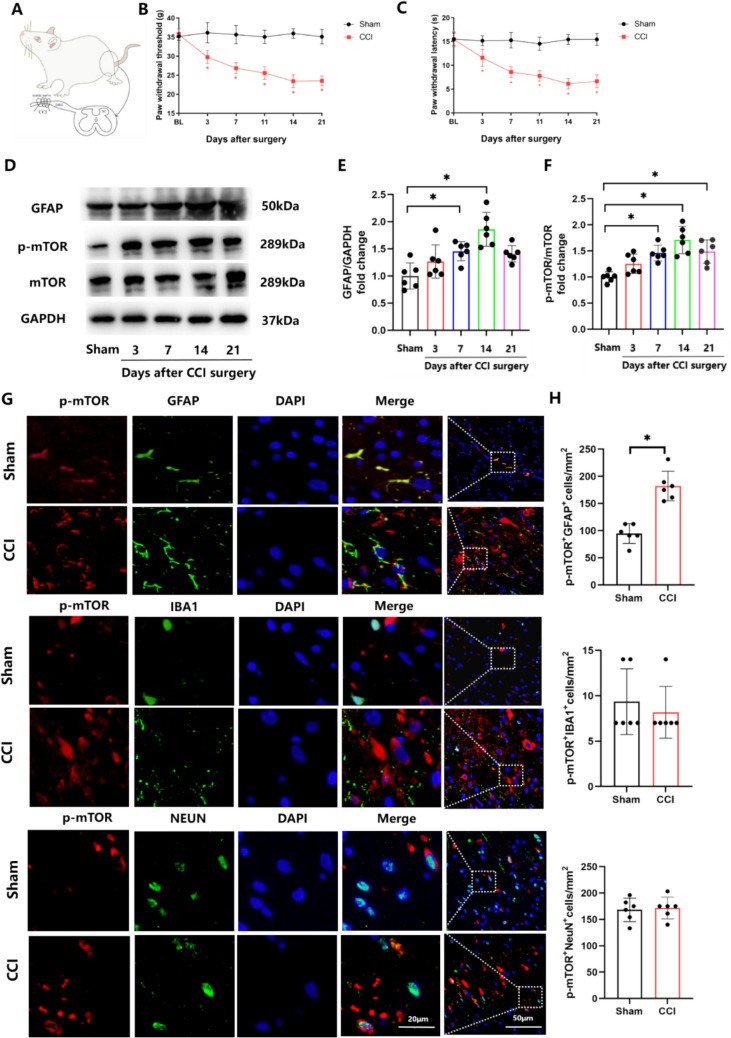
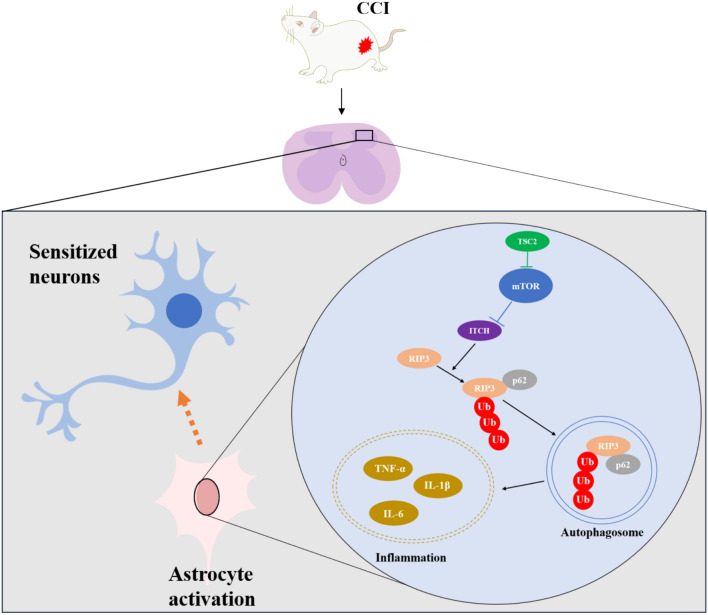
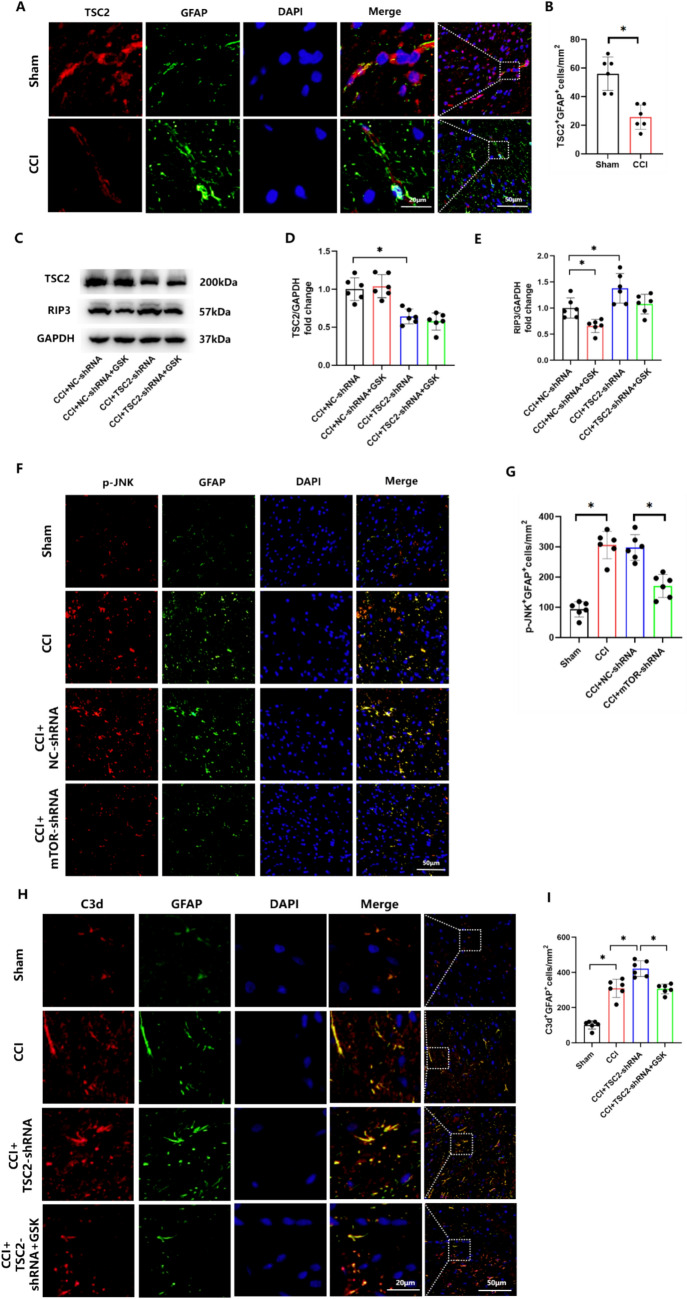
Neuropathic pain (NP), a chronic pain condition, is the result of abnormalities in both central and peripheral pain conduction pathways. Here, we investigated the underlying mechanisms associated with this effect. We found that following chronic constriction injury (CCI) surgery, there was an increase of mTOR in astrocytes and an activation of astrocytes within the spinal cord. Pharmacological inhibition of mTOR reversed CCI-induced hyperalgesia and neuroinflammation. Moreover, knockdown of astrocytic mTOR rescued the downregulation of spinal glutamate metabolism-related protein expression, underscoring the pivotal role of mTOR in modulating this pathway. Intriguingly, we observed that overexpression of mTOR, achieved via intrathecal administration of TSC2-shRNA, led to an upregulation of RIP3. Notably, pharmacological inhibition of RIP3, while ineffective in modulating mTOR activation, effectively eliminated the mTOR-induced astrocyte activation. Mechanistically, we found that mTOR controlled the expression of RIP3 in astrocytes through ITCH-mediated ubiquitination and an autophagy-dependent degradation. Taken together, our results reveal an unanticipated link between mTOR and RIP3 in promoting astrocyte activation, providing new avenues of investigation directed toward the management and treatment of NP.
神经性疼痛(NP)是一种慢性疼痛病症,是中枢和外周疼痛传导通路异常的结果。在此,我们研究了与这种效应相关的潜在机制。我们发现,在慢性缩窄损伤(CCI)手术后,脊髓内星形胶质细胞中的mTOR增加,且星形胶质细胞被激活。mTOR的药理学抑制可逆转CCI诱导的痛觉过敏和神经炎症。此外,敲低星形胶质细胞中的mTOR可挽救脊髓谷氨酸代谢相关蛋白表达的下调,突出了mTOR在调节该通路中的关键作用。有趣的是,我们观察到,通过鞘内注射TSC2-shRNA实现的mTOR过表达导致RIP3上调。值得注意的是,RIP3的药理学抑制虽然在调节mTOR激活方面无效,但有效地消除了mTOR诱导的星形胶质细胞激活。从机制上讲,我们发现mTOR通过ITCH介导的泛素化和自噬依赖性降解来控制星形胶质细胞中RIP3的表达。综上所述,我们的结果揭示了mTOR与RIP3在促进星形胶质细胞激活方面存在意想不到的联系,为NP的管理和治疗提供了新的研究途径。