Salihu Abdulsamad, Jahun Ibrahim, Oyedeji David Olusegun, Fajemisin Wole, Idogho Omokhudu, Shehu Samira, Yakubu Aminu, Anyanti Jennifer
Society for Family Health, Abuja, Nigeria.
Rady Faculty of Health Sciences, University of Manitoba, Winnipeg, Canada.
AIDS Res Ther. 2025 Feb 1;22(1):10. doi: 10.1186/s12981-025-00711-1.
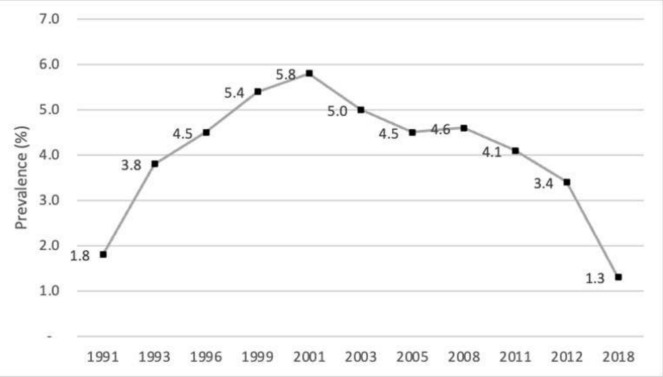
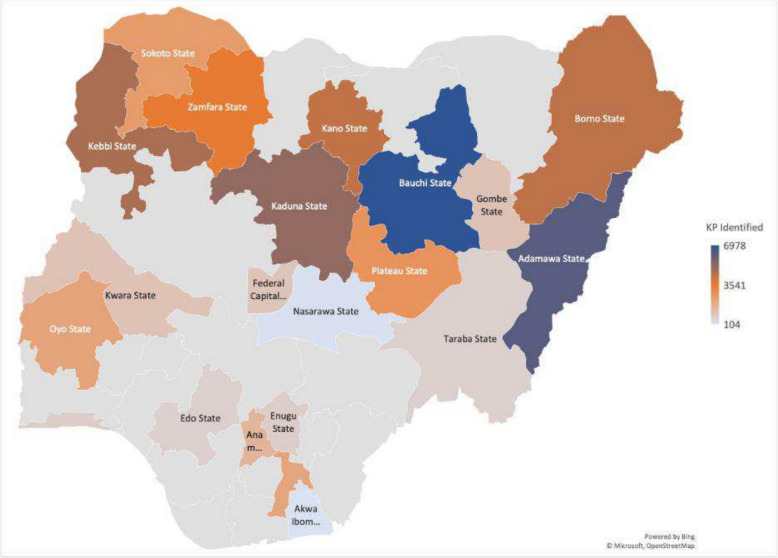
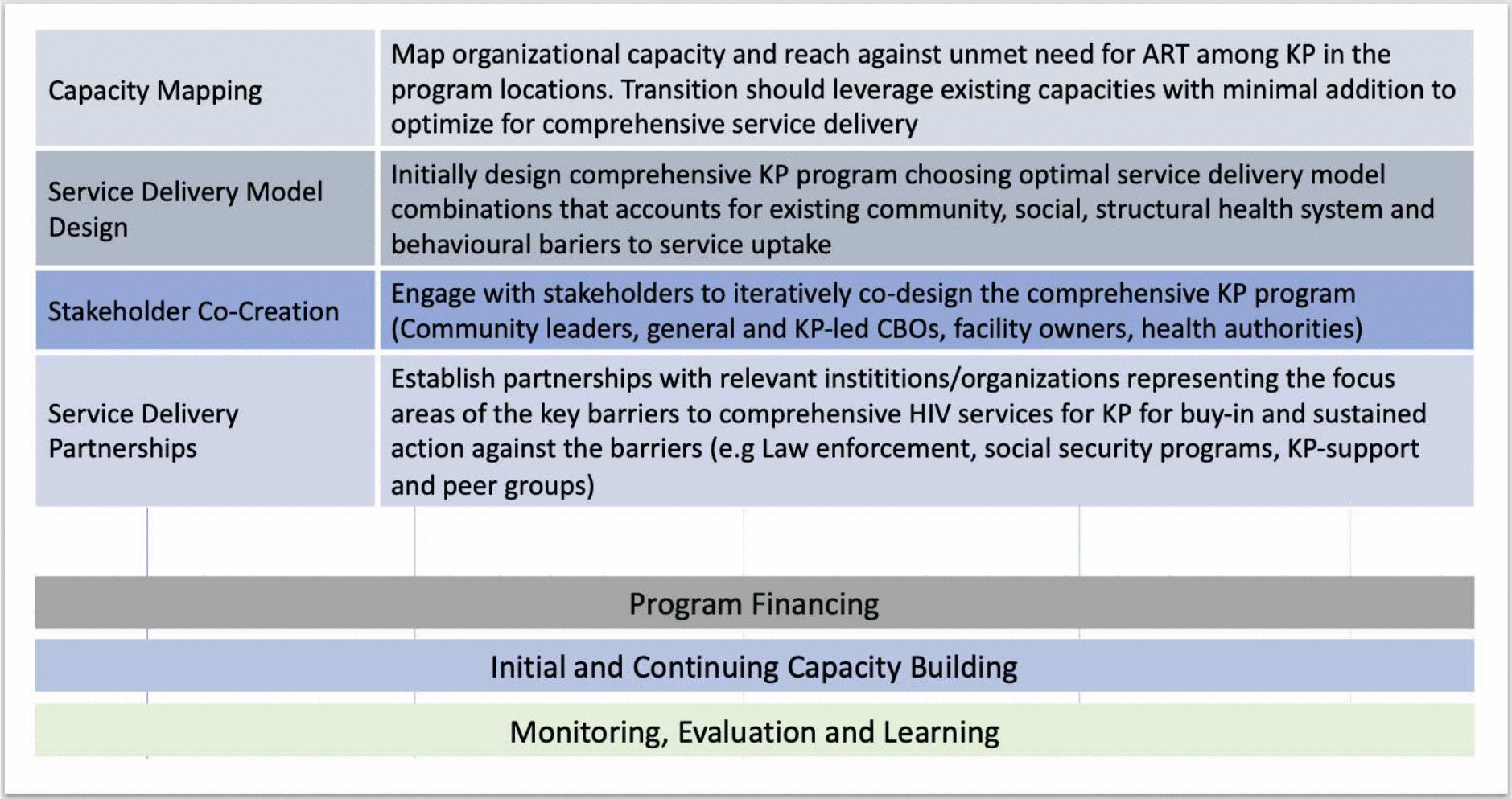
Over the years, Nigeria has recorded significant progress in controlling the HIV epidemic in the country. HIV prevalence has reduced from 4.1% in 2010 to 1.4 in 2019. The number of people acquiring new HIV infections decreased from 120,000 in 2010 to 74,000 in 2021, and HIV-related deaths decreased from 82,000 in 2010 to 51,000 in 2021. However, the country still faces challenges such as high HIV transmission among key populations (KP) who account for 11% of new HIV infections. Over the years, the government and development partners involved in HIV response efforts in Nigeria have been establishing and scaling up access to services to help address the needs of KPs. Initially, services for KPs as with the general population in Nigeria were largely preventive. Treatment of PLHIV in Nigeria commenced in 2002 and has increased from about 15,000 to more than 1.78 million PLHIVs in 2023. Despite this progress in treatment coverage, however, KPs are not equitably covered. To address this gap, the U.S. President's Emergency Plan for AIDS Relief (PEPFAR) launched an ambitious initiative-the Key Population Investment Fund (KPIF)-to target the unaddressed HIV-related needs of key populations (KPs) who are disproportionately affected by HIV. The KPIF initiative was implemented through partner organizations such as the Society for Family Health (SFH), a KP-friendly and indigenous non-governmental organization. Earlier, the program implemented by SFH was largely an HIV prevention program. SFH's transformation, transition, and growth to a comprehensive HIV prevention, care, and treatment service provider was necessary to bridge the gap in the needed expansion of HIV services to adequately meet the care needs of KPs and scale up programs. Therefore, this paper's aim is to share experiences in the transformation of SFH into a comprehensive HIV prevention, treatment, and care service provider in the hope that it may serve as a lesson for organizations with similar objectives.
多年来,尼日利亚在控制本国的艾滋病疫情方面取得了显著进展。艾滋病病毒感染率已从2010年的4.1%降至2019年的1.4%。新增艾滋病病毒感染人数从2010年的12万降至2021年的7.4万,与艾滋病相关的死亡人数从2010年的8.2万降至2021年的5.1万。然而,该国仍面临挑战,比如在占新增艾滋病病毒感染人数11%的重点人群中艾滋病病毒传播率很高。多年来,参与尼日利亚艾滋病应对工作的政府和发展伙伴一直在建立并扩大服务可及性,以帮助满足重点人群的需求。最初,针对重点人群的服务与尼日利亚普通人群的服务一样,主要是预防性的。尼日利亚对艾滋病病毒感染者的治疗始于2002年,到2023年,接受治疗的艾滋病病毒感染者人数已从约1.5万增至178万多人。尽管在治疗覆盖率方面取得了这一进展,但重点人群并未得到公平覆盖。为弥补这一差距,美国总统艾滋病紧急救援计划(PEPFAR)发起了一项雄心勃勃的倡议——重点人群投资基金(KPIF),以满足受艾滋病影响尤为严重的重点人群未得到满足的与艾滋病相关的需求。KPIF倡议是通过诸如家庭健康协会(SFH)等伙伴组织实施的,SFH是一个对重点人群友好的本土非政府组织。早些时候,SFH实施的项目主要是艾滋病预防项目。SFH向全面的艾滋病预防、护理和治疗服务提供者的转变、过渡和发展,对于弥合艾滋病服务所需扩展方面的差距、充分满足重点人群的护理需求以及扩大项目规模而言是必要的。因此,本文旨在分享SFH转变为全面的艾滋病预防、治疗和护理服务提供者的经验,希望能为有类似目标的组织提供借鉴。