Nihart Alexander J, Garcia Marcus A, El Hayek Eliane, Liu Rui, Olewine Marian, Kingston Josiah D, Castillo Eliseo F, Gullapalli Rama R, Howard Tamara, Bleske Barry, Scott Justin, Gonzalez-Estrella Jorge, Gross Jessica M, Spilde Michael, Adolphi Natalie L, Gallego Daniel F, Jarrell Heather S, Dvorscak Gabrielle, Zuluaga-Ruiz Maria E, West Andrew B, Campen Matthew J
Department of Pharmaceutical Sciences, College of Pharmacy, University of New Mexico Health Sciences, Albuquerque, NM, USA.
Division of Gastroenterology and Hepatology, Department of Internal Medicine, University of New Mexico Health Sciences Center, Albuquerque, NM, USA.
Nat Med. 2025 Apr;31(4):1114-1119. doi: 10.1038/s41591-024-03453-1. Epub 2025 Feb 3.
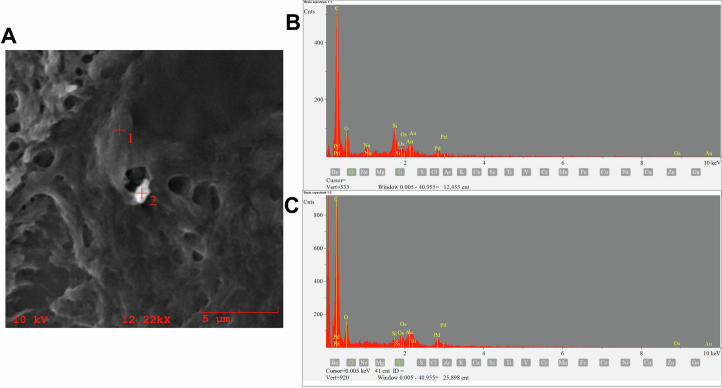
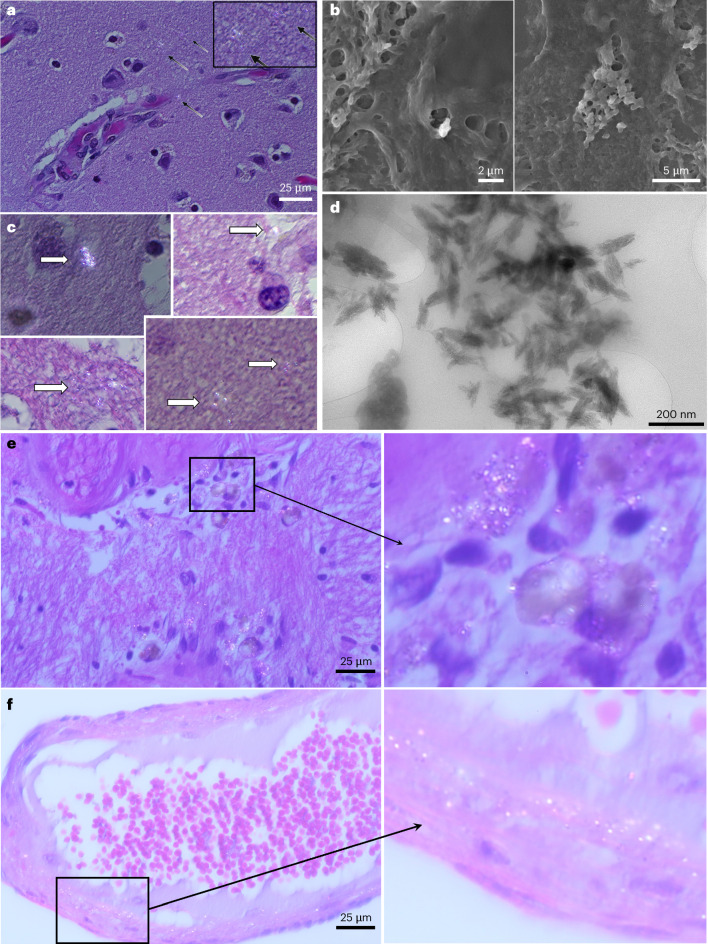
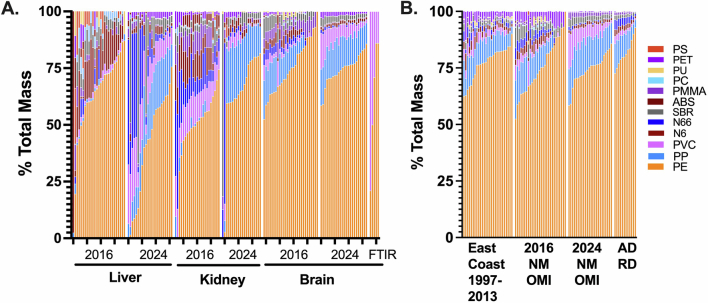
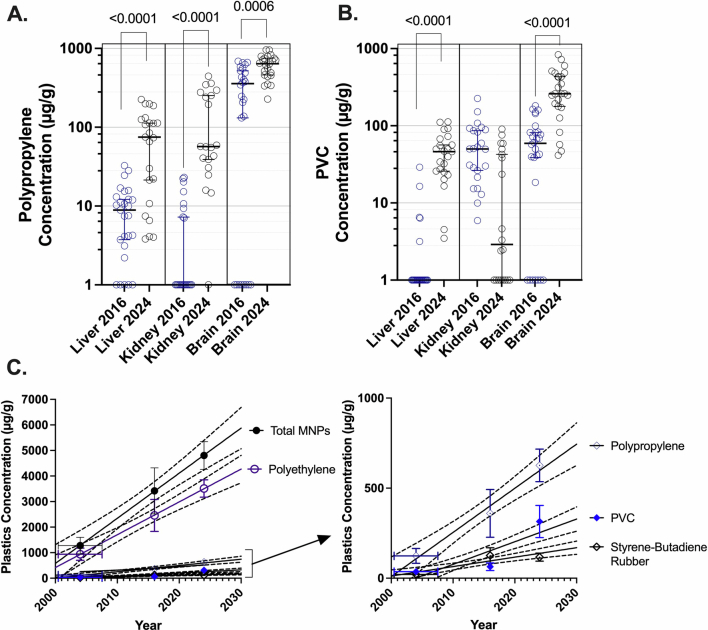
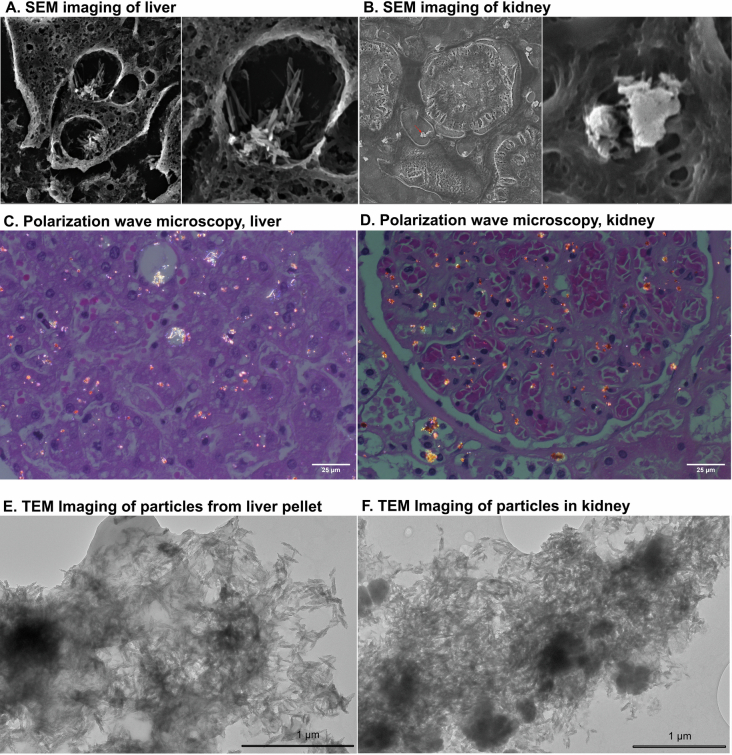
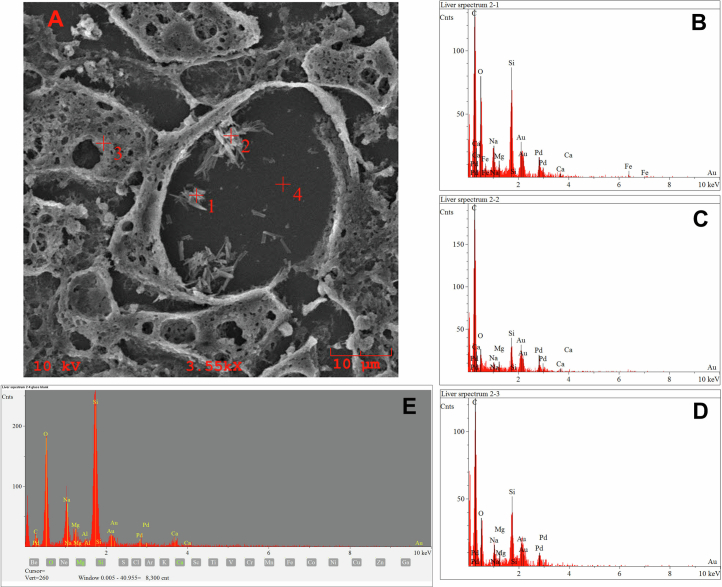
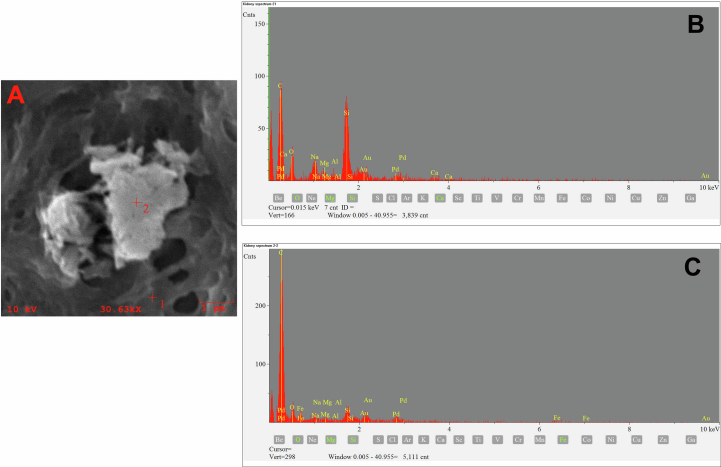
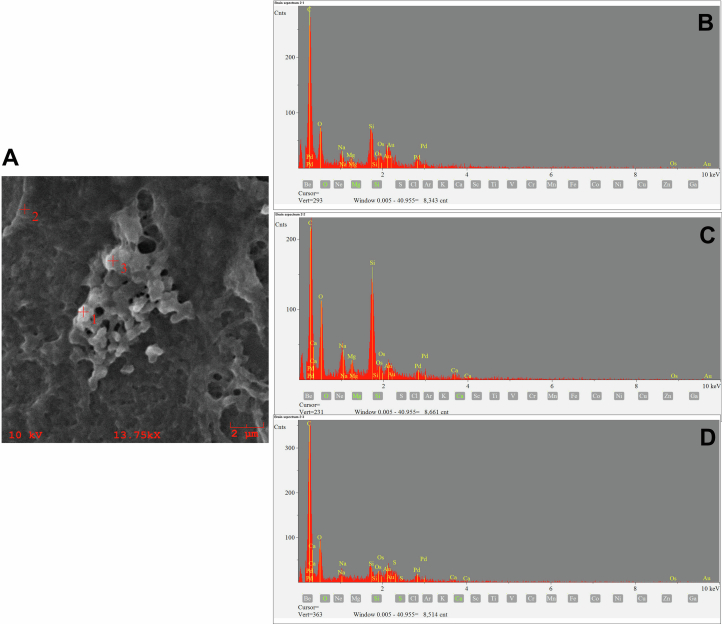
Rising global concentrations of environmental microplastics and nanoplastics (MNPs) drive concerns for human exposure and health outcomes. Complementary methods for the robust detection of tissue MNPs, including pyrolysis gas chromatography-mass spectrometry, attenuated total reflectance-Fourier transform infrared spectroscopy and electron microscopy with energy-dispersive spectroscopy, confirm the presence of MNPs in human kidney, liver and brain. MNPs in these organs primarily consist of polyethylene, with lesser but significant concentrations of other polymers. Brain tissues harbor higher proportions of polyethylene compared to the composition of the plastics in liver or kidney, and electron microscopy verified the nature of the isolated brain MNPs, which present largely as nanoscale shard-like fragments. Plastic concentrations in these decedent tissues were not influenced by age, sex, race/ethnicity or cause of death; the time of death (2016 versus 2024) was a significant factor, with increasing MNP concentrations over time in both liver and brain samples (P = 0.01). Finally, even greater accumulation of MNPs was observed in a cohort of decedent brains with documented dementia diagnosis, with notable deposition in cerebrovascular walls and immune cells. These results highlight a critical need to better understand the routes of exposure, uptake and clearance pathways and potential health consequences of plastics in human tissues, particularly in the brain.
全球环境中微塑料和纳米塑料(MNPs)浓度的不断上升引发了人们对人类接触及其健康后果的担忧。用于可靠检测组织中MNPs的补充方法,包括热解气相色谱 - 质谱法、衰减全反射 - 傅里叶变换红外光谱法和能量色散光谱电子显微镜法,证实了MNPs在人类肾脏、肝脏和大脑中的存在。这些器官中的MNPs主要由聚乙烯组成,其他聚合物的浓度较低但也具有显著意义。与肝脏或肾脏中的塑料成分相比,脑组织中聚乙烯的比例更高,电子显微镜证实了分离出的脑MNPs的性质,其主要呈现为纳米级碎片状。这些死者组织中的塑料浓度不受年龄、性别、种族/民族或死因的影响;死亡时间(2016年与2024年)是一个重要因素,肝脏和脑样本中的MNP浓度均随时间增加(P = 0.01)。最后,在一组有痴呆症诊断记录的死者大脑中观察到了更多的MNPs积累,在脑血管壁和免疫细胞中有明显沉积。这些结果凸显了迫切需要更好地了解塑料在人体组织中的接触途径、摄取和清除途径以及潜在的健康后果,特别是在大脑中。