Freitas-Cortez Maria Angelica, Masrorpour Fatemeh, Jiang Hong, Mahmud Iqbal, Lu Yue, Huang Ailing, Duong Lisa K, Wang Qi, Voss Tiffany A, Kettlun Leyton Claudia S, Wei Bo, Chan Wai-Kin, Lin Kevin, Zhang Jie, Tsouko Efrosini, Ganjoo Shonik, Barsoumian Hampartsoum B, Riad Thomas S, Hu Yun, Leuschner Carola, Puebla-Osorio Nahum, Wang Jing, Hu Jian, Davies Michael A, Puduvalli Vinay K, Billon Cyrielle, Burris Thomas P, Lorenzi Philip L, Gan Boyi, Welsh James W
Children's Research Institute, University of Texas Southwestern Medical Center, Dallas, TX, 75235, USA.
Department of Pediatrics, University of Texas Southwestern Medical Center, Dallas, TX, USA.
Mol Cancer. 2025 Feb 3;24(1):40. doi: 10.1186/s12943-024-02198-2.
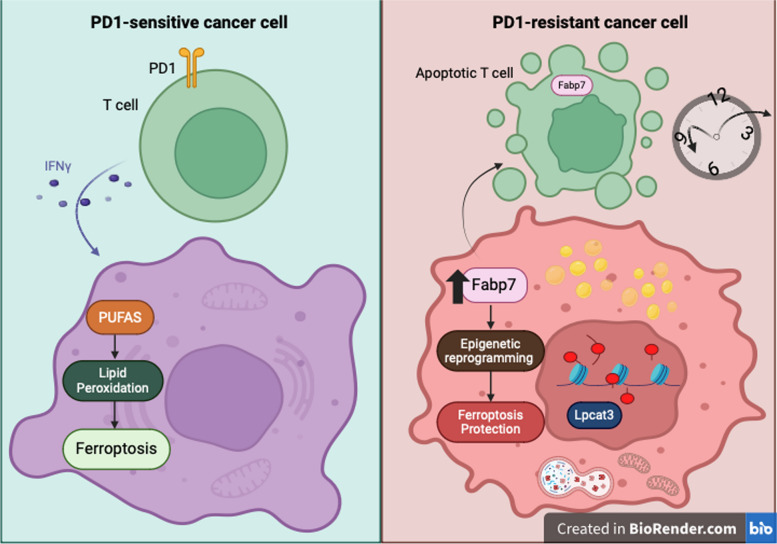
Cancer creates an immunosuppressive environment that hampers immune responses, allowing tumors to grow and resist therapy. One way the immune system fights back is by inducing ferroptosis, a type of cell death, in tumor cells through CD8 T cells. This involves lipid peroxidation and enzymes like lysophosphatidylcholine acyltransferase 3 (Lpcat3), which makes cells more prone to ferroptosis. However, the mechanisms by which cancer cells avoid immunotherapy-mediated ferroptosis are unclear. Our study reveals how cancer cells evade ferroptosis and anti-tumor immunity through the upregulation of fatty acid-binding protein 7 (Fabp7).
To explore how cancer cells resist immune cell-mediated ferroptosis, we used a comprehensive range of techniques. We worked with cell lines including PD1-sensitive, PD1-resistant, B16F10, and QPP7 glioblastoma cells, and conducted in vivo studies in syngeneic 129 Sv/Ev, C57BL/6, and conditional knockout mice with Rora deletion specifically in CD8 T cells, Cd8 cre;Rora mice. Methods included mass spectrometry-based lipidomics, targeted lipidomics, Oil Red O staining, Seahorse analysis, quantitative PCR, immunohistochemistry, PPARγ transcription factor assays, ChIP-seq, untargeted lipidomic analysis, ROS assay, ex vivo co-culture of CD8 T cells with cancer cells, ATAC-seq, RNA-seq, Western blotting, co-immunoprecipitation assay, flow cytometry and Imaging Mass Cytometry.
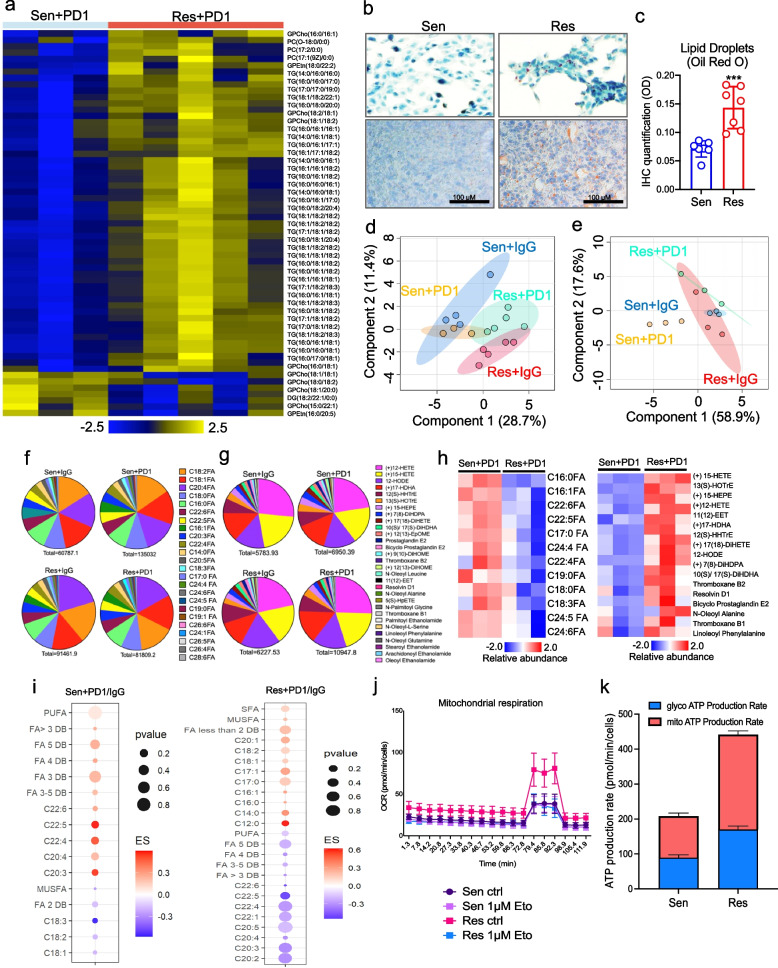
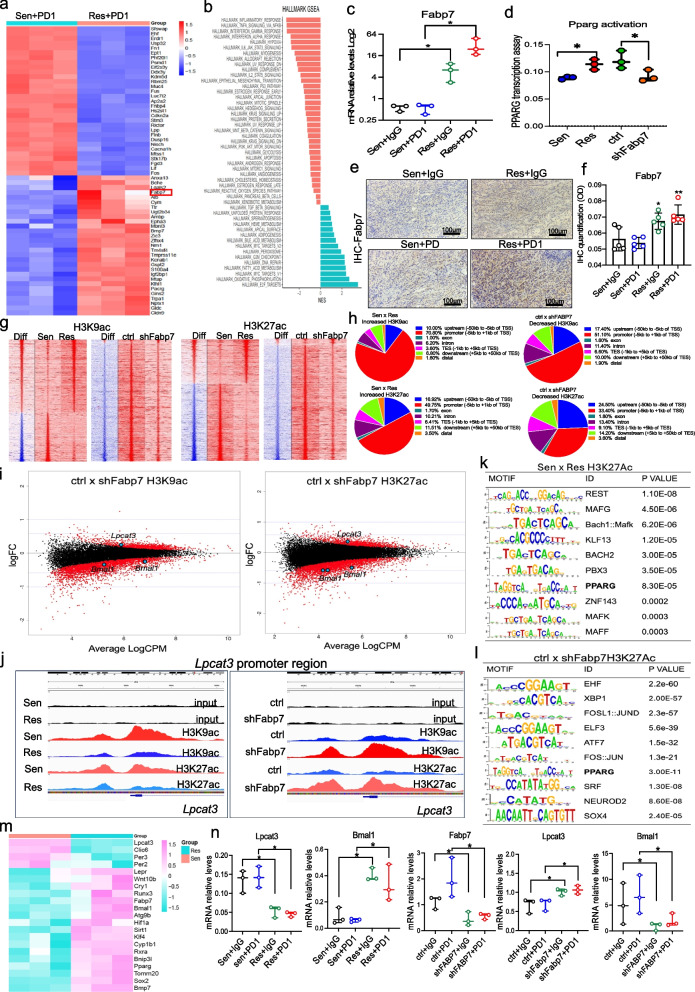
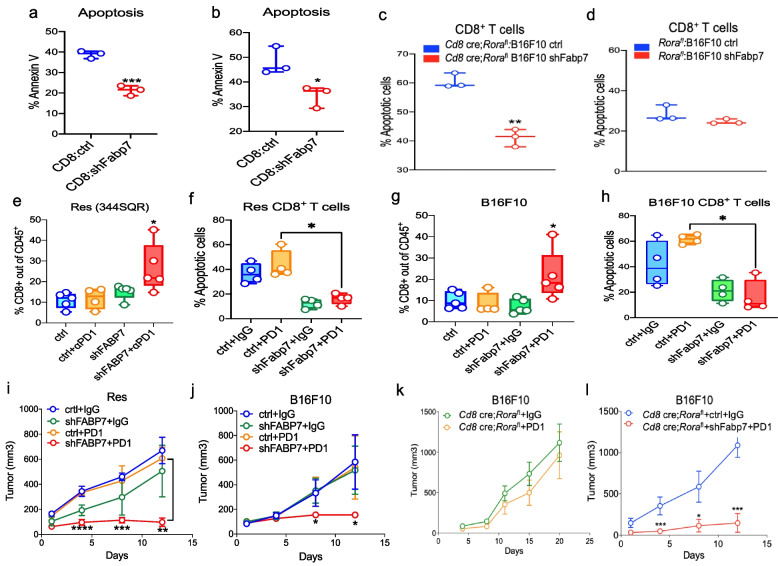
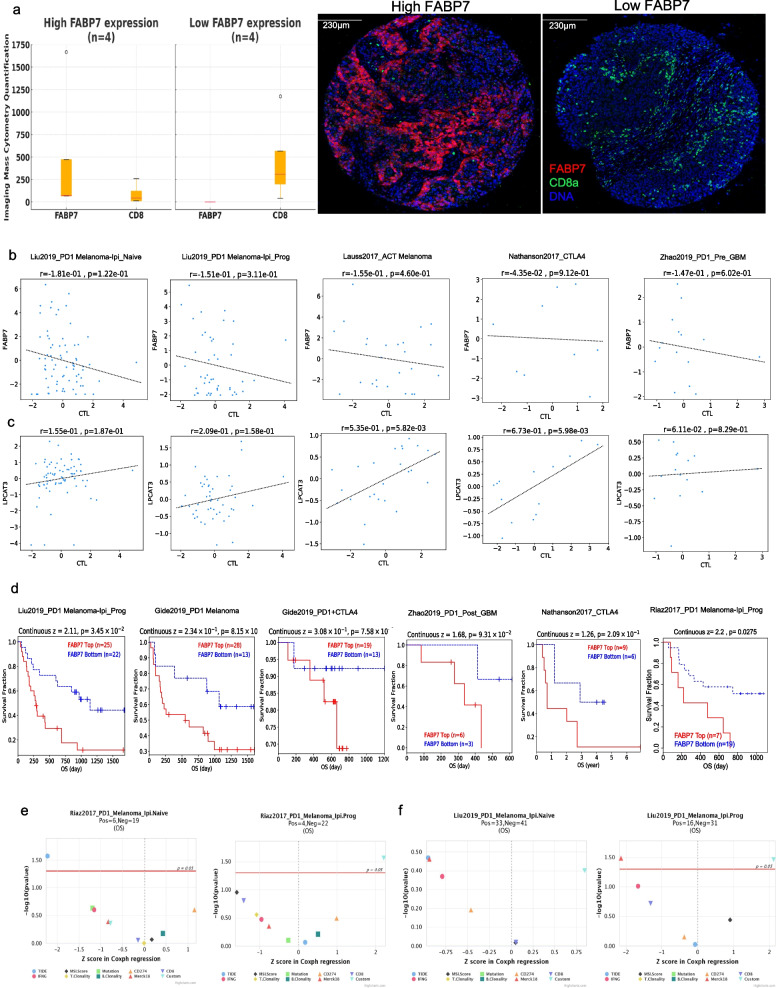
PD1-resistant tumors upregulate Fabp7, driving protective metabolic changes that shield cells from ferroptosis and evade anti-tumor immunity. Fabp7 decreases the transcription of ferroptosis-inducing genes like Lpcat3 and increases the transcription of ferroptosis-protective genes such as Bmal1 through epigenetic reprogramming. Lipidomic profiling revealed that Fabp7 increases triglycerides and monounsaturated fatty acids (MUFAs), which impede lipid peroxidation and ROS generation. Fabp7 also improves mitochondrial function and fatty acid oxidation (FAO), enhancing cancer cell survival. Furthermore, cancer cells increase Fabp7 expression in CD8 T cells, disrupting circadian clock gene expression and triggering apoptosis through p53 stabilization. Clinical trial data revealed that higher FABP7 expression correlates with poorer overall survival and progression-free survival in patients undergoing immunotherapy.
Our study uncovers a novel mechanism by which cancer cells evade immune-mediated ferroptosis through Fabp7 upregulation. This protein reprograms lipid metabolism and disrupts circadian regulation in immune cells, promoting tumor survival and resistance to immunotherapy. Targeting Fabp7 could enhance immunotherapy effectiveness by re-sensitizing resistant tumors to ferroptosis.
癌症会营造一种免疫抑制环境,阻碍免疫反应,使肿瘤得以生长并抵抗治疗。免疫系统反击的一种方式是通过CD8 T细胞诱导肿瘤细胞发生铁死亡,这是一种细胞死亡类型。这涉及脂质过氧化以及诸如溶血磷脂酰胆碱酰基转移酶3(Lpcat3)等酶,这些酶会使细胞更容易发生铁死亡。然而,癌细胞避免免疫疗法介导的铁死亡的机制尚不清楚。我们的研究揭示了癌细胞如何通过上调脂肪酸结合蛋白7(Fabp7)来逃避铁死亡和抗肿瘤免疫。
为了探究癌细胞如何抵抗免疫细胞介导的铁死亡,我们使用了一系列综合技术。我们使用了包括对PD1敏感、对PD1耐药的细胞系、B16F10细胞系以及QPP7胶质母细胞瘤细胞系,并在同基因的129 Sv/Ev、C57BL/6以及特异性缺失CD8 T细胞中Rora的条件性敲除小鼠(Cd8 cre;Rora小鼠)中进行了体内研究。方法包括基于质谱的脂质组学、靶向脂质组学、油红O染色、海马分析、定量PCR、免疫组织化学、PPARγ转录因子测定、ChIP-seq、非靶向脂质组学分析、ROS测定、CD8 T细胞与癌细胞的体外共培养、ATAC-seq、RNA-seq、蛋白质免疫印迹法、免疫共沉淀测定、流式细胞术以及成像质谱流式细胞术。
对PD1耐药的肿瘤上调Fabp7,驱动保护性代谢变化,使细胞免受铁死亡影响并逃避抗肿瘤免疫。Fabp7通过表观遗传重编程降低铁死亡诱导基因如Lpcat3的转录,并增加铁死亡保护基因如Bmal1的转录。脂质组分析表明,Fabp7增加甘油三酯和单不饱和脂肪酸(MUFA),这会阻碍脂质过氧化和ROS生成。Fabp7还改善线粒体功能和脂肪酸氧化(FAO),提高癌细胞的存活率。此外,癌细胞会增加CD8 T细胞中Fabp7的表达,破坏生物钟基因表达并通过p53稳定化触发细胞凋亡。临床试验数据显示,在接受免疫治疗的患者中,较高的FABP7表达与较差的总生存期和无进展生存期相关。
我们的研究揭示了一种新机制,即癌细胞通过上调Fabp7逃避免疫介导的铁死亡。这种蛋白质重新编程脂质代谢并破坏免疫细胞中的昼夜节律调节,促进肿瘤存活和对免疫治疗的抗性。靶向Fabp7可能通过使耐药肿瘤对铁死亡重新敏感来提高免疫治疗的有效性。