
肾纤维化的体外和体内模型:迈向生理相关人源化模型的路径。
Kidney Fibrosis In Vitro and In Vivo Models: Path Toward Physiologically Relevant Humanized Models.
作者信息
Addario Gabriele, Moroni Lorenzo, Mota Carlos
机构信息
Department of Complex Tissue Regeneration, MERLN Institute for Technology-Inspired Regenerative Medicine, Maastricht University, ER Maastricht, 6229, The Netherlands.
出版信息
Adv Healthc Mater. 2025 Apr;14(9):e2403230. doi: 10.1002/adhm.202403230. Epub 2025 Feb 5.
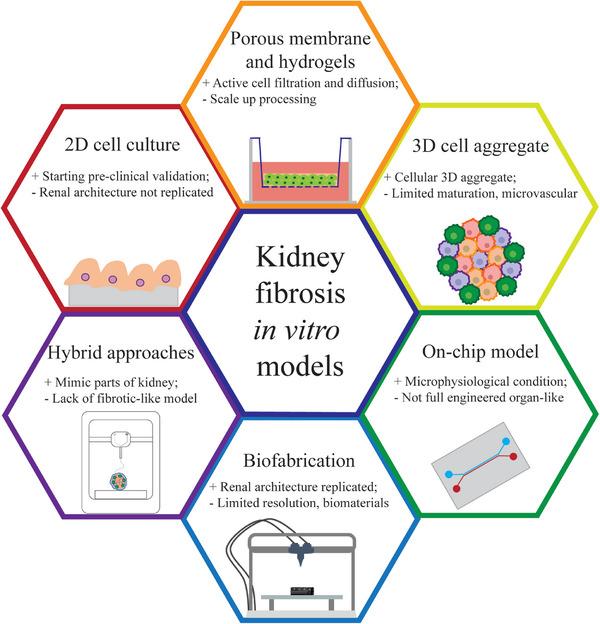
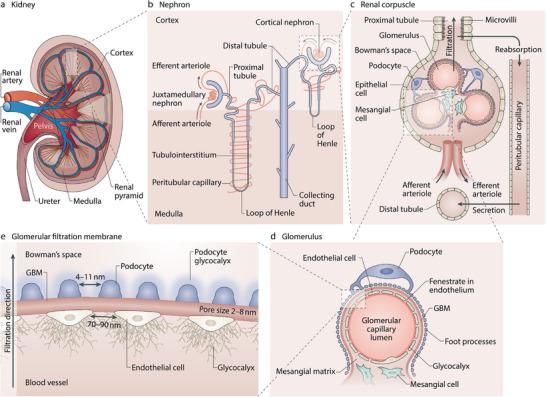
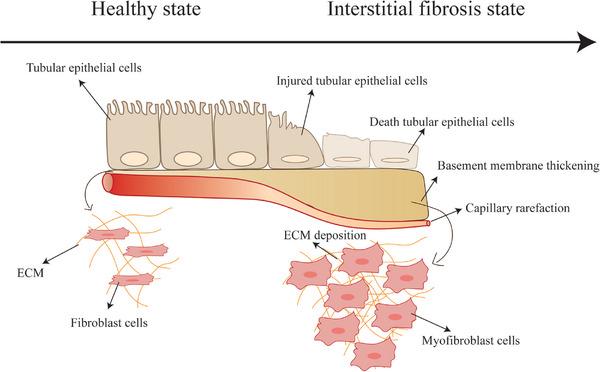
Chronic kidney disease (CKD) affects over 10% of the global population and is a leading cause of mortality. Kidney fibrosis, a key endpoint of CKD, disrupts nephron tubule anatomy and filtration function, and disease pathomechanisms are not fully understood. Kidney fibrosis is currently investigated with in vivo models, that gradually support the identification of possible mechanisms of fibrosis, but with limited translational research, as they do not fully recapitulate human kidney physiology, metabolism, and molecular pathways. In vitro 2D cell culture models are currently used, as a starting point in disease modeling and pharmacology, however, they lack the 3D kidney architecture complexity and functions. The failure of several therapies and drugs in clinical trials highlights the urgent need for advanced 3D in vitro models. This review discusses the urinary system's anatomy, associated diseases, and diagnostic methods, including biomarker analysis and tissue biopsy. It evaluates 2D and in vivo models, highlighting their limitations. The review explores the state-of-the-art 3D-humanized in vitro models, such as 3D cell aggregates, on-chip models, biofabrication techniques, and hybrid models, which aim to mimic kidney morphogenesis and functions. These advanced models hold promise for translating new therapies and drugs for kidney fibrosis into clinics.
慢性肾脏病(CKD)影响着全球超过10%的人口,是导致死亡的主要原因。肾纤维化是CKD的一个关键终点,它破坏肾单位小管的解剖结构和过滤功能,而疾病的发病机制尚未完全明确。目前通过体内模型对肾纤维化进行研究,这些模型逐渐有助于确定纤维化的可能机制,但转化研究有限,因为它们不能完全重现人类肾脏的生理、代谢和分子途径。目前使用体外二维细胞培养模型作为疾病建模和药理学的起点,然而,它们缺乏三维肾脏结构的复杂性和功能。几种疗法和药物在临床试验中的失败凸显了对先进的三维体外模型的迫切需求。本综述讨论了泌尿系统的解剖结构、相关疾病和诊断方法,包括生物标志物分析和组织活检。它评估了二维和体内模型,突出了它们的局限性。本综述探讨了最先进的三维人源化体外模型,如三维细胞聚集体、芯片模型、生物制造技术和混合模型,这些模型旨在模拟肾脏的形态发生和功能。这些先进模型有望将针对肾纤维化的新疗法和药物转化应用于临床。
 Zotero 插件