Wu Jenny L, Iams Wade T
Vanderbilt University School of Medicine, Nashville, TN 37232, USA.
Vanderbilt-Ingram Cancer Center, Nashville, TN 37232, USA.
Oncotarget. 2025 Feb 5;16:39-42. doi: 10.18632/oncotarget.28682.
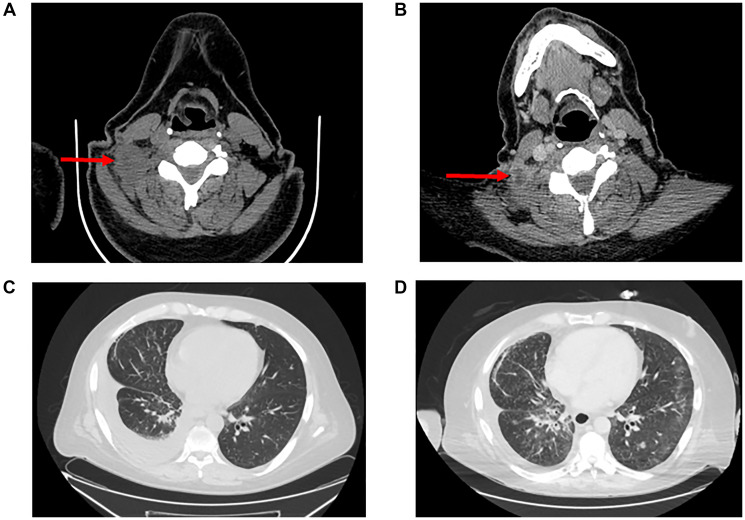
and fusions are targetable mutations that occur in a subset of patients with non-small cell lung cancer (NSCLC). and have been understood to be independent oncogenic drivers which do not co-occur with other common tyrosine kinase receptor mutations except in the acquired resistance setting. Here we present a case of a patient with stage IV fusion NSCLC discovered initially with RNA next generation sequencing (NGS) who acquired resistance to lorlatinib after 6 months on therapy through a novel fusion, detected only through RNA NGS. Combination therapy targeting RET and ROS1 using pralsetinib and lorlatinib achieved a partial response with limited durability of only four months. This is the first reported case of a fusion as a potential mechanism of resistance to lorlatinib, it identifies a novel fusion partner, and it emphasizes the importance of testing for acquired resistance mutations with both DNA and RNA at the time of progression in patients with targetable oncogenic drivers.
并且融合是发生在一部分非小细胞肺癌(NSCLC)患者中的可靶向突变。并且已被理解为独立的致癌驱动因素,除了在获得性耐药情况下,它们不会与其他常见的酪氨酸激酶受体突变同时出现。在此,我们报告一例IV期融合NSCLC患者,最初通过RNA下一代测序(NGS)发现,该患者在接受洛拉替尼治疗6个月后通过一种仅通过RNA NGS检测到的新型融合获得了对洛拉替尼的耐药性。使用普拉替尼和洛拉替尼针对RET和ROS1的联合治疗取得了部分缓解,但仅持续了四个月,缓解期有限。这是首次报道融合作为对洛拉替尼耐药的潜在机制的病例,它识别出一种新型融合伙伴,并强调了在具有可靶向致癌驱动因素的患者病情进展时同时用DNA和RNA检测获得性耐药突变的重要性。