
锌(II)与异喹啉 - 氧化物配位络合物的晶体结构
Crystal structures of zinc(II) coordination complexes with iso-quinoline -oxide.
作者信息
Groneck Erin N, Peek Nathan, Lynch Will E, Padgett Clifford W
机构信息
Department of Biochemistry Chemistry and Physics Georgia Southern University, Armstrong Campus 11935 Abercorn Street Savannah GA 31419 USA.
出版信息
Acta Crystallogr E Crystallogr Commun. 2025 Jan 14;81(Pt 2):132-139. doi: 10.1107/S2056989025000180. eCollection 2025 Feb 1.
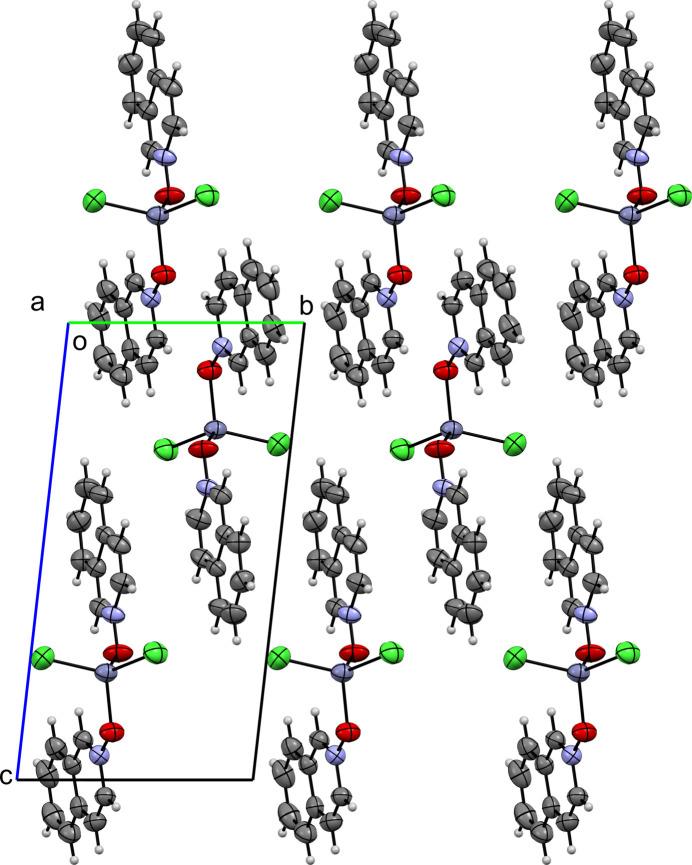
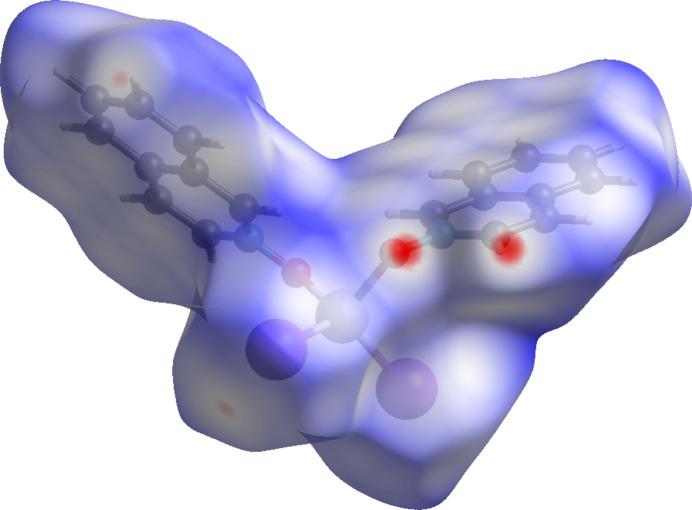
The reaction of one equivalent of zinc(II) halide salts with two equivalents of iso-quinoline -oxide (iQNO; CHNO) in methanol yields compounds of the general formula [Zn (iQNO)], with = Cl (), Br () and I (). However, starting with zinc(II) perchlorate or nitrate leads to the formation of complex ions with the compositions Zn(iQNO) for = ClO (), and Zn(iQNO)(HO) for = NO (). Complexes (), () and (), namely di-chlorido-bis-(iso-quinoline -oxide-κ)zinc(II) [ZnCl(CHNO)], di-bromido-bis-(iso-quinoline -oxide-κ)zinc(II) [ZnBr(CHNO)], and di-iodido-bis-(iso-quinoline -oxide-κ)zinc(II) [ZnI(CHNO)], each exhibit a distorted tetra-hedral coordination geometry around the zinc(II) ion coordinated by two iQNO ligands bound through the oxygen atom and two halide ions. The zinc ion lies on a crystallographic twofold axis in the bromo complex. The -Zn- bond angles are approximately 15-17° larger than the O-Zn-O bond angles resulting in the observed tetra-hedral distortion. In complex (), hexa-kis-(iso-quinoline -oxide-κ)zinc(II) bis-(perchlorate), Zn(CHNO), the zinc(II) ion occupies a special position with 3 site symmetry and is octa-hedrally coordinated by six iQNO ligands, albeit with slight distortions evidenced by a spread of bond angles from 85.82 (4) to 94.18 (4)°. The chlorine atom of the perchlorate anion lies on a crystallographic threefold axis. Finally, complex () crystallizes with a pseudo-octa-hedral geometry; penta-aqua-(iso-quinoline -oxide-κ)zinc(II) dinitrate-iso-quinoline -oxide (1/2), Zn(CHNO)(HO)·2(CHNO). The nitrate ions and non-coordin-ated iQNO mol-ecules engage in π-stacking and hydrogen-bonding inter-actions with the coordinated water mol-ecules. The iQNO-Zn-O equatorial bond angles range from 88.98 (9) to 94.90 (9)°, with the largest deviation from a perfect octa-hedral angle attributed to the influence of a weak C-H⋯O (from water) inter-action (2.287 Å) involving the bound iQNO ligand.
一当量的卤化锌盐与两当量的异喹啉 - 氧化物(iQNO;CHNO)在甲醇中反应生成通式为[Zn (iQNO)]的化合物,其中 = Cl()、Br()和I()。然而,以高氯酸锌或硝酸锌开始反应会导致形成组成分别为Zn(iQNO)( = ClO ())和Zn(iQNO)(HO) ( = NO ())的络合离子。配合物()、()和(),即二氯双(异喹啉 - 氧化物 - κ)锌(II)[ZnCl(CHNO)]、二溴双(异喹啉 - 氧化物 - κ)锌(II)[ZnBr(CHNO)]和二碘双(异喹啉 - 氧化物 - κ)锌(II)[ZnI(CHNO)],在锌(II)离子周围均呈现扭曲的四面体配位几何结构,由两个通过氧原子键合的iQNO配体和两个卤离子配位。锌离子位于溴配合物的晶体学二重轴上。 -Zn-键角比O-Zn-O键角大约大15 - 17°,导致观察到四面体畸变。在配合物(),即六(异喹啉 - 氧化物 - κ)锌(II)双(高氯酸盐),Zn(CHNO)中,锌(II)离子占据具有3位点对称性的特殊位置,并由六个iQNO配体八面体配位,尽管键角从85.82 (4)°到94.18 (4)°的范围表明存在轻微畸变。高氯酸根阴离子的氯原子位于晶体学三重轴上。最后,配合物()以假八面体几何结构结晶;五水(异喹啉 - 氧化物 - κ)锌(II)二硝酸异喹啉 - 氧化物(1/2),Zn(CHNO)(HO)·2(CHNO)。硝酸根离子和未配位的iQNO分子与配位水分子发生π堆积和氢键相互作用。iQNO-Zn-O赤道键角范围为88.98 (9)°至94.90 (9)°,与完美八面体角的最大偏差归因于涉及键合iQNO配体的弱C-H⋯O(来自水)相互作用(2.287 Å)的影响。





 Zotero 插件