Wang Jiayi, Brückner Nadine, Weissmann Simon, Günther Thomas, Zhu Shuyong, Vogt Carolin, Sun Guorong, Guo Rongrong, Bruno Renzo, Ritter Birgit, Steinbrück Lars, Kaufer Benedikt B, Depledge Daniel P, Grundhoff Adam, Viejo-Borbolla Abel
Institute of Virology, Hannover Medical School, Hannover, Germany.
Leibniz Institute of Virology, Hamburg, Germany.
PLoS Pathog. 2025 Feb 10;21(2):e1012367. doi: 10.1371/journal.ppat.1012367. eCollection 2025 Feb.
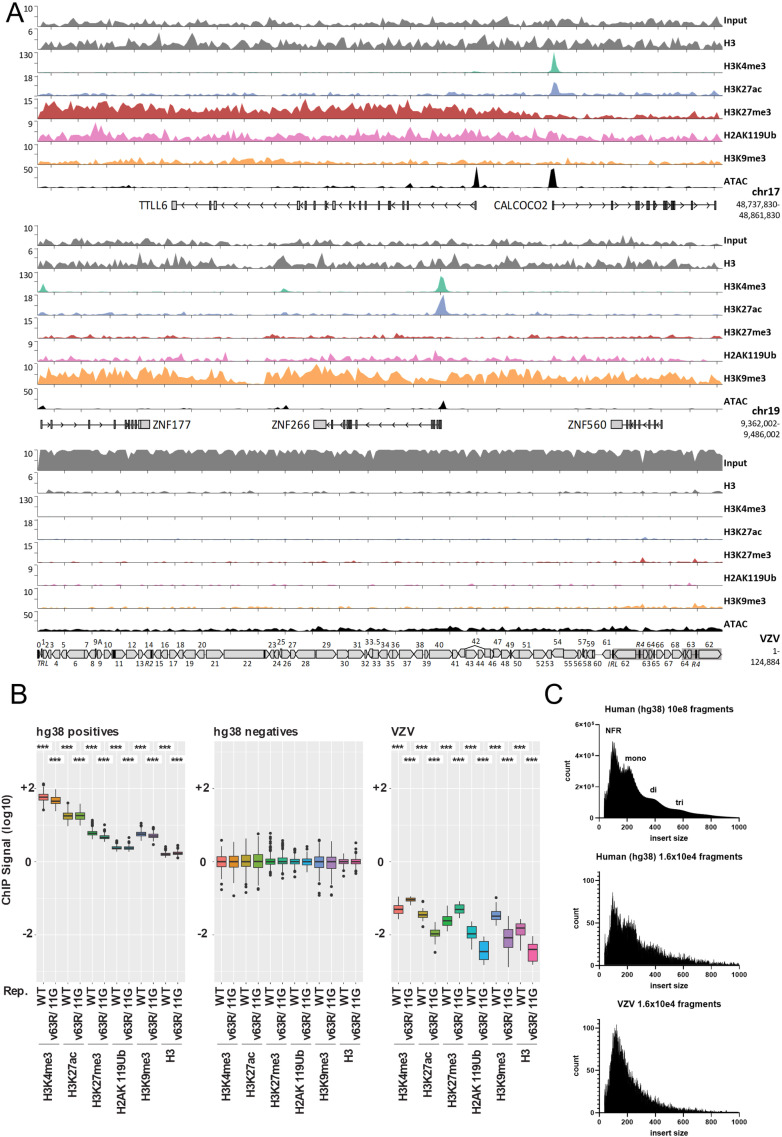
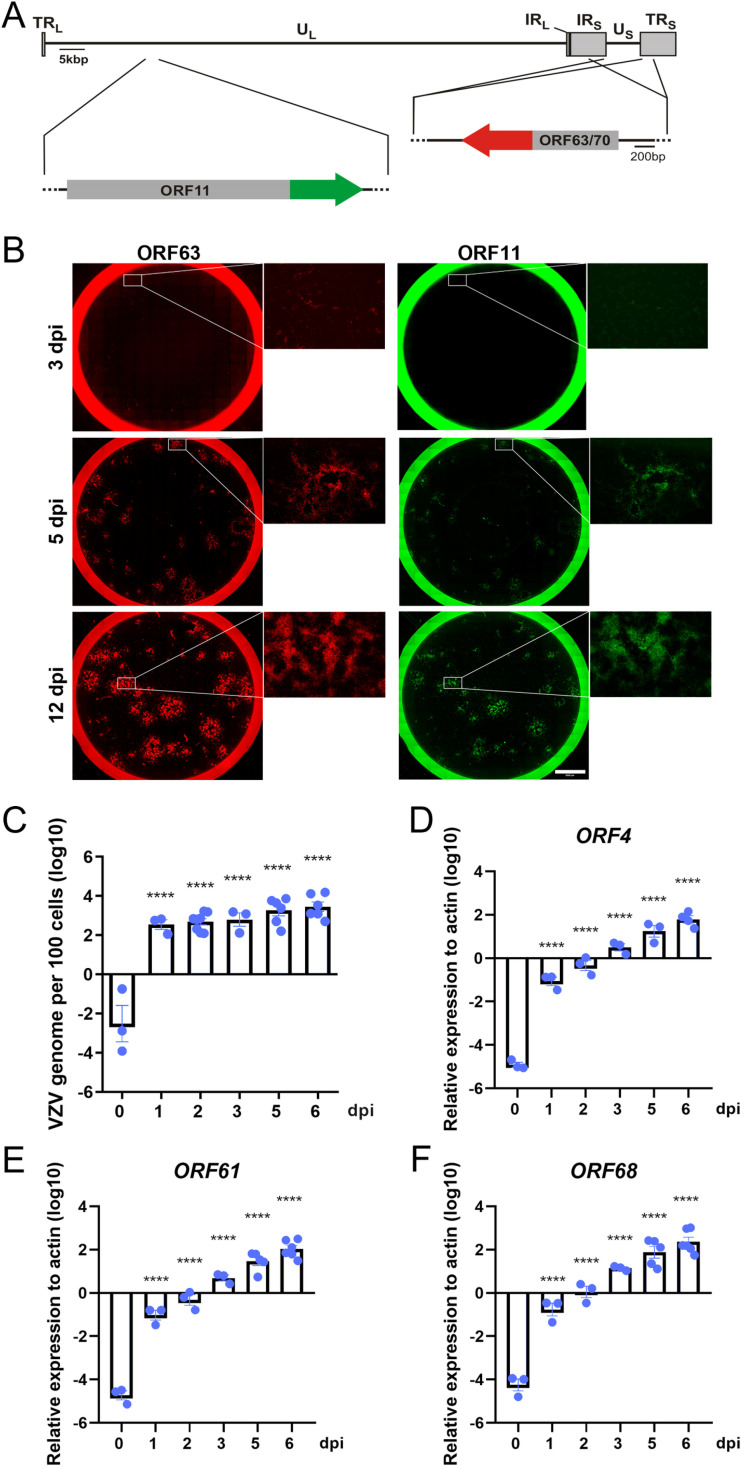
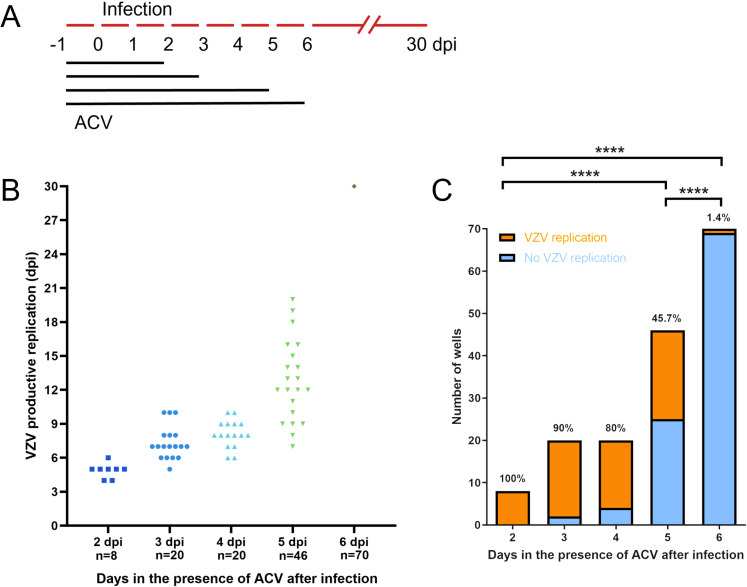
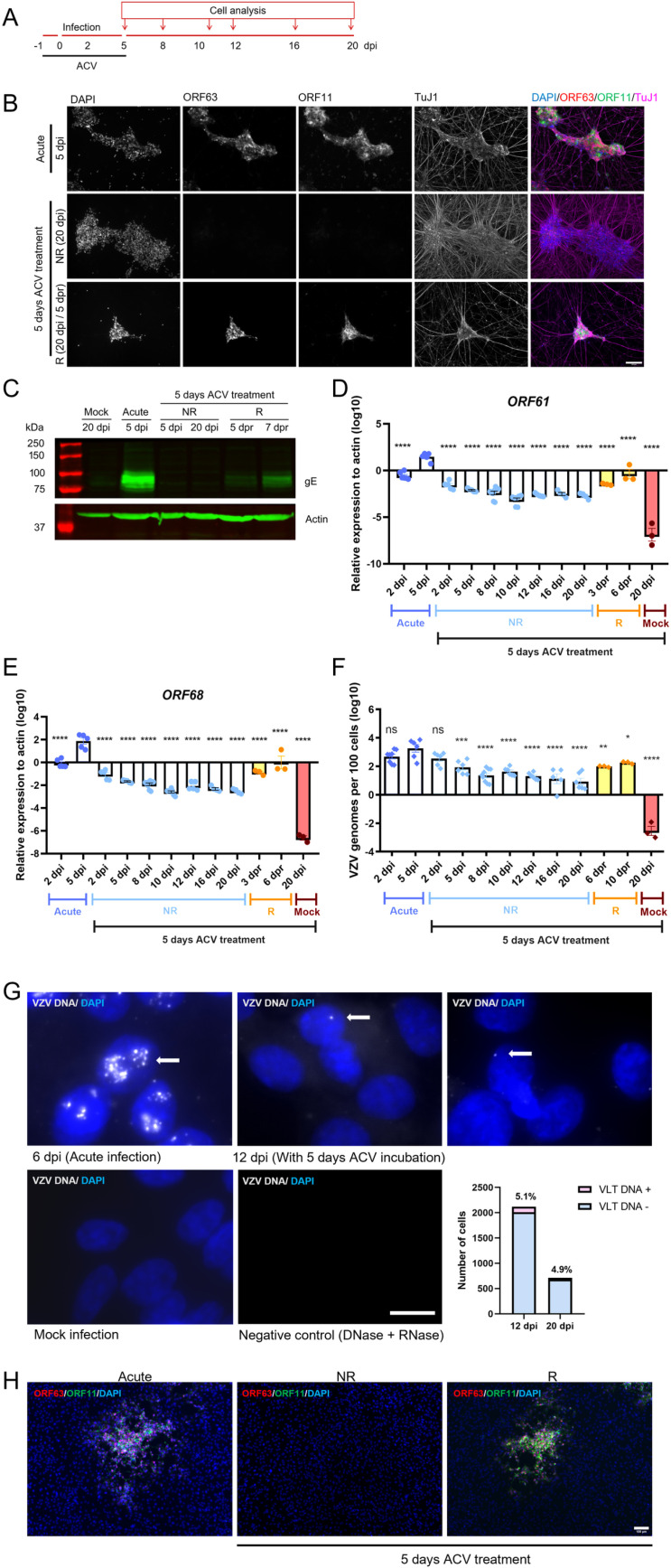
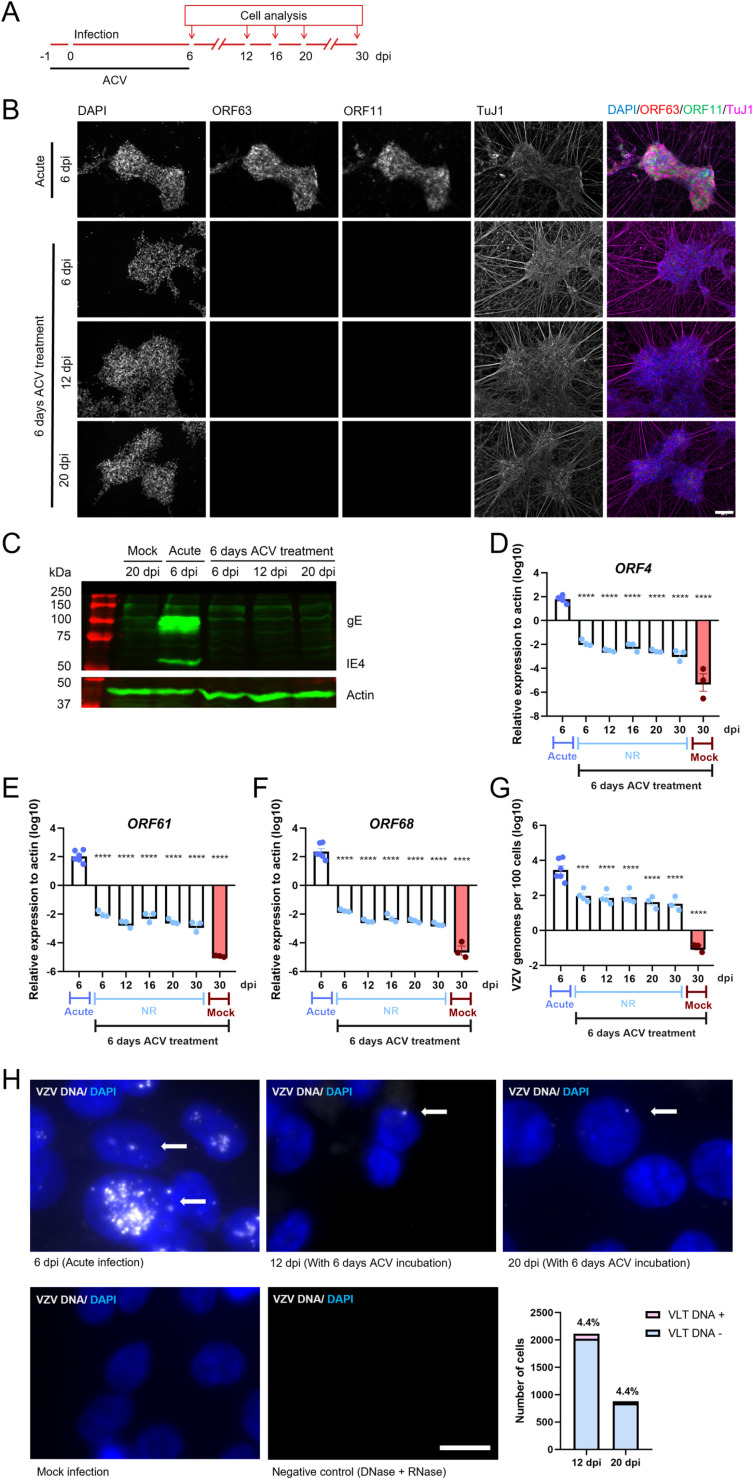
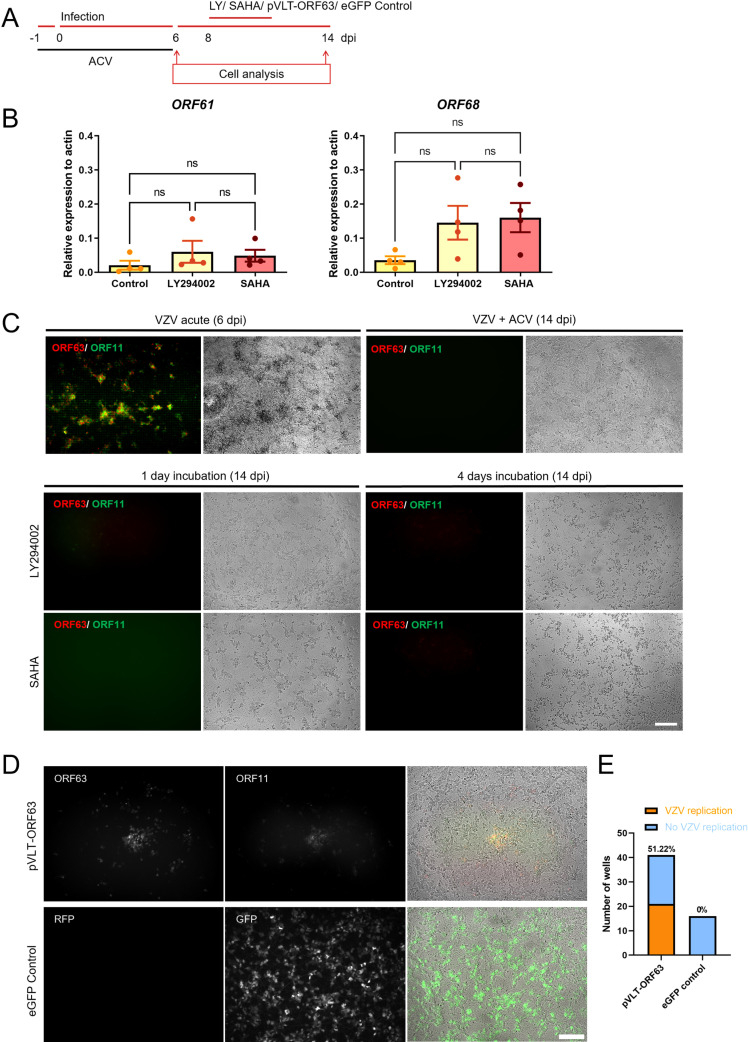
Varicella zoster virus (VZV) is a human-specific herpesvirus that establishes latency in peripheral neurons. The only transcripts detected in infected human trigeminal ganglia (TG) obtained shortly after death correspond to the VZV latency-associated transcript (VLT) and associated VLT-ORF63 splice variants. In vitro studies showed that VLT-ORF63 is translated into a protein (pVLT-ORF63) that induces VZV transcription. The mechanisms that lead to this restricted gene expression and the transition to lytic replication remain unknown, partly due to the difficulty of working with human neurons. In this study, we addressed whether the neuroblastoma-derived cell line SH-SY5Y could serve as a model to investigate the mechanisms that lead to repression of VZV gene expression followed by reactivation. VZV productively infected differentiated SH-SY5Y (dSH-SY5Y) whereas incubation with acyclovir (ACV) inhibited virus replication and induced a progressive repression of the virus. Upon removal of ACV there was production of viral particles in a subset of cells, while others contained non-replicating VZV genomes and VLT-containing transcripts for at least 20 days post-infection (dpi). Exogenous expression of VLT-ORF63 induced productive infection, suggesting that the non-replicating and repressed genomes remained functional. Interestingly, histone deposition was undetectable at VZV genomes in quiescently infected dSH-SY5Y cells, pointing to a potential novel mechanism leading to VZV repression in this neuronal setting.
水痘带状疱疹病毒(VZV)是一种人类特有的疱疹病毒,可在外周神经元中建立潜伏状态。在人死后不久获取的受感染三叉神经节(TG)中检测到的唯一转录本对应于VZV潜伏相关转录本(VLT)以及相关的VLT-ORF63剪接变体。体外研究表明,VLT-ORF63可被翻译成一种诱导VZV转录的蛋白质(pVLT-ORF63)。导致这种基因表达受限以及向裂解性复制转变的机制仍不清楚,部分原因是处理人类神经元存在困难。在本研究中,我们探讨了神经母细胞瘤衍生的细胞系SH-SY5Y是否可作为一种模型,用于研究导致VZV基因表达受抑制继而重新激活的机制。VZV可有效感染分化的SH-SY5Y(dSH-SY5Y)细胞,而与阿昔洛韦(ACV)孵育则会抑制病毒复制并诱导病毒的逐渐抑制。去除ACV后,一部分细胞产生了病毒颗粒,而其他细胞在感染后至少20天(dpi)含有非复制性VZV基因组和含VLT的转录本。VLT-ORF63的外源性表达诱导了 productive感染,这表明非复制性和受抑制的基因组仍然具有功能。有趣的是,在静止感染的dSH-SY5Y细胞的VZV基因组中未检测到组蛋白沉积,这表明在这种神经元环境中存在一种导致VZV抑制的潜在新机制。