Phaw Naw April, Thant Aung Min, Thompson Craig, Jelley Ryan, McQue Kate, Aldridge Jodi, Allsop Caroline, Kerry Jenna, McCullough Francesca, Miller Carolyn, Valappil Manoj, Jefferson Tony, Lawton Colin, Christensen Lee, McPherson Stuart
Liver Unit and NIHR Biomedical Research Centre, Newcastle Upon Tyne Hospitals NHS Foundation Trust, Newcastle Upon Tyne, UK.
Royal Berkshire NHS Foundation Trust, Reading, UK.
BMJ Open Gastroenterol. 2025 Feb 11;12(1):e001593. doi: 10.1136/bmjgast-2024-001593.
Chronic hepatitis C virus (HCV) infection is prevalent in prisons. Universal reception HCV testing is recommended, but acceptance can be suboptimal. To detect and treat missed HCV infections, a high-intensity test and treat (HITT) programme was introduced to rapidly test entire prisons. It remains unknown whether regular HITTs will be required to maintain prison microelimination. We aimed to assess the outcomes of HITTs conducted in a prison 4 years apart with ongoing reception testing.
A prospective observational evaluation of the impact of HITTs was conducted in January 2020 and February 2024 at Low Newton, a female prison. The outcomes of the reception testing were reviewed in the intervening period to determine the number of newly identified HCV infections.
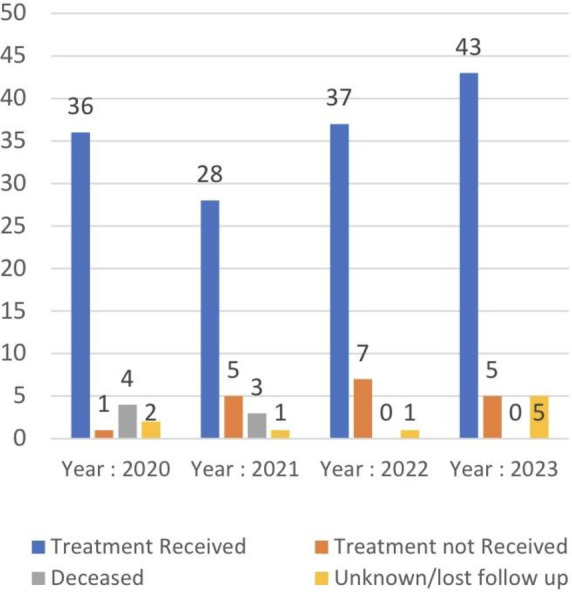
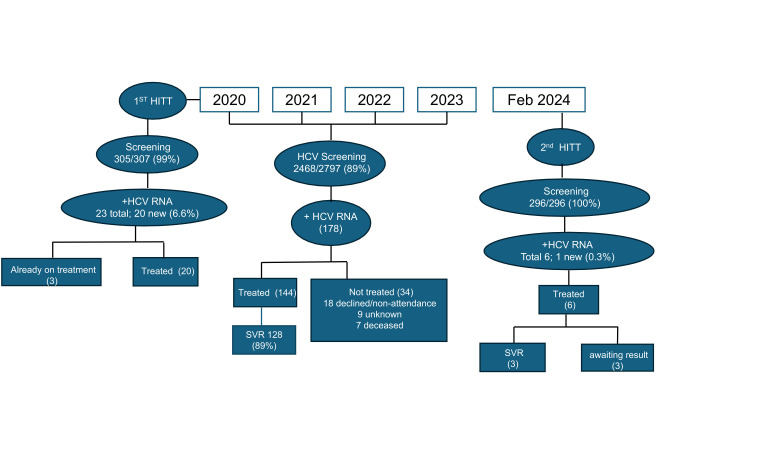
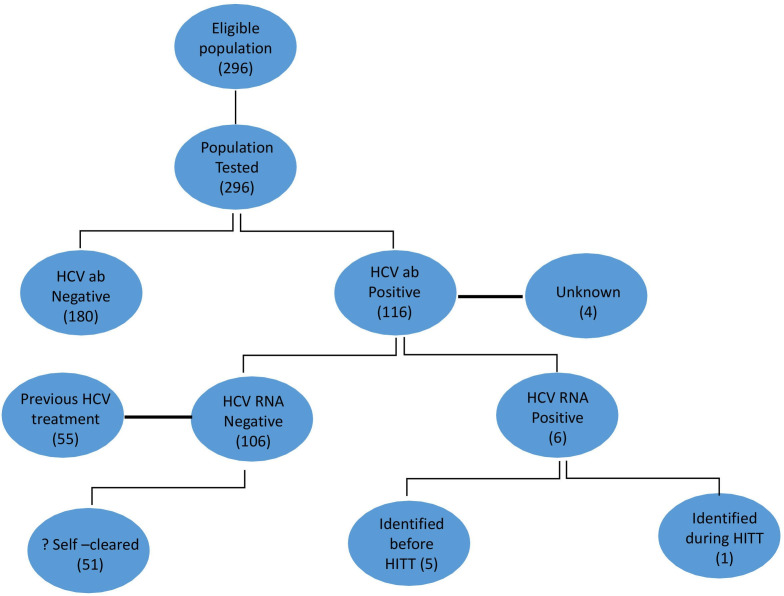
HITTs were successful in testing almost all residents (305/307) in 2020 and (296/296) in 2024. The number of newly diagnosed HCV individuals fell from 6.6% in 2020 to 0.3% in 2024. One new HCV case was identified in the second HITT. In between the HITTs, 89% of receptions had HCV testing, increasing from 83% in 2020 to 95% in 2023. Overall, 81% (144/178) of active HCV infections received antiviral treatment, and 89% achieved sustained virological response. The proportion of active HCV infections between the HITTs was 7.2% through reception testing.
A follow-up HITT after 4 years yielded only 0.3% active HCV infection in a high HCV prevalence prison and a reasonably good reception testing and treatment programme. Therefore, resources should be focused on optimising reception testing rather than undertaking repeated HITTs.
丙型肝炎病毒(HCV)慢性感染在监狱中很普遍。建议对所有入狱人员进行HCV检测,但接受度可能不理想。为了检测和治疗漏诊的HCV感染,引入了高强度检测与治疗(HITT)计划,以便对整个监狱进行快速检测。目前尚不清楚是否需要定期进行HITT来维持监狱内的微消除状态。我们旨在评估在一所监狱中相隔4年进行的HITT以及持续的入狱检测的结果。
2020年1月和2024年2月在一所女子监狱——洛牛顿监狱对HITT的影响进行了前瞻性观察评估。在此期间对入狱检测的结果进行了审查,以确定新发现的HCV感染病例数。
2020年HITT成功检测了几乎所有居民(305/307),2024年检测了(296/296)。新诊断的HCV感染者数量从2020年的6.6%降至2024年的0.3%。在第二次HITT中发现了1例新的HCV病例。在两次HITT之间,89%的入狱人员接受了HCV检测,从2020年的83%增至2023年的95%。总体而言,81%(144/178)的活动性HCV感染接受了抗病毒治疗,89%实现了持续病毒学应答。通过入狱检测,两次HITT之间活动性HCV感染的比例为7.2%。
在一所HCV感染率高的监狱以及一个合理良好的入狱检测与治疗计划下,4年后进行的后续HITT仅产生了0.3%的活动性HCV感染。因此,资源应集中于优化入狱检测,而非进行重复的HITT。