• 文献检索
  • 文档翻译
  • 深度研究
  • 学术资讯
  • Suppr Zotero 插件Zotero 插件
  • 邀请有礼
  • 套餐&价格
  • 历史记录
应用&插件
Suppr Zotero 插件Zotero 插件浏览器插件Mac 客户端Windows 客户端微信小程序
定价
高级版会员购买积分包购买API积分包
服务
文献检索文档翻译深度研究API 文档MCP 服务
关于我们
关于 Suppr公司介绍联系我们用户协议隐私条款
关注我们

Suppr 超能文献

核心技术专利:CN118964589B侵权必究
粤ICP备2023148730 号-1Suppr @ 2026

文献检索

告别复杂PubMed语法,用中文像聊天一样搜索,搜遍4000万医学文献。AI智能推荐,让科研检索更轻松。

立即免费搜索

文件翻译

保留排版,准确专业,支持PDF/Word/PPT等文件格式,支持 12+语言互译。

免费翻译文档

深度研究

AI帮你快速写综述,25分钟生成高质量综述,智能提取关键信息,辅助科研写作。

立即免费体验

推特上与新冠疫情前后痴呆症照护相关的趋势

Pre- and post- COVID-19 trends related to dementia caregiving on Twitter.

作者信息

Ang Li Chang, Malhotra Rahul, Roy Chowdhury Anupama, Liew Tau Ming

机构信息

Medicine Academic Clinical Programme, Singapore General Hospital, Singapore, Singapore.

Centre for Ageing Research and Education, Duke-NUS Medical School, Singapore, Singapore.

出版信息

Sci Rep. 2025 Feb 12;15(1):5173. doi: 10.1038/s41598-024-82405-8.

DOI:10.1038/s41598-024-82405-8
PMID:39939632
原文链接:https://pmc.ncbi.nlm.nih.gov/articles/PMC11821837/
Abstract

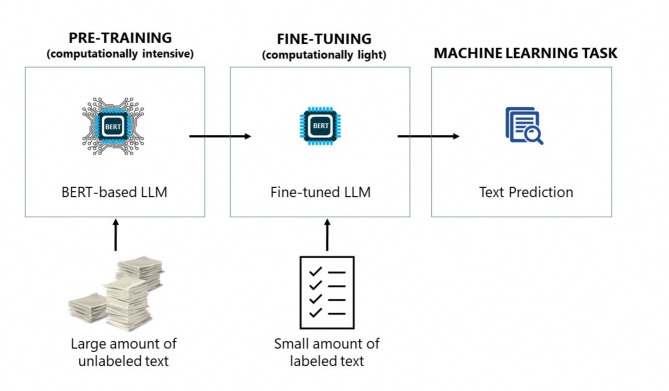
With the advent of new media, more people are turning to social media to share thoughts and emotions related to personal life experiences. We examined salient concerns of dementia caregivers on Twitter pre- and post-pandemic, aiming to shed light on how to better support and engage dementia caregivers post-COVID-19 pandemic. English tweets related to "dementia" and "caregiver" were extracted between 1st January 2013 and 31st December 2022. A supervised deep learning model (Bidirectional Encoder Representations from Transformers, BERT) was trained to select tweets describing individual's experience related to dementia caregiving. An unsupervised deep learning approach (BERT-based topic modelling) was applied to identify topics from selected tweets, with each topic further grouped into themes manually using thematic analysis. A total of 44,527 tweets were analysed, and stratified using the emergence of COVID-19 pandemic as a threshold. Three themes were derived: challenges of caregiving in dementia, strategies to inspire caregivers, and dementia-related stigmatization. Over time, there is a rising trend of tweets relating to dementia caregiving. Post-pandemic, challenges of caregiving remained the top discussed topic; with a notable increase in tweets related to dementia-related stigmatization (p < 0.001), especially in North America and other continents (and less so in Europe). The findings uncover a worrying trend of growing dementia-related stigmatization among the caregivers, manifested by caregivers internalizing publicly-held stigma and projecting negative stereotypes externally as a means to devalue others. The challenges faced by caregivers also remained a significant concern, highlighting the need for continued support and resources for caregivers even post-pandemic.

摘要

随着新媒体的出现,越来越多的人转向社交媒体来分享与个人生活经历相关的想法和情感。我们研究了疫情前后痴呆症护理人员在推特上的突出关注点,旨在阐明如何在新冠疫情后更好地支持和参与痴呆症护理工作。在2013年1月1日至2022年12月31日期间提取了与“痴呆症”和“护理人员”相关的英文推文。训练了一个监督深度学习模型(来自变换器的双向编码器表示,BERT)来选择描述个人痴呆症护理经历的推文。应用无监督深度学习方法(基于BERT的主题建模)从选定的推文中识别主题,并使用主题分析将每个主题进一步手动分组为主题。总共分析了44527条推文,并以新冠疫情的出现为阈值进行分层。得出了三个主题:痴呆症护理的挑战、激励护理人员的策略以及与痴呆症相关的污名化。随着时间的推移,与痴呆症护理相关的推文呈上升趋势。疫情后,护理挑战仍然是讨论最多的话题;与痴呆症相关污名化的推文显著增加(p < 0.001),尤其是在北美和其他大陆(在欧洲则较少)。研究结果揭示了护理人员中与痴呆症相关污名化加剧的令人担忧的趋势,表现为护理人员将公众持有的污名内化,并向外投射负面刻板印象,以此贬低他人。护理人员面临的挑战也仍然是一个重大问题,凸显了即使在疫情后也需要持续为护理人员提供支持和资源。
https://cdn.ncbi.nlm.nih.gov/pmc/blobs/d015/11821837/d17fb22f939f/41598_2024_82405_Fig2_HTML.jpg
https://cdn.ncbi.nlm.nih.gov/pmc/blobs/d015/11821837/a5ad6011a79f/41598_2024_82405_Fig1_HTML.jpg
https://cdn.ncbi.nlm.nih.gov/pmc/blobs/d015/11821837/d17fb22f939f/41598_2024_82405_Fig2_HTML.jpg
https://cdn.ncbi.nlm.nih.gov/pmc/blobs/d015/11821837/a5ad6011a79f/41598_2024_82405_Fig1_HTML.jpg
https://cdn.ncbi.nlm.nih.gov/pmc/blobs/d015/11821837/d17fb22f939f/41598_2024_82405_Fig2_HTML.jpg

相似文献

1
Pre- and post- COVID-19 trends related to dementia caregiving on Twitter.推特上与新冠疫情前后痴呆症照护相关的趋势
Sci Rep. 2025 Feb 12;15(1):5173. doi: 10.1038/s41598-024-82405-8.
2
Analyzing Topics and Sentiments from Twitter to Gain Insights to Refine Interventions for Family Caregivers of Persons with Alzheimer's Disease and Related Dementias (ADRD) During COVID-19 Pandemic.从 Twitter 分析主题和情绪,以深入了解在 COVID-19 大流行期间对阿尔茨海默病和相关痴呆症(ADRD)患者的家庭照顾者进行干预的措施。
Stud Health Technol Inform. 2022 Jan 14;289:170-173. doi: 10.3233/SHTI210886.
3
Emotions and Topics Expressed on Twitter During the COVID-19 Pandemic in the United Kingdom: Comparative Geolocation and Text Mining Analysis.在英国 COVID-19 大流行期间在 Twitter 上表达的情绪和主题:比较地理定位和文本挖掘分析。
J Med Internet Res. 2022 Oct 5;24(10):e40323. doi: 10.2196/40323.
4
Using Twitter to understand perspectives and experiences of dementia and caregiving at the beginning of the COVID-19 pandemic.利用 Twitter 了解 COVID-19 大流行初期的痴呆症和护理的观点与经验。
Dementia (London). 2022 Jul;21(5):1734-1752. doi: 10.1177/14713012221096982. Epub 2022 May 13.
5
Detection of Hate Speech in COVID-19-Related Tweets in the Arab Region: Deep Learning and Topic Modeling Approach.检测阿拉伯地区与 COVID-19 相关推文的仇恨言论:深度学习和主题建模方法。
J Med Internet Res. 2020 Dec 8;22(12):e22609. doi: 10.2196/22609.
6
Unveiling Topics and Emotions in Arabic Tweets Surrounding the COVID-19 Pandemic: Topic Modeling and Sentiment Analysis Approach.揭示围绕新冠疫情的阿拉伯语推文的主题与情感:主题建模与情感分析方法
JMIR Infodemiology. 2025 Feb 10;5:e53434. doi: 10.2196/53434.
7
Toward Using Twitter for Tracking COVID-19: A Natural Language Processing Pipeline and Exploratory Data Set.用于追踪 COVID-19 的 Twitter:自然语言处理管道和探索性数据集。
J Med Internet Res. 2021 Jan 22;23(1):e25314. doi: 10.2196/25314.
8
Topics, Trends, and Sentiments of Tweets About the COVID-19 Pandemic: Temporal Infoveillance Study.关于新冠疫情的推文主题、趋势和情绪:时间信息监测研究
J Med Internet Res. 2020 Oct 23;22(10):e22624. doi: 10.2196/22624.
9
Piecing together the narrative of #longcovid: an unsupervised deep learning of 1,354,889 X (formerly Twitter) posts from 2020 to 2023.拼凑“长新冠”的故事:对2020年至2023年1354889条X(原推特)帖子进行无监督深度学习
Front Public Health. 2024 Dec 16;12:1491087. doi: 10.3389/fpubh.2024.1491087. eCollection 2024.
10
Dynamics of the Negative Discourse Toward COVID-19 Vaccines: Topic Modeling Study and an Annotated Data Set of Twitter Posts.针对 COVID-19 疫苗的负面话语动态:主题建模研究与 Twitter 帖子的标注数据集。
J Med Internet Res. 2023 Apr 12;25:e41319. doi: 10.2196/41319.

本文引用的文献

1
Public perception on 'healthy ageing' in the past decade: An unsupervised machine learning of 63,809 Twitter posts.过去十年公众对“健康老龄化”的认知:对63809条推特帖子的无监督机器学习
Heliyon. 2023 Jan 21;9(2):e13118. doi: 10.1016/j.heliyon.2023.e13118. eCollection 2023 Feb.
2
The Stigma Toward Dementia on Twitter: A Sentiment Analysis of Dutch Language Tweets.推特上对痴呆症的污名化:荷兰语推文的情感分析
J Health Commun. 2022 Oct 3;27(10):697-705. doi: 10.1080/10810730.2022.2149904. Epub 2022 Dec 15.
3
Caregiving for People With Dementia or Cognitive Impairment During the COVID-19 Pandemic: A Review.
2019冠状病毒病大流行期间对痴呆症或认知障碍患者的照护:一项综述
Gerontol Geriatr Med. 2022 Oct 20;8:23337214221132369. doi: 10.1177/23337214221132369. eCollection 2022 Jan-Dec.
4
Using Twitter to understand perspectives and experiences of dementia and caregiving at the beginning of the COVID-19 pandemic.利用 Twitter 了解 COVID-19 大流行初期的痴呆症和护理的观点与经验。
Dementia (London). 2022 Jul;21(5):1734-1752. doi: 10.1177/14713012221096982. Epub 2022 May 13.
5
Using Twitter to Examine Stigma Against People With Dementia During COVID-19: Infodemiology Study.利用推特研究新冠疫情期间对痴呆症患者的污名化:信息流行病学研究
JMIR Aging. 2022 Mar 31;5(1):e35677. doi: 10.2196/35677.
6
Who displays dementia-related stigma and what does the general public know about dementia? Findings from a nationally representative survey.谁表现出与痴呆症相关的耻辱感,公众对痴呆症了解多少?一项全国代表性调查的结果。
Aging Ment Health. 2023 Jun;27(6):1111-1119. doi: 10.1080/13607863.2022.2040428. Epub 2022 Feb 20.
7
Analyzing Topics and Sentiments from Twitter to Gain Insights to Refine Interventions for Family Caregivers of Persons with Alzheimer's Disease and Related Dementias (ADRD) During COVID-19 Pandemic.从 Twitter 分析主题和情绪,以深入了解在 COVID-19 大流行期间对阿尔茨海默病和相关痴呆症(ADRD)患者的家庭照顾者进行干预的措施。
Stud Health Technol Inform. 2022 Jan 14;289:170-173. doi: 10.3233/SHTI210886.
8
Examining the Utility of Social Media in COVID-19 Vaccination: Unsupervised Learning of 672,133 Twitter Posts.社交媒体在新冠疫苗接种中的应用研究:对 672,133 条推特帖子的无监督学习。
JMIR Public Health Surveill. 2021 Nov 3;7(11):e29789. doi: 10.2196/29789.
9
The use of social media and online communications in times of pandemic COVID-19.在2019冠状病毒病大流行期间社交媒体和在线通信的使用情况。
J Intensive Care Soc. 2021 Aug;22(3):255-260. doi: 10.1177/1751143720966280. Epub 2020 Oct 22.
10
Exploring Changes in Caregiver Burden and Caregiving Intensity due to COVID-19.探索因新冠疫情导致的照料者负担和照料强度变化。
Gerontol Geriatr Med. 2021 Feb 26;7:2333721421999279. doi: 10.1177/2333721421999279. eCollection 2021 Jan-Dec.