Ikumi Akira, Asai Reo, Eda Yusuke, Uchida Tooru, Kohyama Sho, Ogawa Takeshi, Yoshii Yuichi
Department of Orthopedic Surgery, Institute of Medicine, University of Tsukuba, Tsukuba 305-8577, Ibaraki, Japan.
Department of Orthopedic Surgery, Tsukuba Medical Center Hospital, Tsukuba 305-8558, Ibaraki, Japan.
Diagnostics (Basel). 2025 Feb 1;15(3):345. doi: 10.3390/diagnostics15030345.
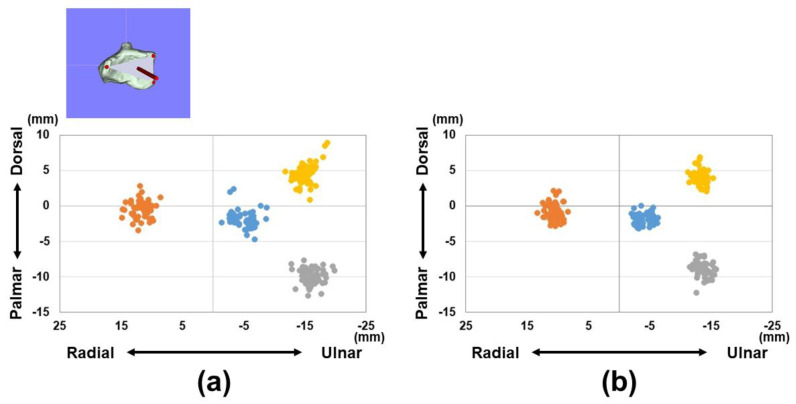
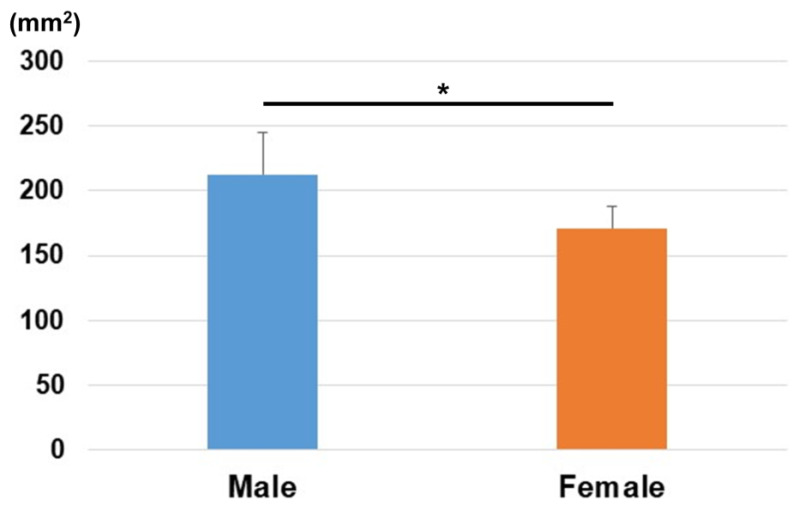
This study aims to define three-dimensional (3D) parameters for the inclination of the distal radius joint surface. The goal is to develop standardized parameters for fracture reduction through comprehensive 3D evaluations of the joint surfaces. We analyzed 112 CT scans of unaffected wrists (56 males and 56 females) to construct 3D models of the distal radius. Using 3D coordinates, the normal vectors and angles were calculated based on three reference points on the distal radius joint surface. These normal vector components were then converted into unit vector components A, B, and C for the x, y, and z axes, respectively. Additionally, the angles of these unit vectors were assessed in the xy, yz, and xz planes. The 3D measurements were compared between males and females and against traditional two-dimensional (2D) parameters such as palmar tilt and radial inclination. For males, the unit vector components were as follows: A: -0.14 ± 0.09, B: -0.92 ± 0.02, and C: -0.36 ± 0.07; for females, A: -0.21 ± 0.08, B: -0.90 ± 0.03, and C: -0.36 ± 0.05. Significant differences were found between males and females for the A and B vector components (representing the palmar-dorsal and proximal-distal axes, < 0.01). The angles of the unit vectors in the xy, yz, and xz planes were 8.9 ± 5.4°/12.9 ± 5.0°, 21.3 ± 4.1°/22.1 ± 3.2°, and 22.2 ± 14.8°/28.8 ± 10.1° for males and females, respectively. There were significant differences between males and females in the angles of the xy and xz planes (sagittal and axial planes, < 0.01). Strong correlations were observed between the xy-plane vectors and palmar tilt (r = 0.96), as well as between the yz-plane vectors and radial inclination (r = 0.88). This study evaluated the 3D inclination of the distal radius joint surface, revealing significant gender differences. This method, which also allows for the assessment of rotational alignment-difficult with conventional techniques-is expected to be a key 3D parameter in treating distal radius fractures.
本研究旨在确定桡骨远端关节面倾斜度的三维(3D)参数。目标是通过对关节面进行全面的3D评估来制定骨折复位的标准化参数。我们分析了112例未受影响手腕的CT扫描(56例男性和56例女性),以构建桡骨远端的3D模型。利用3D坐标,基于桡骨远端关节面上的三个参考点计算法向量和角度。然后将这些法向量分量分别转换为x、y和z轴的单位向量分量A、B和C。此外,在xy、yz和xz平面中评估这些单位向量的角度。比较了男性和女性之间的3D测量结果,并与传统的二维(2D)参数(如掌倾角和桡骨倾斜度)进行了对比。对于男性,单位向量分量如下:A:-0.14±0.09,B:-0.92±0.02,C:-0.36±0.07;对于女性,A:-0.21±0.08,B:-0.90±0.03,C:-0.36±0.05。在A和B向量分量(分别代表掌背和近远轴)方面,男性和女性之间存在显著差异(<0.01)。男性和女性在xy、yz和xz平面中单位向量的角度分别为8.9±5.4°/12.9±5.0°、21.3±4.1°/22.1±3.2°和22.2±14.8°/28.8±10.1°。男性和女性在xy和xz平面(矢状面和轴面)的角度存在显著差异(<0.01)。观察到xy平面向量与掌倾角之间存在强相关性(r = 0.96),以及yz平面向量与桡骨倾斜度之间存在强相关性(r = 0.88)。本研究评估了桡骨远端关节面的3D倾斜度,揭示了显著的性别差异。这种方法还能够评估旋转对线情况——这是传统技术难以做到的——有望成为治疗桡骨远端骨折的关键3D参数。