Calle Rubio Myriam, Cataluña Juan José Soler, Miravitlles Marc, Navarrete Bernardino Alcázar, López-Campos José Luis, Ferrer Manuel E Fuentes, Rodríguez Hermosa Juan Luis
Pulmonology Department, Hospital Clínico San Carlos, 28040 Madrid, Spain.
Department of Medicine, School of Medicine, Universidad Complutense de Madrid, Instituto de Investigación Sanitaria del Hospital Clínico San Carlos (IdISSC), CIBER de Enfermedades Respiratorias (CIBERES), 28003 Madrid, Spain.
J Clin Med. 2025 Jan 22;14(3):707. doi: 10.3390/jcm14030707.
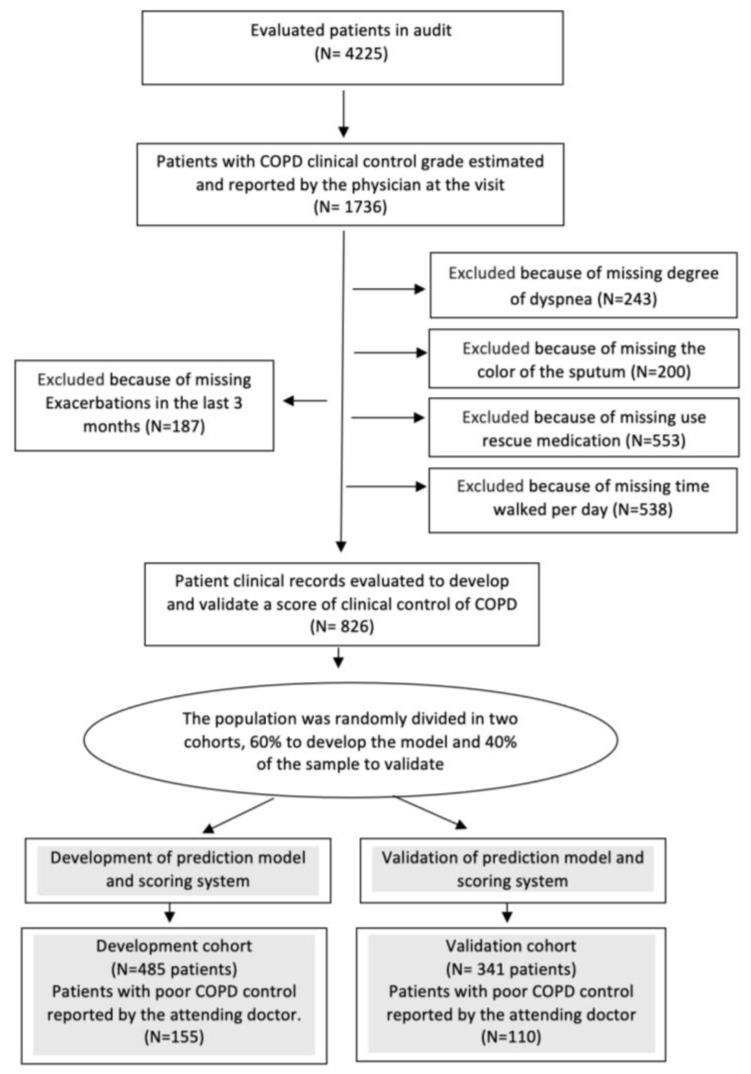
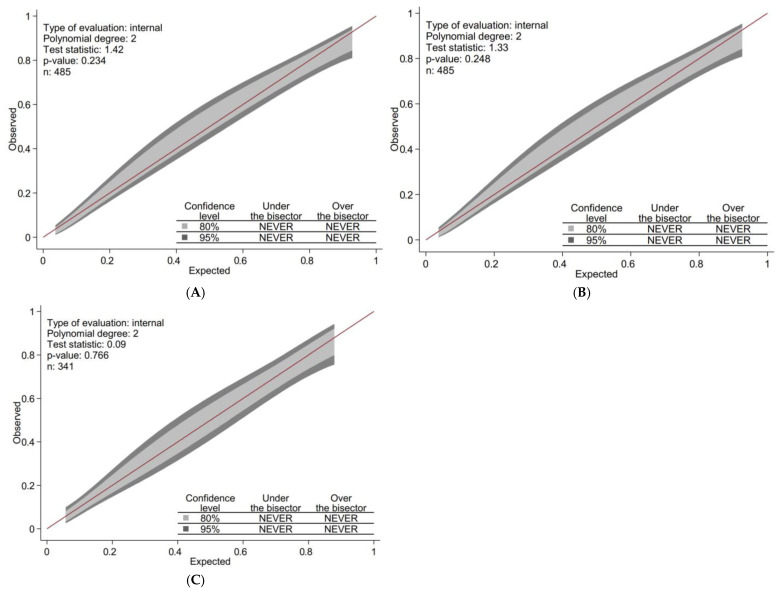
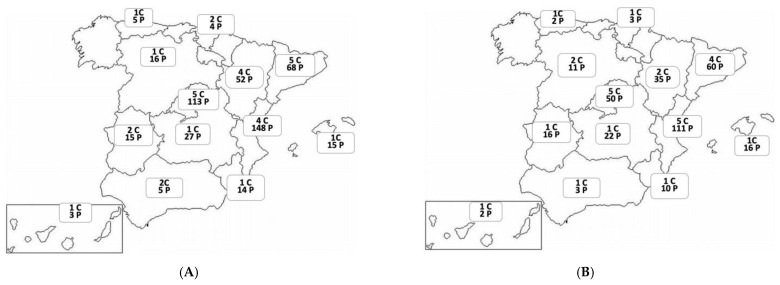
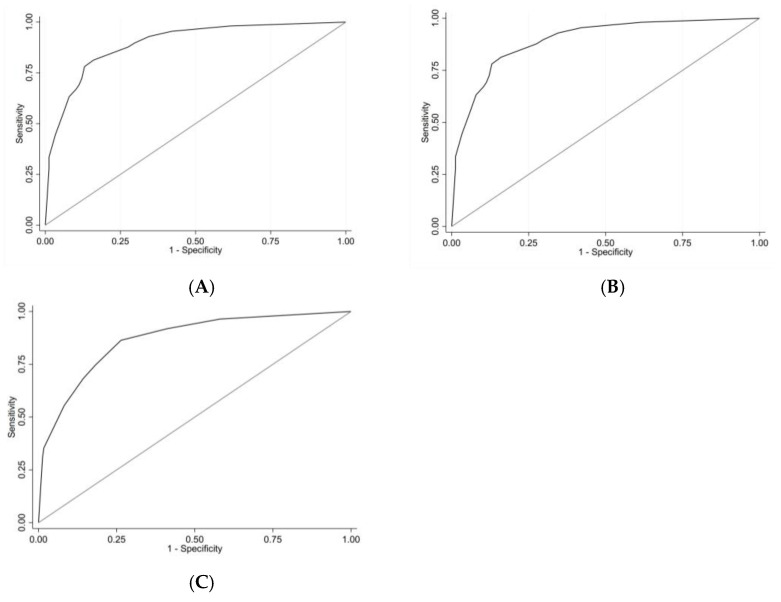
: the concept of clinical control of COPD is a measure proposed in the Spanish COPD Guidelines (GesEPOC), which aims to help clinicians assess the clinical status in order to adapt the treatment plan at follow-up. However, studies that have evaluated clinical practice reveal that the degree of control of COPD is not always assessed, which underlines the need to promote its assessment through a scoring system. To develop a scoring system that quantitatively assesses the validated criteria defining the degree of COPD control. : this study used data from the EPOCONSUL audit in respiratory clinics across Spain. We included in this analysis all patients with a COPD clinical control grade estimated and reported by the physician at the visit, who had registered the criteria necessary to define the degree of clinical control validated and established in GesEPOC. Patients were randomly assigned to either the development or validation cohorts. The development cohort included 485 patients and the validation cohort included 341 patients. Score modelling was conducted using a multivariate logistic regression model, and calibration of the model and score was assessed using the Hosmer-Lemeshow goodness-of-fit test and GiViTi Calibration belts. The model and generated score's discrimination capacity were analyzed by calculating the Area Under the Curve (AUC). : the scoring system was developed using four criteria as predictors of poor clinical control of COPD reported by the treating physician:adjusted dyspnoea severity, use of rescue inhaler more than three times per week, walking less than 30 min per day, and COPD exacerbations in the last three months. The scoring system attributed scores from 0 to 8. Calibration was satisfactory in both development and validation cohorts, and the score's discrimination power, as indicated by the AUC, was 0.892. : this scoring system provides an easy-to-use quantitative assessment of clinical control of COPD that we believe will help to measure COPD control and its evolution during patient follow-up. Future research will be needed to prospectively evaluate this score as a predictor of outcome.
慢性阻塞性肺疾病(COPD)临床控制的概念是西班牙COPD指南(GesEPOC)中提出的一项措施,其目的是帮助临床医生评估临床状况,以便在随访时调整治疗方案。然而,评估临床实践的研究表明,COPD的控制程度并非总是得到评估,这突出了通过评分系统促进其评估的必要性。为了开发一个评分系统,定量评估定义COPD控制程度的有效标准。 本研究使用了来自西班牙各地呼吸诊所的EPOCONSUL审计数据。我们将本次分析纳入了所有在就诊时由医生估计并报告了COPD临床控制等级、且记录了GesEPOC中定义临床控制程度所需有效标准的患者。患者被随机分配到开发队列或验证队列。开发队列包括485名患者,验证队列包括341名患者。使用多变量逻辑回归模型进行评分建模,并使用Hosmer-Lemeshow拟合优度检验和GiViTi校准带评估模型和评分。通过计算曲线下面积(AUC)分析模型和生成评分的辨别能力。 该评分系统使用四个标准作为治疗医生报告的COPD临床控制不佳的预测指标来开发:调整后的呼吸困难严重程度、每周使用急救吸入器超过三次、每天步行少于30分钟以及过去三个月内的COPD急性加重。该评分系统的分数范围为0至8分。在开发队列和验证队列中校准均令人满意,AUC表明评分的辨别力为0.892。 该评分系统为COPD的临床控制提供了一种易于使用的定量评估方法,我们认为这将有助于在患者随访期间衡量COPD的控制情况及其进展。未来需要进行前瞻性研究,以评估该评分作为预后预测指标的情况。