Chen Huan, Fu Caihong, Fang Weihao, Wang Zhenyao, Zhang Dawei, Zhang Hu
Department of Rehabilitation, Shunyi Hospital, Beijing Hospital of Traditional Chinese Medicine, Beijing, China.
Front Neurol. 2025 Jan 29;16:1502772. doi: 10.3389/fneur.2025.1502772. eCollection 2025.
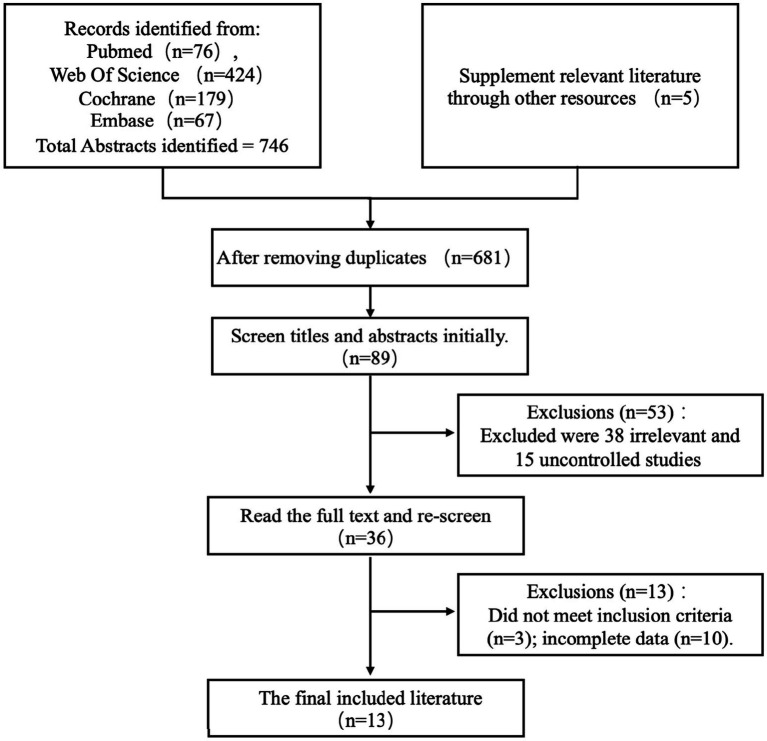
Stroke patients are susceptible to malnutrition as a result of dysphagia, neurological impairments, and altered levels of consciousness. The nutritional status of individuals post-stroke is a critical determinant influencing the efficacy of rehabilitation outcomes. Therefore, there is great interest in the possible role of nutrients in promoting recovery after stroke. This article examines the enhancement of rehabilitation outcomes through the improvement of nutritional status. A comprehensive literature search was conducted using the PubMed, Cochrane, Web of Science, and Embase databases. Articles relevant to this topic, published from the inception of each database until November 2024, were identified. The selection was restricted to randomized controlled clinical trials, irrespective of language or publication date. The search specifically targeted studies involving stroke patients, encompassing both hemorrhagic and ischemic types, and interventions that combined nutritional supplementation with rehabilitation therapy. Studies with a focus on stroke prevention were excluded. Full-text articles that met the inclusion criteria were retrieved from the aforementioned sources. In instances where both a full report and a conference abstract were available for the same study, only the full report was considered. A total of 751 studies were considered for inclusion in this scoping review. Following a rigorous screening process, 13 studies were selected for detailed analysis. All selected studies were randomized controlled clinical trials. The findings indicate that supplementation with nutrients such as proteins, vitamins, essential amino acids, and antioxidants can enhance activities of daily living, improve balance function, and reduce neurological deficits in post-stroke patients. This review aims to synthesize current evidence regarding the effects of various nutrients and dietary regimens on limb rehabilitation in post-stroke patients, with the goal of providing new insights to facilitate the accelerated recovery of this population.
由于吞咽困难、神经功能障碍和意识水平改变,中风患者易患营养不良。中风后个体的营养状况是影响康复效果的关键决定因素。因此,人们对营养素在促进中风后恢复中可能发挥的作用非常感兴趣。本文探讨通过改善营养状况来提高康复效果。使用PubMed、Cochrane、科学网和Embase数据库进行了全面的文献检索。确定了从每个数据库创建到2024年11月发表的与该主题相关的文章。选择仅限于随机对照临床试验,不考虑语言或出版日期。检索特别针对涉及中风患者的研究,包括出血性和缺血性中风类型,以及将营养补充与康复治疗相结合的干预措施。排除侧重于中风预防的研究。从上述来源检索符合纳入标准的全文文章。如果同一研究既有完整报告又有会议摘要,则仅考虑完整报告。共有751项研究被纳入本范围综述。经过严格的筛选过程,选择了13项研究进行详细分析。所有入选研究均为随机对照临床试验。研究结果表明,补充蛋白质、维生素、必需氨基酸和抗氧化剂等营养素可以增强中风后患者的日常生活活动能力,改善平衡功能,并减少神经功能缺损。本综述旨在综合目前关于各种营养素和饮食方案对中风后患者肢体康复影响的证据,以期提供新的见解,促进该人群的加速康复。