Kurnaz Merve, Nazan Ali Arslan, Eraydın Feyza
Istanbul Kent University, Istanbul, Turkey.
Private Company Permatter LLC, Florida, USA.
Lasers Med Sci. 2025 Feb 13;40(1):86. doi: 10.1007/s10103-025-04348-4.
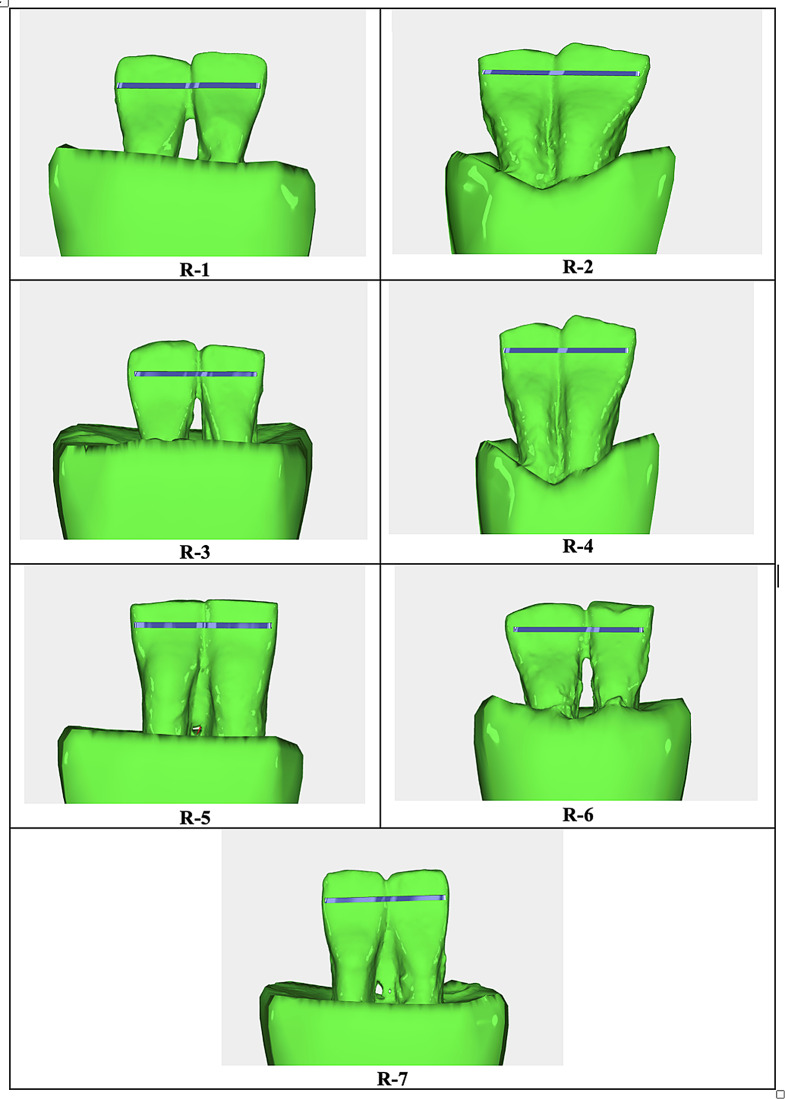
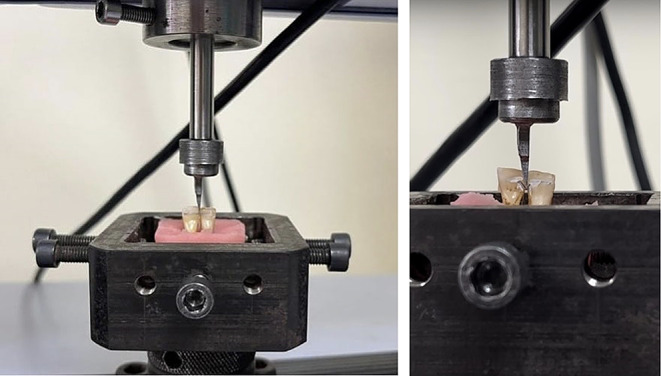
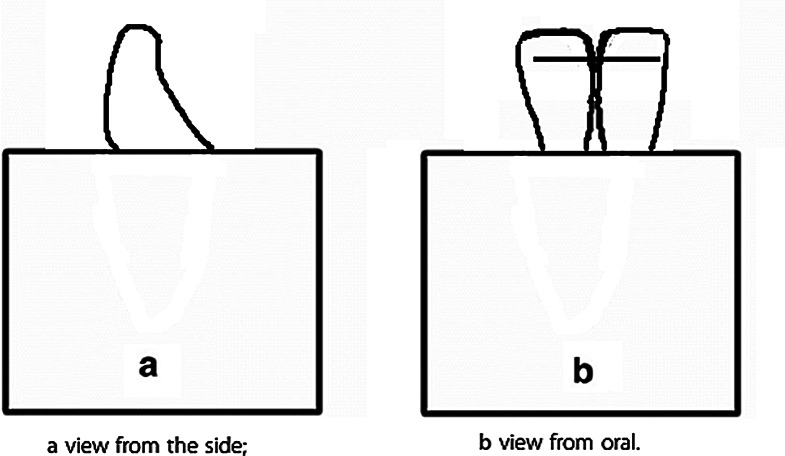
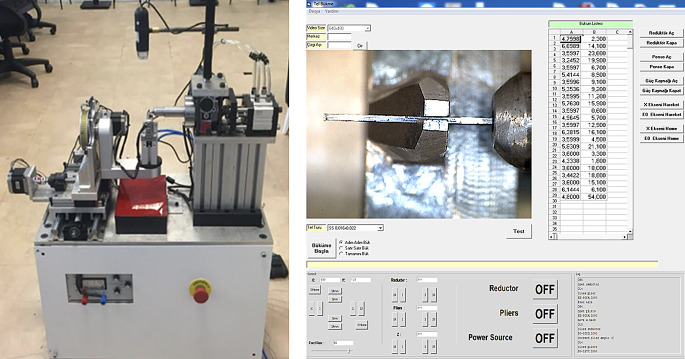
This study aims to assess the in vitro durability of Nitinol retainers, manufactured using computer-aided methods with hydrophilic or superhydrophilic surfaces to reduce debonding, alongside a commonly used composite adhesive. The 112 lower incisor teeth were embedded in blocks in pairs. Retainer wires were made up of 0.018 × 0.018 inch Nickel Titanium alloy(G4™ Nickel Titanium G&H Orthodontics, USA) by bending a robot arm. A total of 16 teeth(8 blocks) were used for each of the mentioned 7 groups Ni-Ti Retainer; Laser Textured Ni-Ti Retainer; Laser Texturing and Atmospheric Plasma Applicated Ni-Ti Retainer; Atmospheric Plasma Applicated Ni-Ti Retainer; Laser Texturing and Atmospheric Plasma Applicated Ni-Ti Retainer2; Laser Texturing and Atmospheric Plasma Applicated Ni-Ti Retainer3; SS-0.0018"(Morelli, Brazil). Transbond LR(3 M Unitek, California) was used. The shear bond strength tests were conducted. The Kruskal-Wallis H test was employed, pairwise comparisons followed by Dunn's test with Bonferroni correction as a post-hoc analysis. There was no statistically significant difference between the groups for maximum force and maximum stress(p > 0.05). However, a significant difference was found in maximum elongation (p:0.0023). Pairwise comparisons highlighted significantly higher elongation values in the SS-0.0018" group. The stainless-steel wire demonstrated higher elongation values, which may offer clinical advantages in cases with higher occlusal forces and periodontal problems due to its material flexibility. Laser Texturing and Atmospheric Plasma Applied Ni-Ti Retainers exhibited higher test performance. Surface treatments applied to CAD/CAM retainers can provide an advantage by enhancing bond strength, potentially reducing the risk of debonding. These findings underline the importance of material selection and surface treatments in optimizing fixed retention strategies for long-term clinical success.
本研究旨在评估采用计算机辅助方法制造的、具有亲水性或超亲水性表面以减少脱粘的镍钛保持器与常用复合粘合剂一起的体外耐久性。112颗下切牙成对嵌入块体中。保持器丝由0.018×0.018英寸的镍钛合金(G4™镍钛合金,G&H正畸公司,美国)通过机器人手臂弯曲制成。上述7组中的每组使用16颗牙齿(8个块体):镍钛保持器;激光纹理化镍钛保持器;激光纹理化和大气等离子体处理镍钛保持器;大气等离子体处理镍钛保持器;激光纹理化和大气等离子体处理镍钛保持器2;激光纹理化和大气等离子体处理镍钛保持器3;SS-0.0018"(莫雷利,巴西)。使用Transbond LR(3M Unitek,加利福尼亚)。进行了剪切粘结强度测试。采用Kruskal-Wallis H检验,随后进行两两比较,并采用Dunn检验和Bonferroni校正作为事后分析。各组之间在最大力和最大应力方面无统计学显著差异(p>0.05)。然而,在最大伸长率方面发现了显著差异(p:0.0023)。两两比较突出显示SS-0.0018"组的伸长率值显著更高。不锈钢丝显示出更高的伸长率值,由于其材料柔韧性,在咬合力较高和存在牙周问题的情况下可能具有临床优势。激光纹理化和大气等离子体处理的镍钛保持器表现出更高的测试性能。应用于CAD/CAM保持器的表面处理可通过提高粘结强度提供优势,潜在地降低脱粘风险。这些发现强调了材料选择和表面处理在优化固定保持策略以实现长期临床成功方面的重要性。