Lim Bryce, Kamal Aryan, Gomez Ramos Borja, Adrian Segarra Juan M, Ibarra Ignacio L, Dignas Lennart, Kindinger Tim, Volz Kai, Rahbari Mohammad, Rahbari Nuh, Poisel Eric, Kafetzopoulou Kanela, Böse Lio, Breinig Marco, Heide Danijela, Gallage Suchira, Barragan Avila Jose E, Wiethoff Hendrik, Berest Ivan, Schnabellehner Sarah, Schneider Martin, Becker Jonas, Helm Dominic, Grimm Dirk, Mäkinen Taija, Tschaharganeh Darjus F, Heikenwalder Mathias, Zaugg Judith B, Mall Moritz
Cell Fate Engineering and Disease Modeling Group, German Cancer Research Center (DKFZ) and DKFZ-ZMBH Alliance, Heidelberg, Germany.
HITBR Hector Institute for Translational Brain Research gGmbH, Heidelberg, Germany.
Nat Genet. 2025 Mar;57(3):668-679. doi: 10.1038/s41588-025-02081-w. Epub 2025 Feb 13.
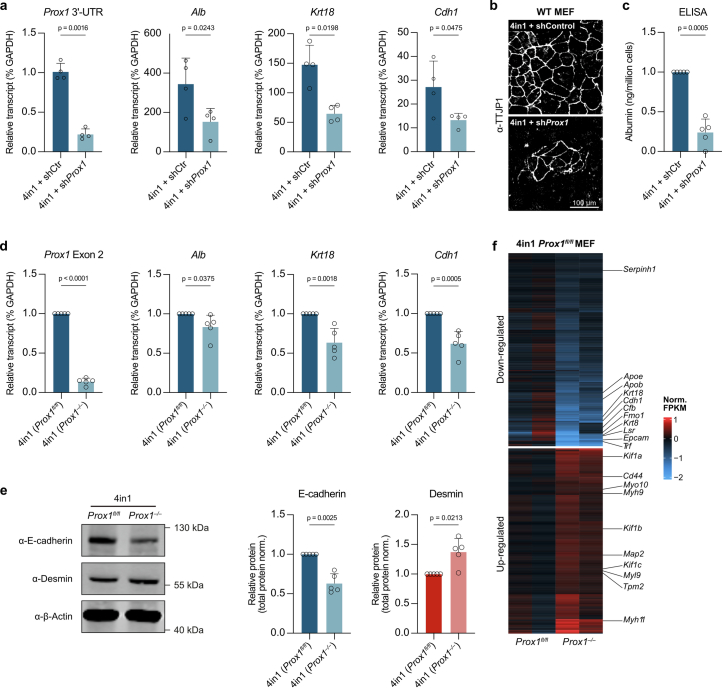
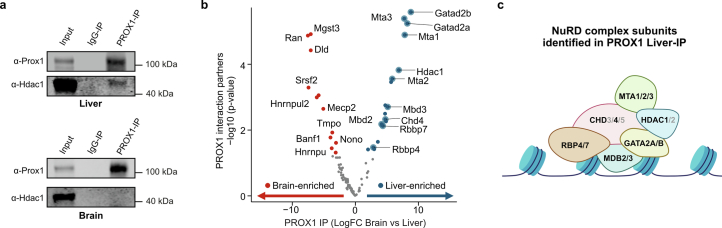
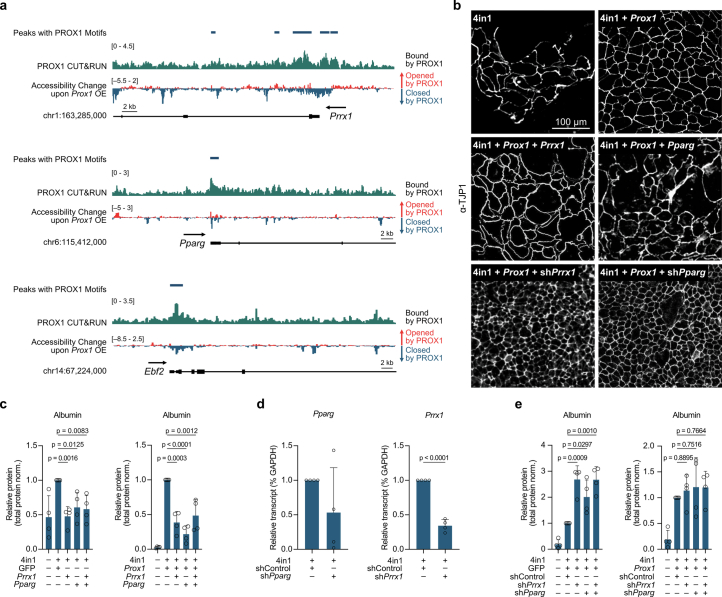
Cell fate plasticity enables development, yet unlocked plasticity is a cancer hallmark. While transcription master regulators induce lineage-specific genes to restrict plasticity, it remains unclear whether plasticity is actively suppressed by lineage-specific repressors. Here we computationally predict so-called safeguard repressors for 18 cell types that block phenotypic plasticity lifelong. We validated hepatocyte-specific candidates using reprogramming, revealing that prospero homeobox protein 1 (PROX1) enhanced hepatocyte identity by direct repression of alternative fate master regulators. In mice, Prox1 was required for efficient hepatocyte regeneration after injury and was sufficient to prevent liver tumorigenesis. In line with patient data, Prox1 depletion caused hepatocyte fate loss in vivo and enabled the transition of hepatocellular carcinoma to cholangiocarcinoma. Conversely, overexpression promoted cholangiocarcinoma to hepatocellular carcinoma transdifferentiation. Our findings provide evidence for PROX1 as a hepatocyte-specific safeguard and support a model where cell-type-specific repressors actively suppress plasticity throughout life to safeguard lineage identity and thus prevent disease.
细胞命运可塑性推动了发育进程,然而不受控制的可塑性却是癌症的一个标志。虽然转录主调控因子会诱导谱系特异性基因来限制可塑性,但目前尚不清楚可塑性是否受到谱系特异性阻遏物的主动抑制。在此,我们通过计算预测了18种细胞类型中所谓的保障阻遏物,它们终身阻断表型可塑性。我们利用重编程验证了肝细胞特异性候选物,发现prospero同源框蛋白1(PROX1)通过直接抑制替代命运主调控因子来增强肝细胞特性。在小鼠中,Prox1是损伤后高效肝细胞再生所必需的,并且足以预防肝脏肿瘤发生。与患者数据一致,Prox1缺失在体内导致肝细胞命运丧失,并使肝细胞癌转变为胆管癌。相反,过表达促进胆管癌向肝细胞癌的转分化。我们的研究结果为PROX1作为肝细胞特异性保障提供了证据,并支持一种模型,即细胞类型特异性阻遏物在整个生命过程中主动抑制可塑性,以保障谱系特性从而预防疾病。