
印度中部医院及城市建筑环境中经常接触表面分离出的耐头孢西丁凝固酶阴性葡萄球菌的分子特征分析
Molecular Characterization of Cefoxitin-Resistant Coagulase-Negative Staphylococci From Frequently Touched Surfaces of Hospital and Urban-Built Environments of Central India.
作者信息
Keshri Anushri, Gore Dilip Govardhan, Singh Indu, Sharma Divakar, Kolla Varaprasad
机构信息
Department of Biotechnology, Amity Institute of Biotechnology, Amity University Chhattisgarh, Raipur, Chhattisgarh 493225, India.
Department of Biotechnology, Sai Biosystems Private Limited, Nagpur, Maharashtra 440009, India.
出版信息
Can J Infect Dis Med Microbiol. 2025 Feb 5;2025:5766823. doi: 10.1155/cjid/5766823. eCollection 2025.
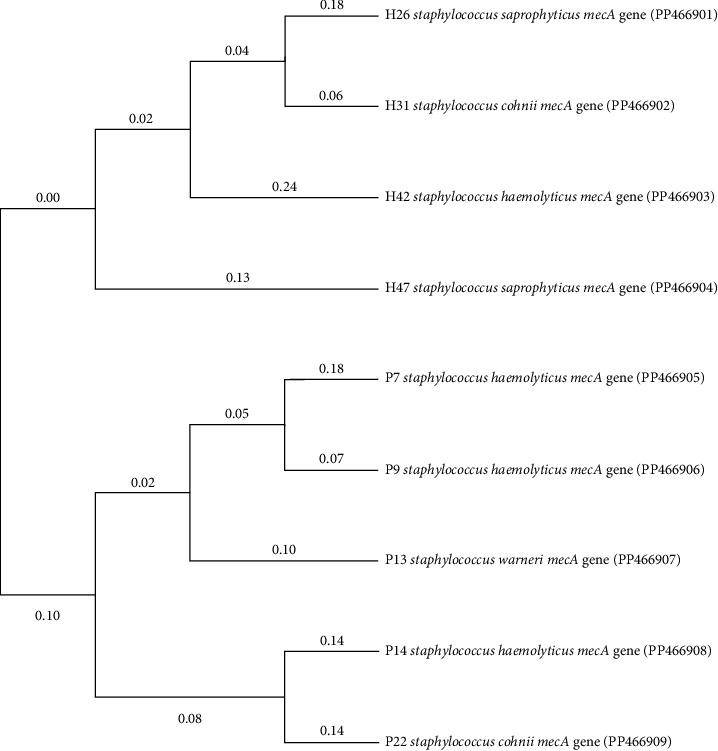
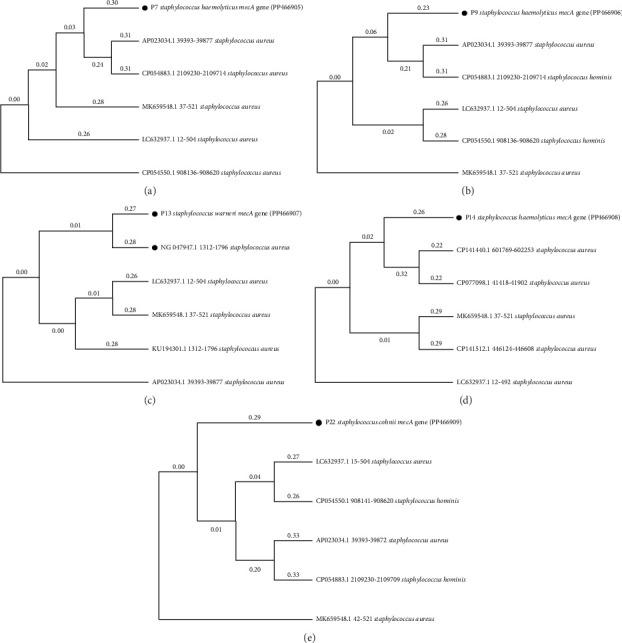
Coagulase-negative staphylococci (CoNS) are the major pathogen (hospital as well as environmental) and their emerging multidrug-resistant (MDR) strains complicate the treatment process. In this study, we investigated the prevalence and antibiotic resistance of CoNS on frequently touched surfaces in hospital and urban built environments (UBEs) in Vidarbha, Maharashtra, India. A total of 200 isolates screened for species and 55 methicillin-resistant staphylococci isolates were identified, and among them, 19 were classified as cefoxitin-resistant CoNS. These 19 cefoxitin-resistant CoNS isolates were tested for the presence of the gene by conventional PCR and only nine (47.36%) were found to be positive. positive strains were tested to check MIC for various antibiotics and three marker gene characteristics, namely, ß-lactamase, cefoxitin screen, and inducible clindamycin resistance via the VITEK 2 system. These strains were 100% resistant to benzylpenicillin and oxacillin, and approximately 50% were resistant to vancomycin. Amplified gene fragments were sequenced, and SNP analysis was performed alongside a standard sequence from (Acc no. NG_047938.1). In total, among the 466 nucleotides, 386 sequences were found to be invariable, and 80 polymorphic variables were identified (46 singleton variable sites and 34 parsimony information sites). The spread of antibiotic resistance is very common in both UBEs and hospital environments; thus, our study concluded that a surveillance program is recommended for the Vidarbha region for the assessment of co-occurring CoNS and better infection control of the environment for future reduction in contact infection.
凝固酶阴性葡萄球菌(CoNS)是主要病原体(医院及环境中的),其新出现的多重耐药(MDR)菌株使治疗过程复杂化。在本研究中,我们调查了印度马哈拉施特拉邦维达巴地区医院和城市建筑环境(UBE)中经常接触表面上CoNS的流行情况及抗生素耐药性。共筛选了200株菌株进行菌种鉴定,鉴定出55株耐甲氧西林葡萄球菌菌株,其中19株被分类为耐头孢西丁CoNS。通过常规PCR检测这19株耐头孢西丁CoNS分离株中 基因的存在情况,仅9株(47.36%)呈阳性。对阳性菌株检测各种抗生素的最低抑菌浓度(MIC)以及通过VITEK 2系统检测三种标记基因特征,即β-内酰胺酶、头孢西丁筛选和诱导型克林霉素耐药性。这些菌株对苄青霉素和苯唑西林100%耐药,约50%对万古霉素耐药。对扩增的 基因片段进行测序,并与来自 (登录号NG_047938.1)的标准序列一起进行单核苷酸多态性(SNP)分析。总共,在466个核苷酸中,发现386个序列不变,鉴定出80个多态性变量(46个单态变量位点和34个简约信息位点)。抗生素耐药性在UBE和医院环境中都很常见;因此,我们的研究得出结论,建议为维达巴地区制定监测计划,以评估同时存在的CoNS情况,并更好地控制环境感染,以便未来减少接触感染。


 Zotero 插件