Schroeer Andreas, Corona-Strauss Farah I, Hannemann Ronny, Hackley Steven A, Strauss Daniel J
Systems Neuroscience and Neurotechnology Unit, Faculty of Medicine, Saarland University & htw saar, Homburg/Saar, Germany.
Center for Digital Neurotechnologies Saar, Homburg/Saar, Germany.
Front Neurosci. 2025 Jan 31;18:1462507. doi: 10.3389/fnins.2024.1462507. eCollection 2024.
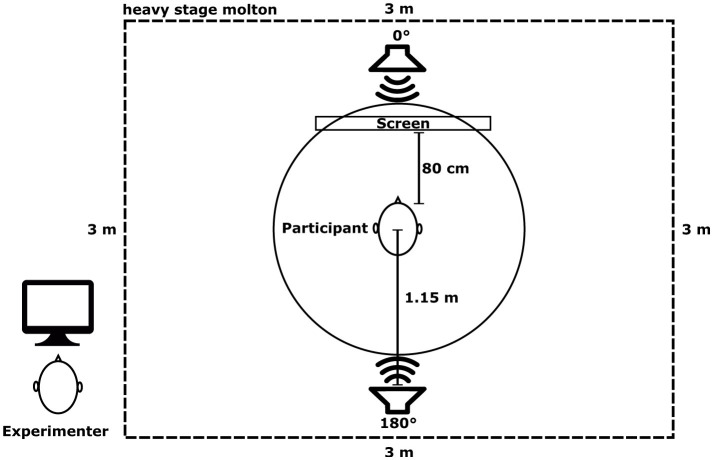
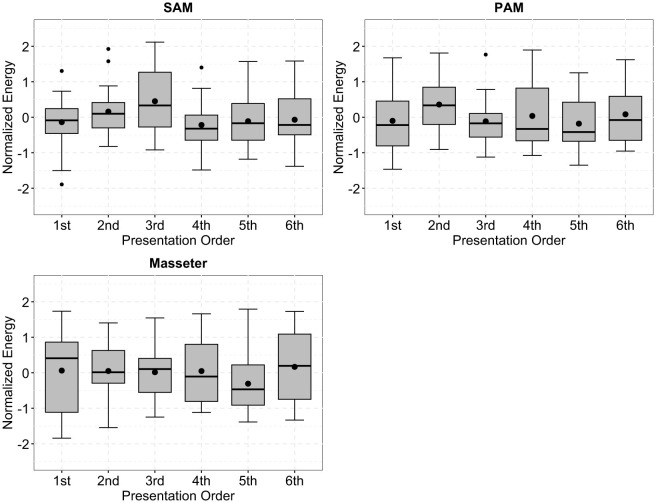
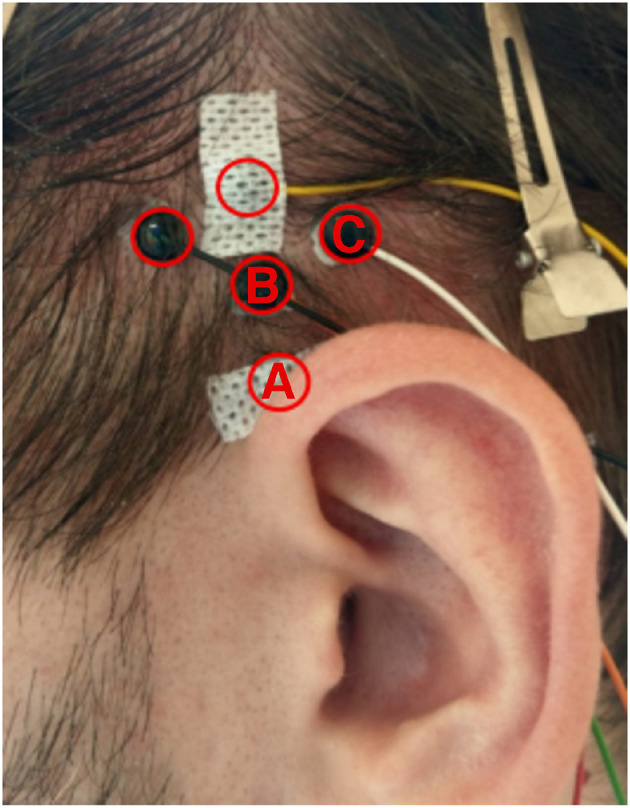
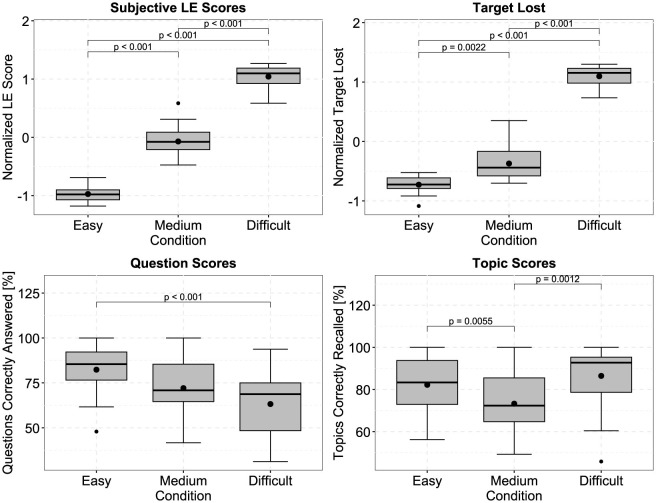
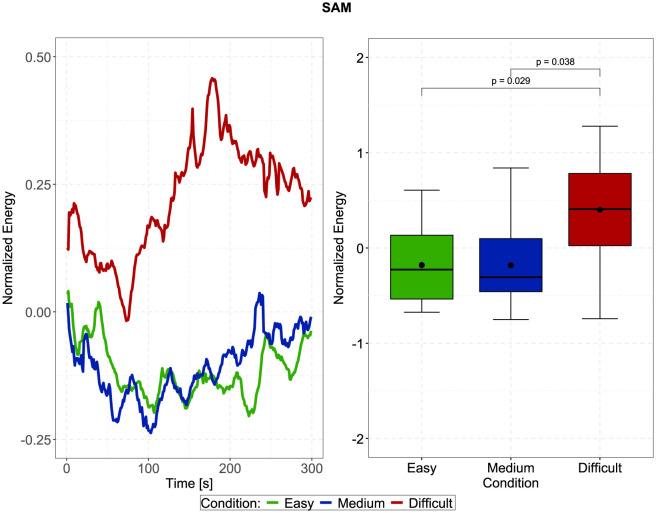
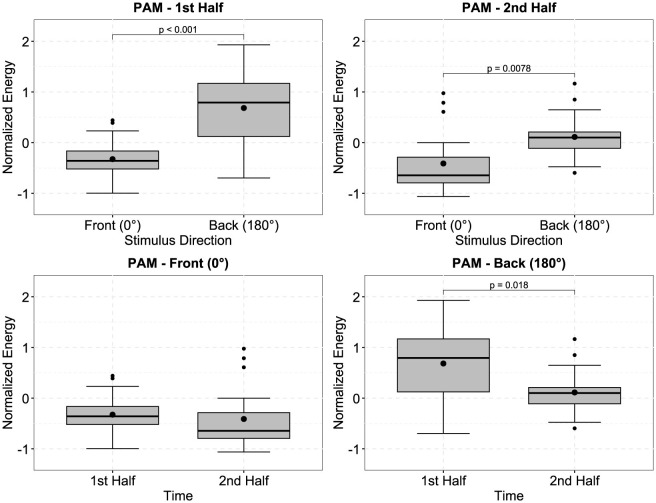
Recently, electromyographic (EMG) signals of auricular muscles have been shown to be an indicator of spatial auditory attention in humans, based on a vestigial pinna-orienting system. Because spatial auditory attention in a competing speaker task is closely related to the more generalized concept of attentional effort in listening, the current study investigated the possibility that the EMG activity of auricular muscles could also reflect correlates of effortful listening in general. Twenty participants were recruited. EMG signals from the left and right superior and posterior auricular muscles (SAM, PAM) were recorded while participants attended a target podcast in a competing speaker paradigm. Three different conditions, each more difficult and requiring a higher amount of effortful listening, were generated by varying the number and pitch of distractor streams, as well as the signal-to-noise ratio. All audio streams were either presented from a loudspeaker placed in front of the participants (0°), or in the back (180°). Overall, averaged PAM activity was not affected by different levels of effortful listening, but was significantly larger when stimuli were presented from the back, as opposed to the front. Averaged SAM activity, however, was significantly larger in the most difficult condition, which required the largest amount of effort, compared to the easier conditions, but was not affected by stimulus direction. We interpret the increased SAM activity to be the response of the vestigial pinna-orienting system to an effortful stream segregation task.
最近的研究表明,基于残留的耳廓定向系统,耳廓肌肉的肌电图(EMG)信号可作为人类空间听觉注意力的一个指标。由于在竞争性说话者任务中的空间听觉注意力与更广义的倾听中注意力努力的概念密切相关,因此本研究调查了耳廓肌肉的肌电图活动是否也能反映一般情况下努力倾听的相关因素。招募了20名参与者。在参与者以竞争性说话者范式收听目标播客时,记录左右耳上和耳后肌肉(SAM、PAM)的肌电图信号。通过改变干扰流的数量和音高以及信噪比,产生了三种不同的条件,每种条件都更具难度,需要更高程度的努力倾听。所有音频流要么由放置在参与者前方(0°)的扬声器播放,要么由后方(180°)的扬声器播放。总体而言,平均PAM活动不受不同程度的努力倾听的影响,但当刺激从后方而不是前方呈现时,其活动显著更大。然而,与较容易的条件相比,在最困难的条件下(需要最大程度的努力),平均SAM活动显著更大,但不受刺激方向的影响。我们将增加的SAM活动解释为残留的耳廓定向系统对努力的流分离任务的反应。