Mohammadi Shooka, Fulop Tamas, Khalil Abdelouahed, Ebrahimi Sara, Hasani Motahareh, Ziaei Somayeh, Farsi Farnaz, Mirtaheri Elham, Afsharianfar Mostafa, Heshmati Javad
Nutrition and Metabolic Diseases Research Center, Ahvaz Jundishapur University of Medical Sciences, Ahvaz, 6135715794, Iran.
Department of Social and Preventive Medicine, Faculty of Medicine, University of Malaya, Kuala Lumpur, Malaysia.
BMC Complement Med Ther. 2025 Feb 22;25(1):71. doi: 10.1186/s12906-025-04819-9.
Supplementation with pine bark extract (PBE) may improve risk factors associated with cardiometabolic syndrome (CMS). The effects of PBE supplementation on cardiometabolic risk factors were evaluated in this systematic review and meta-analysis of randomized controlled trials (RCTs).
A comprehensive search of various databases was performed to identify relevant RCTs published up to September 2024. A random-effects model was employed for the meta-analysis, which included 27 RCTs with 1,685 participants.
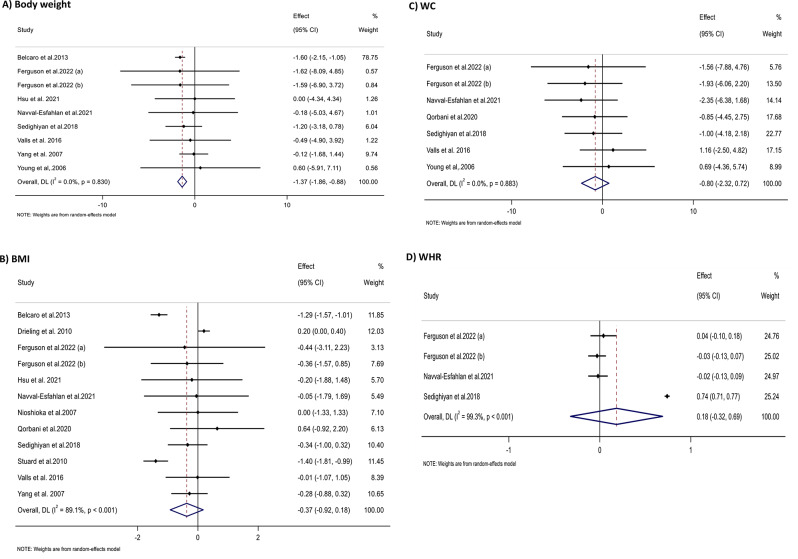
The findings indicated that PBE supplementation significantly reduced systolic blood pressure (SBP) (weighted mean difference (WMD): -2.26 mmHg, 95% confidence interval (CI): -3.73, -0.79; P = 0.003), diastolic blood pressure (DBP) (WMD: -2.62 mmHg, 95% CI: -3.71, -1.53; P < 0.001), fasting blood sugar (FBS) (WMD: -6.25 mg/dL, 95% CI: -9.97, -2.53; P = 0.001), hemoglobin A1c (HbA1c) (WMD: -0.32%, 95% CI: -0.54, -0.11; P = 0.003), body weight (WMD: -1.37 kg, 95% CI: -1.86, -0.88; P < 0.001), and low-density lipoprotein (LDL) cholesterol (WMD: -5.07 mg/dL, 95% CI: -9.21, -0.94; P = 0.016) in the PBE-treated group compared to their untreated counterparts. However, no significant impact of PBE was observed on waist-to-hip ratio (WHR), body mass index (BMI), waist circumference (WC), or serum levels of insulin, high-density lipoprotein (HDL) cholesterol, triglycerides (TG), and total cholesterol (TC).
Supplementation with PBE may ameliorate specific cardiometabolic risk factors, as indicated by reductions in body weight, DBP, SBP, FBS, LDL, and HbA1c levels. This approach can be regarded as an adjunct therapeutic strategy for CMS management. Further high-quality trials with larger sample sizes and longer durations are required to validate these findings.
补充松树皮提取物(PBE)可能改善与心脏代谢综合征(CMS)相关的风险因素。本系统评价和随机对照试验(RCT)的荟萃分析评估了补充PBE对心脏代谢风险因素的影响。
对各种数据库进行全面检索,以确定截至2024年9月发表的相关RCT。荟萃分析采用随机效应模型,纳入了27项RCT,共1685名参与者。
研究结果表明,与未接受治疗的对照组相比,接受PBE治疗的组收缩压(SBP)显著降低(加权平均差(WMD):-2.26 mmHg,95%置信区间(CI):-3.73,-0.79;P = 0.003),舒张压(DBP)(WMD:-2.62 mmHg,95% CI:-3.71,-1.53;P < 0.001),空腹血糖(FBS)(WMD:-6.25 mg/dL,95% CI:-9.97,-2.53;P = 0.001),糖化血红蛋白(HbA1c)(WMD:-0.32%,95% CI:-0.54,-0.11;P = 0.003),体重(WMD:-1.37 kg,95% CI:-1.86,-0.88;P < 0.001),以及低密度脂蛋白(LDL)胆固醇(WMD:-5.07 mg/dL,95% CI:-9.21,-0.94;P = 0.016)。然而,未观察到PBE对腰臀比(WHR)、体重指数(BMI)、腰围(WC)或胰岛素、高密度脂蛋白(HDL)胆固醇、甘油三酯(TG)和总胆固醇(TC)的血清水平有显著影响。
补充PBE可能改善特定的心脏代谢风险因素,表现为体重、DBP、SBP、FBS、LDL和HbA1c水平降低。这种方法可被视为CMS管理的辅助治疗策略。需要进一步进行更大样本量和更长持续时间的高质量试验来验证这些发现。