
功能磁共振成像对视觉皮层功能障碍作为伴先兆偏头痛生物标志物的见解。
fMRI Insights into Visual Cortex Dysfunction as a Biomarker for Migraine with Aura.
作者信息
Pikor Damian, Banaszek-Hurla Natalia, Drelichowska Alicja, Hurla Mikołaj, Dorszewska Jolanta, Wolak Tomasz, Kozubski Wojciech
机构信息
Laboratory of Neurobiology, Department of Neurology, Poznań University of Medical Sciences, 60-355 Poznan, Poland.
World Hearing Center, Bioimaging Research Center of Institute of Physiology and Pathology of Hearing, 05-830 Kajetany, Poland.
出版信息
Neurol Int. 2025 Jan 21;17(2):15. doi: 10.3390/neurolint17020015.
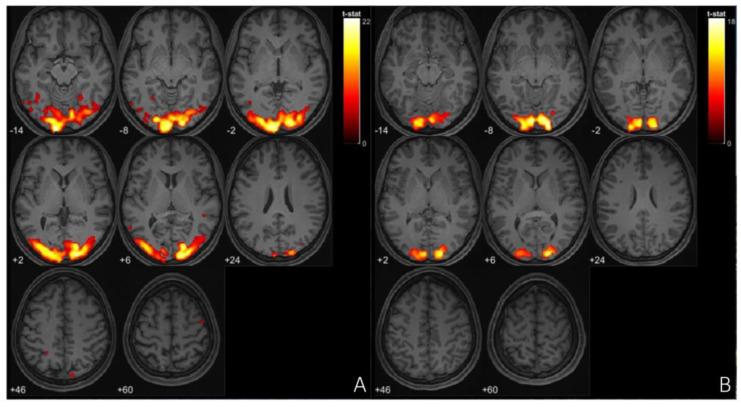
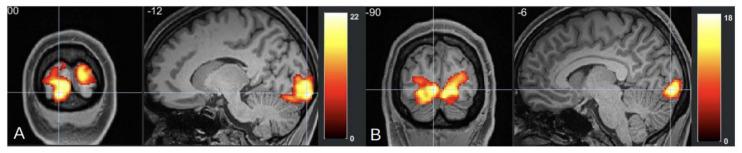
Migraine with aura (MwA) is a common and severely disabling neurological disorder, characterised by transient yet recurrent visual disturbances, including scintillating scotomas, flickering photopsias, and complex geometric patterns. These episodic visual phenomena significantly compromise daily functioning, productivity, and overall quality of life. Despite extensive research, the underlying pathophysiological mechanisms remain only partially understood. Cortical spreading depression (CSD), a propagating wave of neuronal and glial depolarisation, has been identified as a central process in MwA. This phenomenon is triggered by ion channel dysfunction, leading to elevated intracellular calcium levels and excessive glutamate release, which contribute to widespread cortical hyperexcitability. Genetic studies, particularly involving the family, further implicate dysregulation of calcium channels in the pathogenesis of MwA. Recent advances in neuroimaging, particularly functional magnetic resonance imaging (fMRI), have provided critical insights into the neurophysiology of MwA. These results support the central role of CSD as a basic mechanism behind MwA and imply that cortical dysfunction endures beyond brief episodes, possibly due to chronic neuronal dysregulation or hyperexcitability. The visual cortex of MwA patients exhibits activation patterns in comparison to other neuroimaging studies, supporting the possibility that it is a disease-specific biomarker. Its distinctive sensory and cognitive characteristics are influenced by a complex interplay of cortical, vascular, and genetic factors, demonstrating the multifactorial nature of MwA. We now know much more about the pathophysiology of MwA thanks to the combination of molecular and genetic research with sophisticated neuroimaging techniques like arterial spin labelling (ASL) and fMRI. This review aims to synthesize current knowledge and analyse molecular and neurophysiological targets, providing a foundation for developing targeted therapies to modulate cortical excitability, restore neural network stability, and alleviate the burden of migraine with aura. The most important and impactful research in our field has been the focus of this review, which highlights important developments and their contributions to the knowledge and treatment of migraine with aura.
伴先兆偏头痛(MwA)是一种常见且严重致残的神经系统疾病,其特征为短暂但反复发作的视觉障碍,包括闪烁暗点、闪光幻觉和复杂的几何图案。这些发作性视觉现象严重影响日常功能、工作效率和整体生活质量。尽管进行了广泛研究,但潜在的病理生理机制仍仅部分为人所知。皮层扩散性抑制(CSD),一种神经元和胶质细胞去极化的传播波,已被确定为MwA的核心过程。这种现象由离子通道功能障碍引发,导致细胞内钙水平升高和谷氨酸过度释放,进而导致广泛的皮层兴奋性增高。基因研究,特别是涉及[具体家族]的研究,进一步表明钙通道失调在MwA发病机制中的作用。神经影像学的最新进展,尤其是功能磁共振成像(fMRI),为MwA的神经生理学提供了关键见解。这些结果支持CSD作为MwA背后基本机制的核心作用,并暗示皮层功能障碍在短暂发作后仍持续存在,可能是由于慢性神经元失调或兴奋性增高所致。与其他神经影像学研究相比,MwA患者的视觉皮层表现出激活模式,支持其作为疾病特异性生物标志物的可能性。其独特的感觉和认知特征受皮层、血管和遗传因素复杂相互作用的影响,表明MwA具有多因素性质。由于分子和基因研究与动脉自旋标记(ASL)和fMRI等先进神经影像学技术的结合,我们现在对MwA的病理生理学有了更多了解。本综述旨在综合当前知识,分析分子和神经生理学靶点,为开发靶向疗法以调节皮层兴奋性、恢复神经网络稳定性和减轻伴先兆偏头痛负担提供基础。我们领域中最重要且最具影响力的研究一直是本综述的重点,它突出了重要进展及其对伴先兆偏头痛知识和治疗的贡献。
 Zotero 插件