Feng Yuling, Escudero Castelán Nayeli, Hossain Mohammed Akhter, Wu Hongkang, Katayama Hidekazu, Smith Stuart J, Cummins Scott F, Mita Masatoshi, Bathgate Ross A D, Elphick Maurice R
Centre for Evolutionary & Functional Genomics, School of Biological & Behavioural Sciences, Queen Mary University of London, London, E1 4NS, UK.
Florey Institute of Neuroscience and Mental Health and Department of Biochemistry and Pharmacology, University of Melbourne, Parkville, VIC, 3010, Australia.
BMC Biol. 2025 Feb 25;23(1):59. doi: 10.1186/s12915-025-02158-2.
Relaxins are a family of peptides that regulate reproductive physiology in vertebrates. Evidence that this is an evolutionarily ancient role of relaxins has been provided by the discovery of two relaxin-like gonad-stimulating peptides (RGP1 and RGP2) that trigger spawning in starfish. The main aim of this study was to identify the receptor(s) that mediate(s) the effects of RGP1 and RGP2 in starfish.
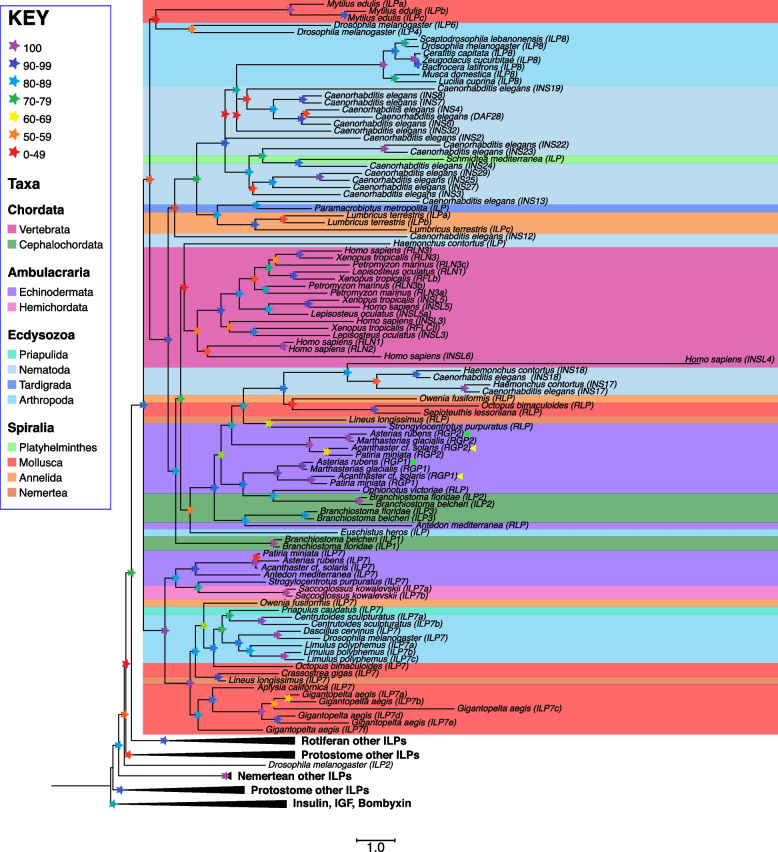
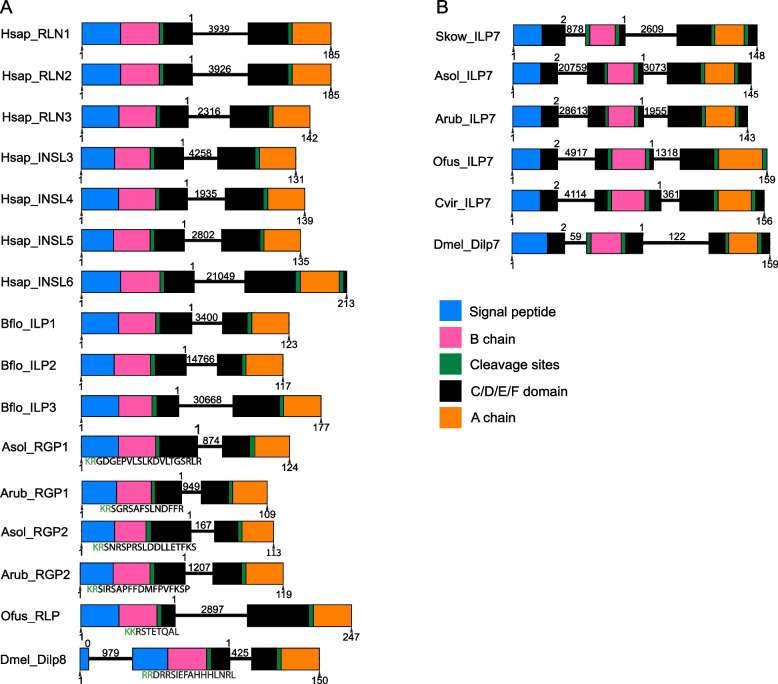
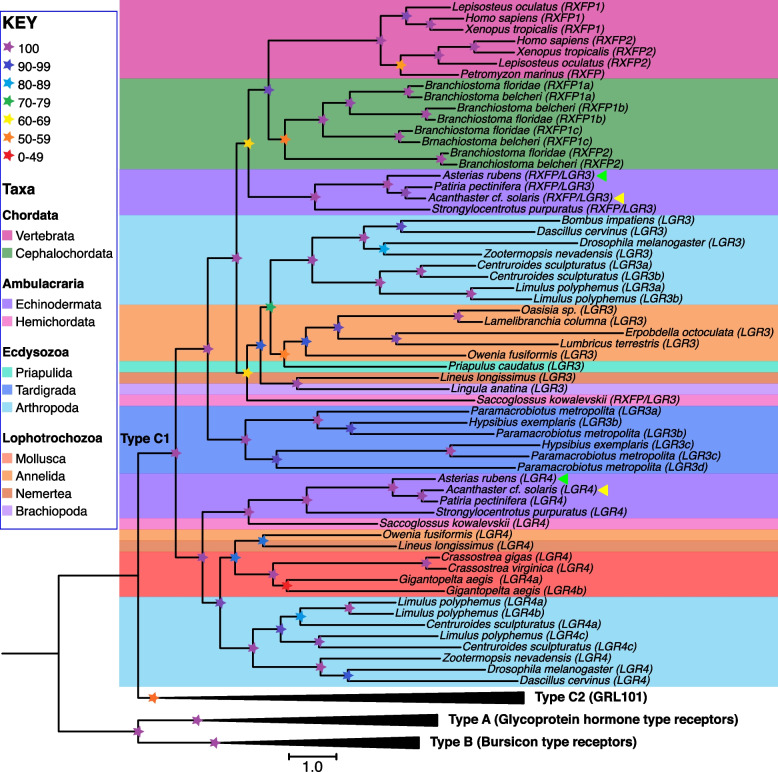
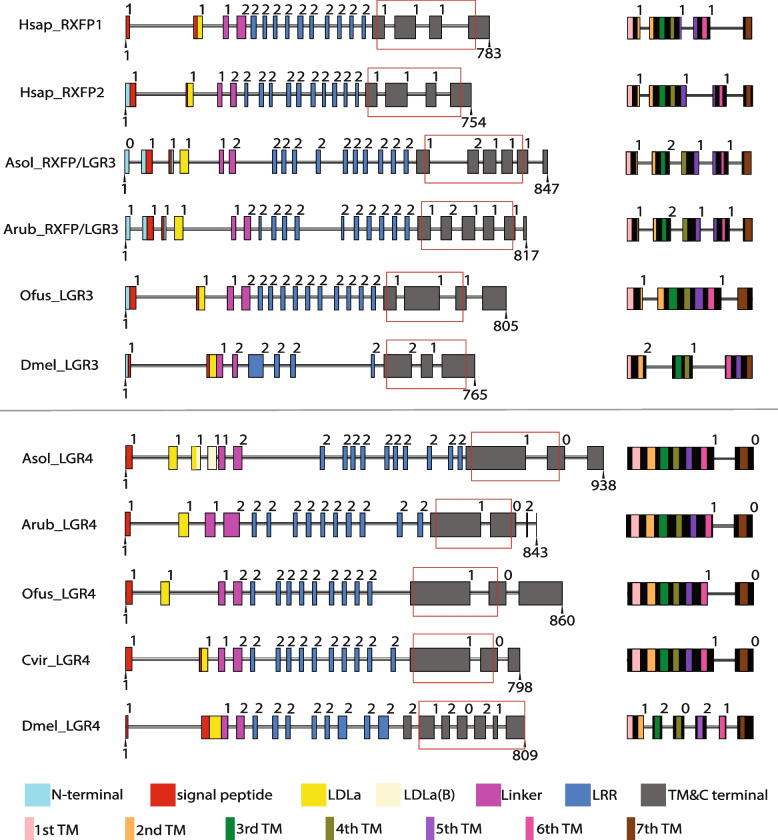
Here we show that RGP1 and RGP2 belong to a family of peptides that include vertebrate relaxins, Drosophila insulin-like peptide 8 (Dilp8), and other relaxin-like peptides in several protostome taxa. An ortholog of the human relaxin receptors RXFP1 and RXFP2 and the Drosophila receptor LGR3 was identified in starfish (RXFP/LGR3). In Drosophila, but not in humans and other vertebrates, there is a paralog of LGR3 known as LGR4, and here an LGR4-type receptor was also identified in starfish. In vitro pharmacological experiments revealed that both RGP1 and RGP2 act as ligands for RXFP/LGR3 in the starfish Acanthaster cf. solaris and Asterias rubens, but neither peptide acts as a ligand for LGR4 in these species.
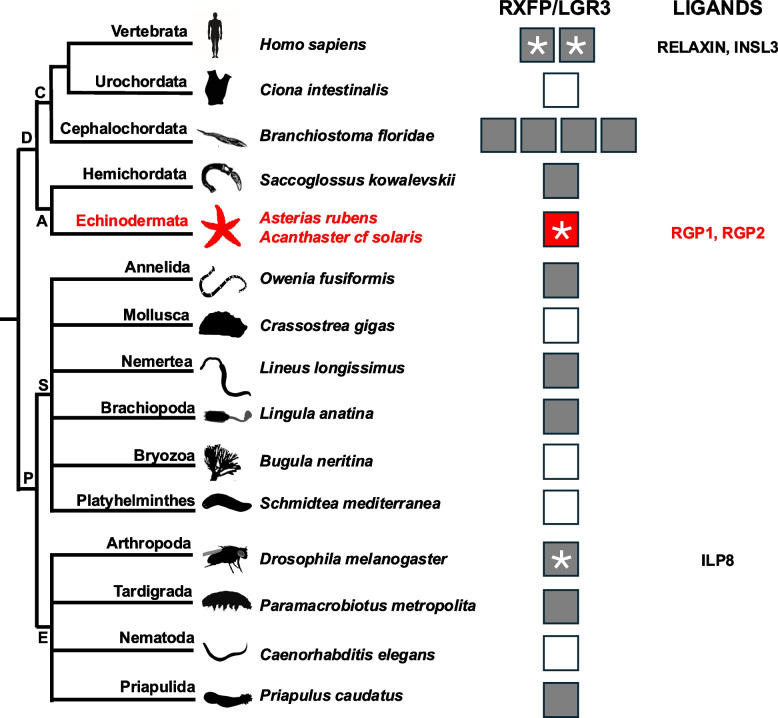
Discovery of the RXFP/LGR3-type receptor for RGP1 and RGP2 in starfish provides a new insight into the evolution of relaxin-type signaling as a regulator of reproductive processes. Furthermore, our findings indicate that RXFP/LGR3-type receptors have been lost in several phyla, including urochordates, mollusks, bryozoans, platyhelminthes, and nematodes.
松弛素是一类调节脊椎动物生殖生理的肽。海星中发现的两种松弛素样促性腺刺激肽(RGP1和RGP2)可触发产卵,这为松弛素在进化上具有古老作用提供了证据。本研究的主要目的是鉴定介导RGP1和RGP2在海星中作用的受体。
我们在此表明,RGP1和RGP2属于一类肽,这类肽包括脊椎动物松弛素、果蝇胰岛素样肽8(Dilp8)以及几个原口动物类群中的其他松弛素样肽。在海星中鉴定出了人类松弛素受体RXFP1和RXFP2以及果蝇受体LGR3的直系同源物(RXFP/LGR3)。在果蝇中存在LGR3的旁系同源物LGR4,但在人类和其他脊椎动物中不存在,并且在此研究中也在海星中鉴定出了LGR4型受体。体外药理学实验表明,在多棘海星和红海星中,RGP1和RGP2均作为RXFP/LGR3的配体起作用,但在这些物种中,这两种肽均不作为LGR4的配体。
在海星中发现RGP1和RGP2的RXFP/LGR3型受体,为松弛素型信号作为生殖过程调节剂的进化提供了新的见解。此外,我们的研究结果表明,RXFP/LGR3型受体在包括尾索动物、软体动物、苔藓虫、扁形动物和线虫在内的几个门中已经消失。