Javaid Nasir, Jang Tae-Won, Fu Yuting, Choi Younho
Florida Research and Innovation Center, Cleveland Clinic, Port St. Lucie, Florida, USA.
J Virol. 2025 Apr 15;99(4):e0220524. doi: 10.1128/jvi.02205-24. Epub 2025 Feb 27.
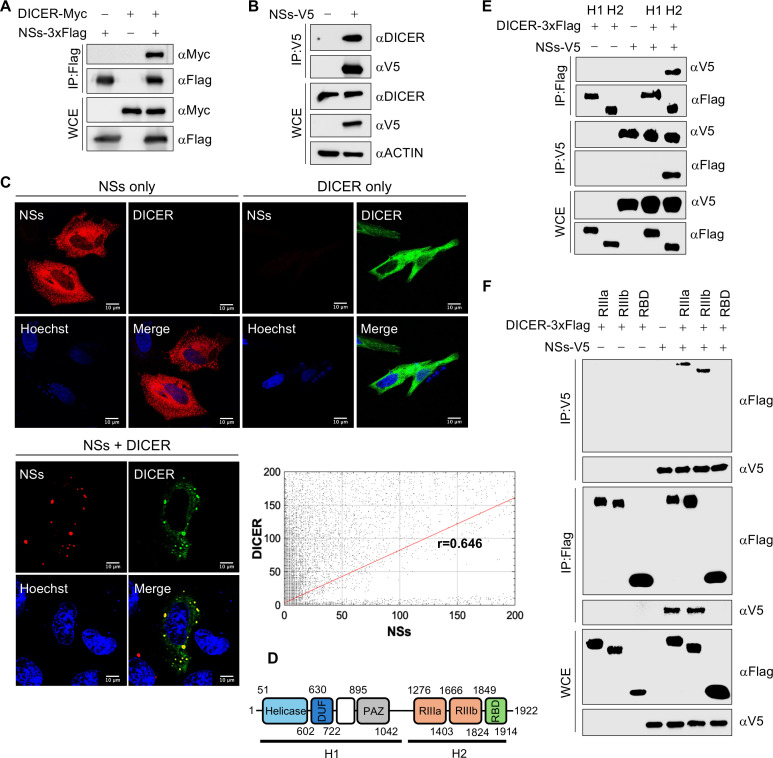
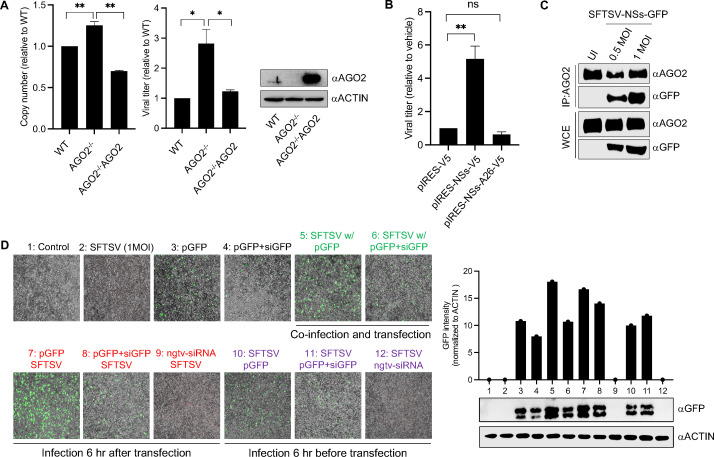
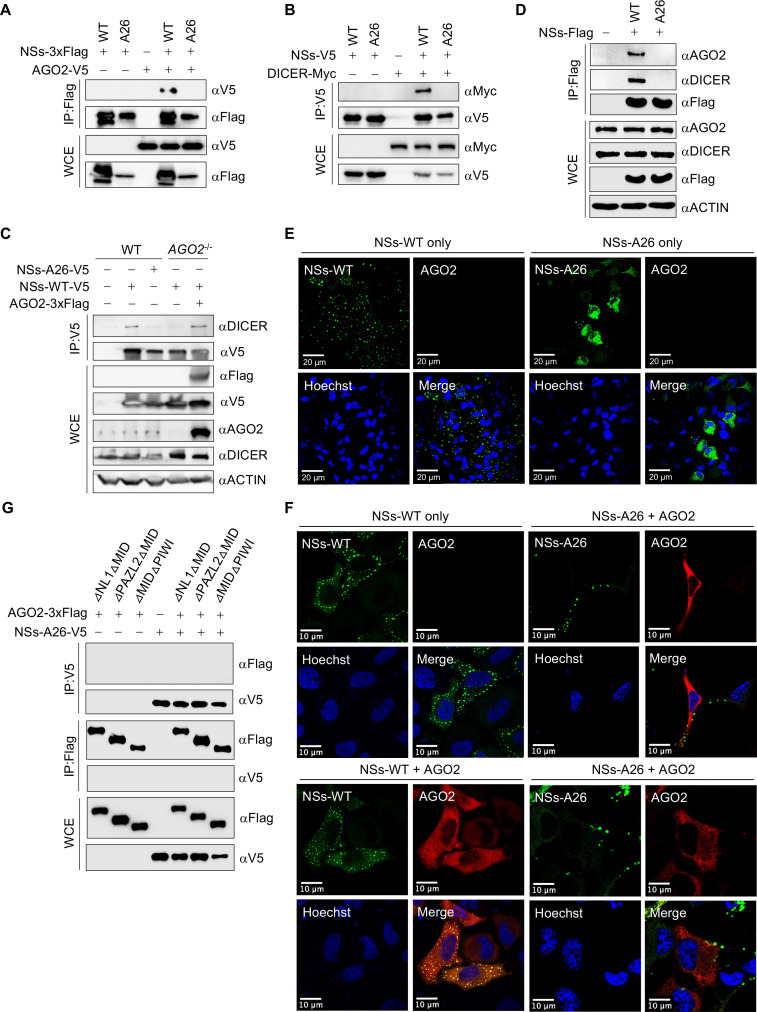
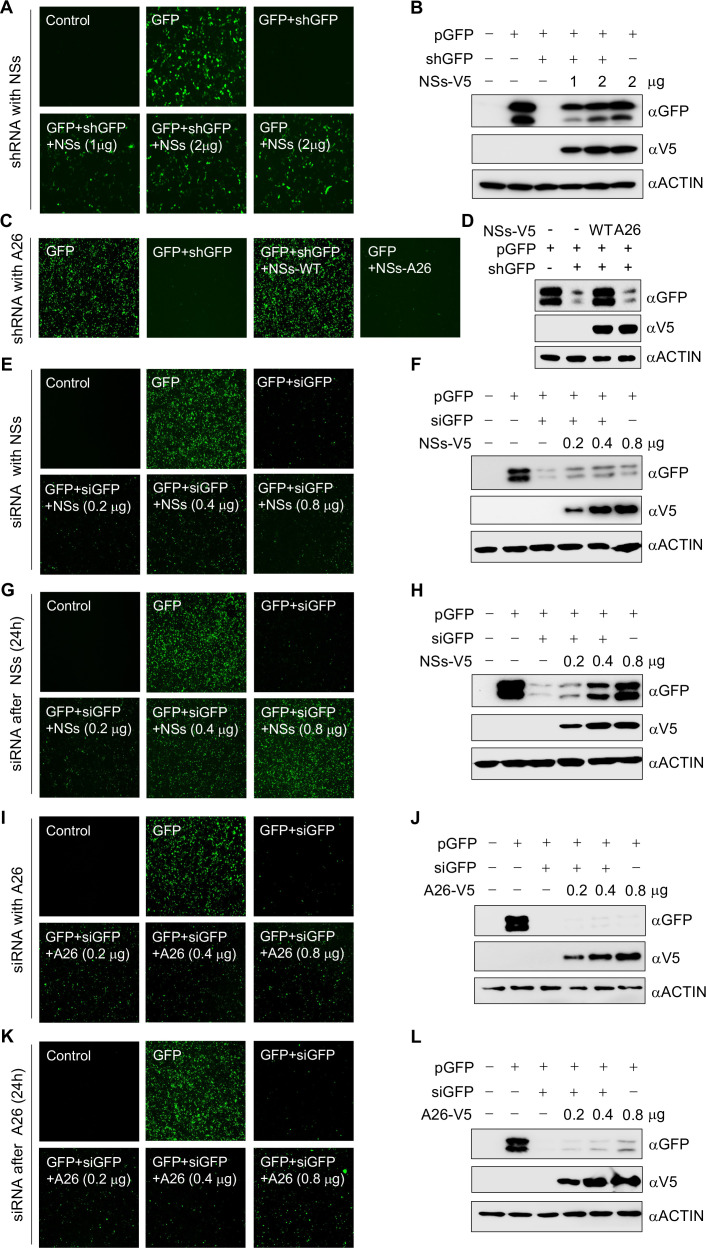
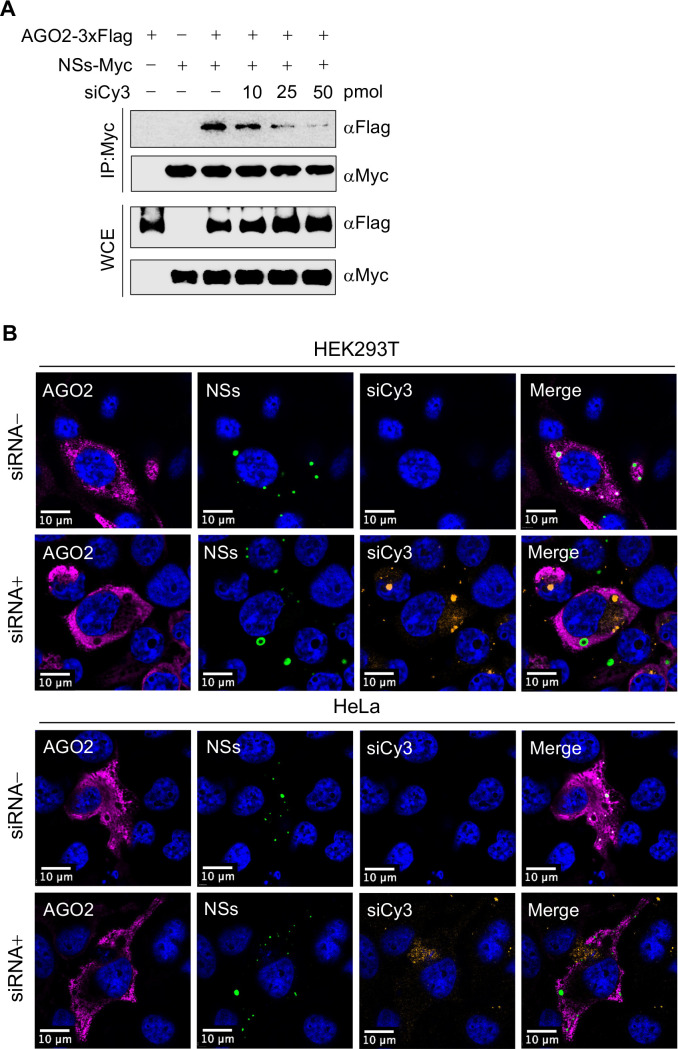
RNA interference (RNAi) is a posttranscriptional gene silencing mechanism acting as an antiviral defense in eukaryotes. During viral replication, intermediate double-stranded RNAs are processed into virus-derived small interfering RNAs (vsiRNAs) by the host enzyme, DICER. These vsiRNAs are incorporated into the RNA-induced silencing complex (RISC), where AGO2 cleaves viral genomic RNAs. However, viruses have evolved mechanisms to suppress this pathway. Here, we report that the nonstructural protein (NSs) of severe fever with thrombocytopenia syndrome virus (SFTSV) interacts with RISC to suppress the RNAi pathway. NSs forms a ternary complex by interacting with both DICER and AGO2 of the RNAi pathway. The interaction between NSs and DICER, facilitated by the two RNase III domains of DICER, is disrupted in the absence of AGO2 or the DICER-interacting domain (PIWI) of AGO2, indicating a direct interaction between NSs and AGO2. Functional assays using shRNA- and siRNA-mediated silencing of GFP signal, along with co-localization studies, demonstrated that NSs competes with siRNA to interact with AGO2, thereby abolishing RNAi activity. Mutational analysis identified an NSs-A26 mutant that no longer interacts with AGO2 and is unable to suppress RNAi activity, suggesting that NSs acts as a viral suppressor of RNAi (VSR) for SFTSV. Viral infection led to the generation of vsiRNA and showed higher replication in cells compared to wild-type (WT) cells, confirming the antiviral role of the RNAi pathway against SFTSV infection. These data suggest that the NSs-AGO2 interaction suppresses RNAi, counteracting the antiviral RNAi pathway, thereby facilitating SFTSV infection and pathogenesis.IMPORTANCERNA interference (RNAi) is the main antiviral defense pathway in plants and insects but is not predominant in mammals. While RNAi's role in countering severe fever with thrombocytopenia syndrome virus (SFTSV) infection has been studied in ticks, its role in humans is unknown. The SFTSV nonstructural protein (NSs) forms inclusion bodies (IBs) in the host, sequestering multiple antiviral proteins and facilitating pathogenesis, contributing to SFTSV's high mortality rate. Our study found that SFTSV NSs directly interacts with AGO2, a key RNAi protein, hindering its function. A novel NSs mutant failed to interact with AGO2 and lost its RNAi suppression ability, highlighting NSs as a viral suppressor of RNAi (VSR). Infection studies confirmed the RNAi pathway's critical role in combating SFTSV infection. This study demonstrates NSs's role in viral infection and suggests potential therapeutic approaches.
RNA干扰(RNAi)是一种转录后基因沉默机制,在真核生物中作为抗病毒防御作用。在病毒复制过程中,中间双链RNA被宿主酶DICER加工成病毒衍生的小干扰RNA(vsiRNA)。这些vsiRNA被整合到RNA诱导沉默复合体(RISC)中,AGO2在其中切割病毒基因组RNA。然而,病毒已经进化出抑制该途径的机制。在这里,我们报道发热伴血小板减少综合征病毒(SFTSV)的非结构蛋白(NSs)与RISC相互作用以抑制RNAi途径。NSs通过与RNAi途径的DICER和AGO2相互作用形成三元复合体。在没有AGO2或AGO2的DICER相互作用结构域(PIWI)的情况下,由DICER的两个核糖核酸酶III结构域促进的NSs与DICER之间的相互作用被破坏,表明NSs与AGO2之间存在直接相互作用。使用shRNA和siRNA介导的GFP信号沉默的功能测定以及共定位研究表明,NSs与siRNA竞争与AGO2相互作用,从而消除RNAi活性。突变分析鉴定出一种NSs - A26突变体,其不再与AGO2相互作用并且无法抑制RNAi活性,这表明NSs作为SFTSV的RNAi病毒抑制因子(VSR)发挥作用。病毒感染导致vsiRNA的产生,并且与野生型(WT)细胞相比在细胞中显示出更高的复制,证实了RNAi途径对SFTSV感染的抗病毒作用。这些数据表明NSs - AGO2相互作用抑制RNAi,对抗抗病毒RNAi途径,从而促进SFTSV感染和发病机制。
重要性
RNA干扰(RNAi)是植物和昆虫中的主要抗病毒防御途径,但在哺乳动物中并不占主导地位。虽然已经在蜱中研究了RNAi在对抗发热伴血小板减少综合征病毒(SFTSV)感染中的作用,但其在人类中的作用尚不清楚。SFTSV非结构蛋白(NSs)在宿主中形成包涵体(IBs),隔离多种抗病毒蛋白并促进发病机制,导致SFTSV的高死亡率。我们的研究发现,SFTSV NSs直接与关键的RNAi蛋白AGO2相互作用,阻碍其功能。一种新的NSs突变体未能与AGO2相互作用并失去其RNAi抑制能力,突出了NSs作为RNAi病毒抑制因子(VSR)的作用。感染研究证实了RNAi途径在对抗SFTSV感染中的关键作用。这项研究证明了NSs在病毒感染中的作用,并提出了潜在的治疗方法。